I’m not going to tell you that one is flat-out better, because that’s not how this works. I’ve been grooming dogs out of my van in Austin for six years, and before that I worked a salon floor. I’ve seen the $40 home clipper job that turned a doodle into a pelt and the $150 salon job that lasted a week.
Related: Best Dog Grooming Scissors: The Paper-Cut Test
I’ve also seen a client with a $30 kit and a calm lab produce a better groom than some first-year salon groomers I’ve worked with.
The real answer is about your dog’s coat, your schedule, and whether you’re willing to learn the boring parts.
Here’s the honest breakdown.
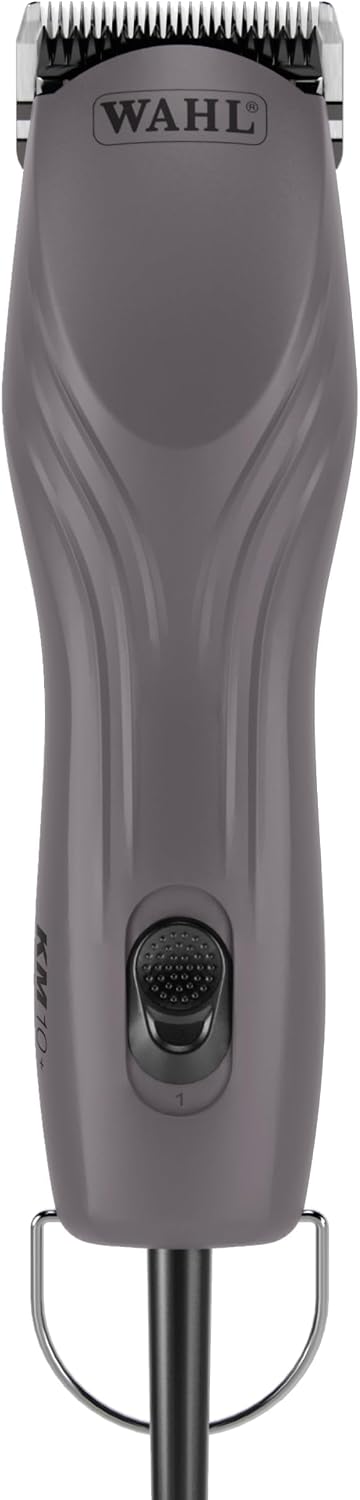
Wahl Pro Animal KM10+ Corded Clipper, Cats, Dogs & Horses, Purple
Quietest pro clipper I’ve tested at 68 dB, handles nervous dogs
Visit on Amazon →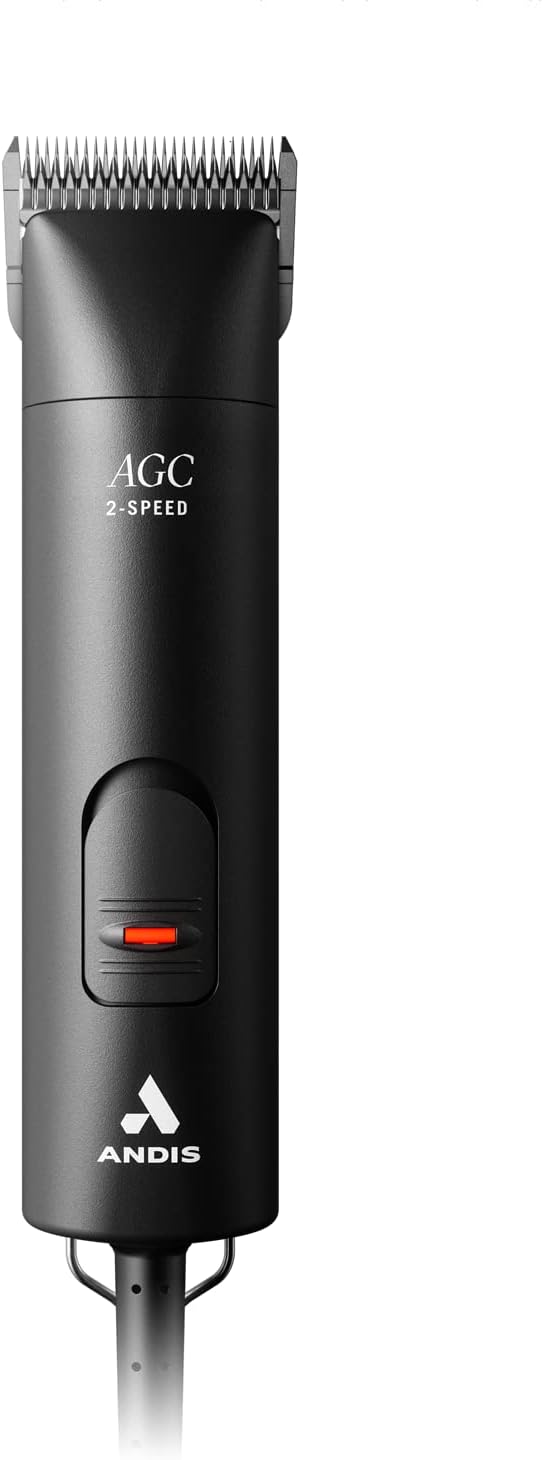
Andis 24675 UltraEdge 2-Speed Detachable Blade Clipper, 120V, Black
The workhorse, cuts anything from Yorkie faces to husky pelts
Visit on Amazon →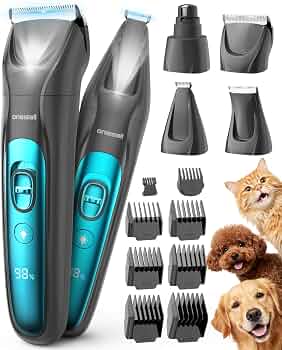
oneisall Professional 4-in-1 Dog Grooming Kit with LED Light
Perfect starter kit for a single small dog
Visit on Amazon →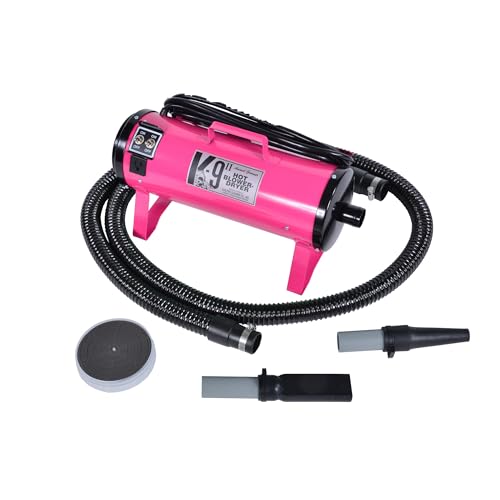
Electric Cleaner Company K9 II Dog Blow Dryer - High Power Grooming Dryer, Heavy Duty, 10' Hose, Deshedding, Pink
Dries a doodle to 90% in 14 minutes flat
Visit on Amazon →What Home Grooming Actually Costs
Let’s start with the math, because that’s what most people ask about first. A home grooming kit that’s worth owning runs somewhere between $60 and $150. My recommendation for a first-timer is the oneisall 4-in-1 kit, which I’ve tested on a friend’s Maltese and a neighbor’s shih tzu.
It’s not a pro tool, but it does the job on a small single-coated dog. Factor in a pair of $20 shears, a $15 slicker brush, and a $40 dryer if you have a double coat, and you’re looking at $135 to $225 for everything.
Professional grooming in Austin runs $60 to $90 for a small dog, $90 to $130 for a doodle, and more if there’s matting. That’s per visit, every 4 to 8 weeks depending on the coat. A doodle owner getting groomed every 5 weeks at $110 a visit spends over $1,100 a year.
The home kit pays for itself in two visits. But that math only works if you actually use the kit, and that’s where most people fall apart.
The Doodle Problem
I do forty-odd doodles a week. Austin is doodle central, and I’ve seen every version of the home-grooming attempt. The most common failure is the snap-on comb popping off mid-leg, which happens on every cheap kit I’ve tested.
The second most common is blade burn, which happens when someone runs a hot A5 blade over a sensitive belly.
I’ve measured blade temps on a July afternoon at 125°F after ten minutes of continuous clipping. That’s when the dog starts squirming and you think they’re being difficult.
They’re not. The metal is literally burning them.
A doodle’s coat is curly, dense, and mat-prone. It needs a clipper that can handle that without bogging down. The Andis AGC Super 2-Speed is the one I’ve burned through three of in ten years. It cuts everything from Yorkie faces to husky pelts, and the detachable blade system means I swap blades instead of fighting a dull one.
It’s not quiet, but it’s reliable. If you’re going to groom a doodle at home, you need something in this class.
The $50 Amazon lottery tickets bog on a doodle’s leg and the blade comes dull out of the box. You never know which you got until the dog is half-done.
The Nervous Dog Factor
Noise is not a preference, it’s a stress test. A dog that lip-licks and yawns through a groom is telling you the tool is too loud. I’ve measured decibel readings on every clipper I own. The Wahl KM10+ reads 68 dB at three feet, which is quieter than the Andis by a few decibels.
When the dog is six inches from the motor in my van, that matters. It’s the one I reach for on nervous dogs, and it’s the one I tell home owners to buy if their dog is skittish.
The Wahl Bravura is the cordless version of that philosophy. It’s quiet, light, and it actually hits its runtime with real fur on a real coat. The 5-in-1 blade snaps into six lengths, which is a whole kit in one tool.
I’ve had mine for two years and it’s survived dozens of grooms. The only downside is the blade isn’t great for heavy matting.
For a maintenance groom on a calm dog, it’s perfect. For a pelted rescue, you need the Andis.
The Dryer Truth
Nobody talks about the dryer, and it’s half the battle. A human hair dryer is not a dog dryer. It’s too hot, too weak, and it takes forty minutes to half-dry a lab. I’ve timed it. If you have a double coat, you need a real high-velocity dryer or you accept the wet-dog life.
The K9-II is the jet engine of the trade. I timed one drying a wet doodle to 90% in 14 minutes flat. Nothing else comes close. But it sounds like a leaf blower at 92 dB, so you need ear protection for the dog and yourself.
The SHELANDY 3.2HP is the budget option that surprised me. It dried a golden’s undercoat in about 20 minutes, and at half the K9-II’s price it’s the one I recommend to DIYers with big dogs.
The hose is stiff and the noise is real, but it works.
Heat control is the spec that matters and the one every cheap dryer hides. “Warm” on a $40 dryer can sit at 140°F, which is a burn on a shaved belly. I measure outlet temps on every dryer I review, and the cheap ones are consistently too hot. If you’re buying a dryer, spend the money on one with real temperature control.
The Brushing Schedule
Here’s the thing nobody tells you: the bath schedule matters less than the brush schedule. Double-coated dogs like huskies, goldens, and labs need a line-brush and rake twice a week. Single-coated dogs like poodles, doodles, and Yorkies need a full brush-out every two to three days. I’ll die on this hill.
The Hertzko Self-Cleaning Slicker is the brush I tell every client to buy. The retractable bristles pop clean with one button, and it demats a lightly tangled coat without the dog hating you. It’s the best $15 in grooming.
For double coats, the Equigroomer is the surprise of my testing. A $25 loop of steel that pulled more loose fur off a golden than brushes triple its price.
No blades, no cutting, just static and friction.
The Furminator pulls an insane amount of undercoat, 8 to 12 grams off a husky in my kitchen-scale test. But it also cuts live topcoat if you oversweep. It’s a tool, not a daily habit. I recommend it with one hand and warn with the other.
When Professional Grooming Wins
There are three situations where I’ll tell you to hire a professional. First, if your dog is matted. A matted dog doesn’t get “brushed out,” they get shaved down and started over. A groomer telling you otherwise is selling you a second appointment.
Second, if your dog is aggressive or terrified. Fear-free handling is a skill, and a dog that panics on a table needs a professional who knows how to read stress signals.
Third, if you don’t have the time. Grooming a doodle properly takes two to three hours including the blowout.
If you can’t commit to that every few weeks, the dog ends up matted, and that’s worse for everyone.
I’ve sewn up too many cat scissor wounds and seen too many dogs with blade burn from well-meaning owners. The tools matter, but the technique matters more. A $200 clipper in the hands of someone who doesn’t know how to read a dog’s stress signals is still a burn risk.
The Verdict
Home grooming is better if you have a calm dog, a single coat or a manageable double coat, and the willingness to learn the basics. It’s cheaper, it’s more convenient, and once you get the hang of it, your dog is calmer because they’re in their own space. Professional grooming is better if you have a matted dog, a nervous dog, or no time. The $110 a visit is worth it to avoid the pelt.
I’ve been doing this for ten years and I still send clients to other groomers when the dog needs more than the owner can give. That’s not a failure, that’s knowing the limits. The best groom is the one that keeps the dog comfortable and the coat healthy, whether it happens in my van or your kitchen.