Related: Dog Grooming Blade Temperature: Why Cool Blades Matter More Than Motor Size
I groom dogs for a living, forty-odd a week, most of them out of a converted cargo van I park in driveways around Austin. So when someone asks me which home dog grooming tools are actually worth buying, I answer the way I answer a client standing in my van with a matted doodle: it depends on the coat, on the dog's nerves, and on whether you have a table. It does not depend on which box has the nicest photo on it.
The four tools in this guide are the ones I would put in front of a home groomer first. A clipper that can get through real coat instead of stalling halfway down a leg. A nail trimmer that takes a clean bite. A folding table or hammock so you are not crouched on a bathroom floor wrecking your back while the dog learns it can escape. And, because grooming is a cutting job before it is anything else, something to keep the edges that finish a face actually sharp.
None of this turns you into a groomer, and I am not selling that. It makes the twenty minutes you spend on your own dog every few weeks safer and faster. If a tool does not do that, it does not belong in your closet.
The three questions every tool has to answer
First, will it run through a coat without heating up or bogging? Metal that gets hot enough irritates skin, and a motor that stalls on a thick leg leaves you with a half-finished dog and a nervous owner. That is the whole reason I keep a thermometer in the van.
Second, how loud is it at the dog's ear, not at yours? A dog that lip-licks and yawns through a groom is telling you the tool is too loud. Noise is not a preference. It is a stress test.
Third, would I use it on a nervous rescue or a puppy? If the answer is no, it is a tool for calm dogs only, and you should know that before you buy it rather than at minute four of a groom.
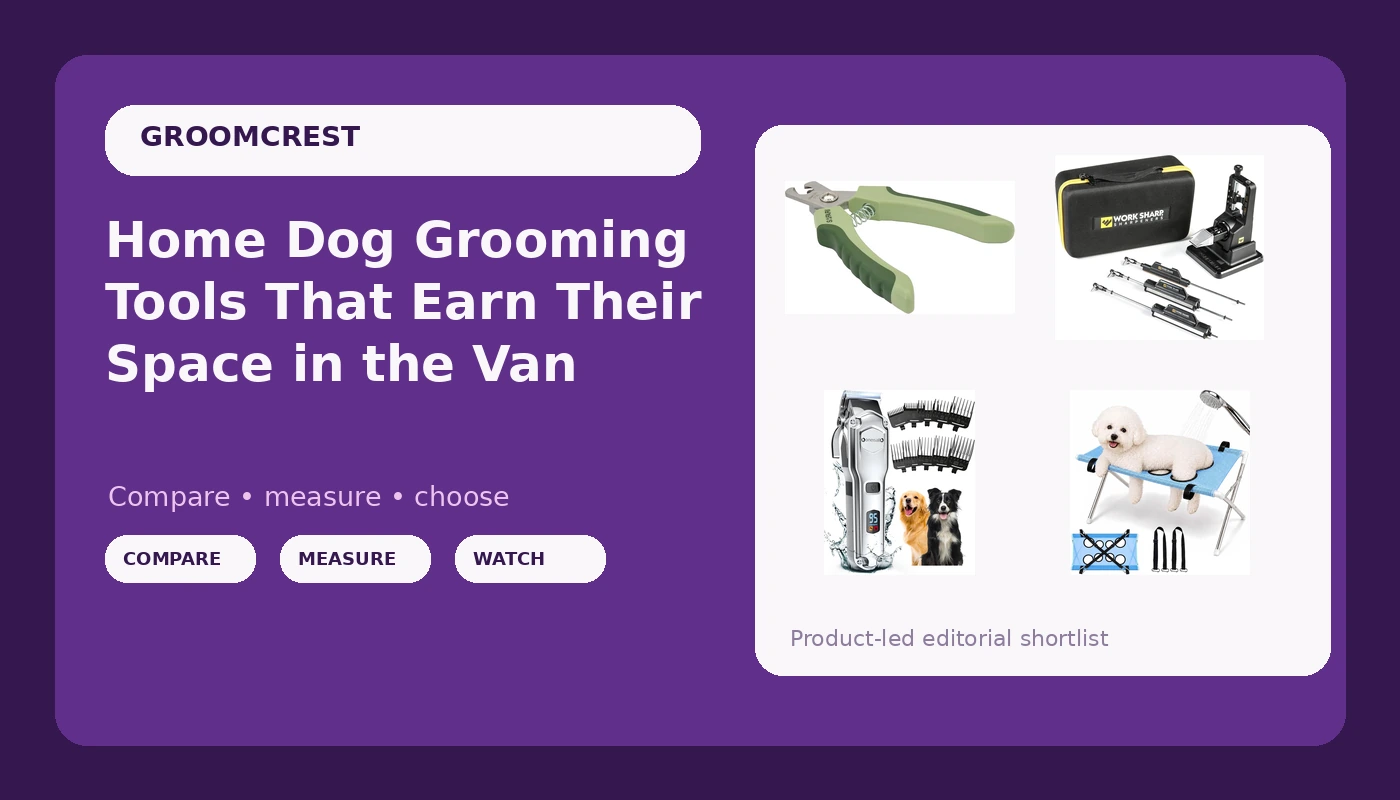
Best overall: oneisall Dog Clippers for Grooming Thick Heavy Coats
This is the clipper I point home groomers toward when their dog is small to medium and the coat is genuinely thick. The name tells you the job it was built for, and that matters, because most cheap clippers are built for a Yorkie face and sold to people who own doodles.
Here is the honest framing. A clipper has one job: cut coat without burning the dog. Everything else on the box is decoration. What separates this from a generic set is that it is aimed at heavy coat rather than light trimming, so you are not asking a face trimmer to do a body clip.
Two things I tell every home groomer who buys a cordless clipper. First, work in passes instead of parking the blade in one spot, and rest the blade when it feels warm in your hand. A hot handle means a hot blade, and the dog feels it in the metal long before you feel it in your palm. Second, snap-on combs pop off mid-leg on curly coats, and that is not a brand problem, it is a design problem across the category. Go slower over legs and furnishings.
Who should skip it? If you own a Maltese, a Yorkie, or a short-coated dog you only tidy up, you can spend half as much and be fine. If you own a doodle, a poodle, or a thick double coat, this is the tool that stops the groom from turning into a fight.
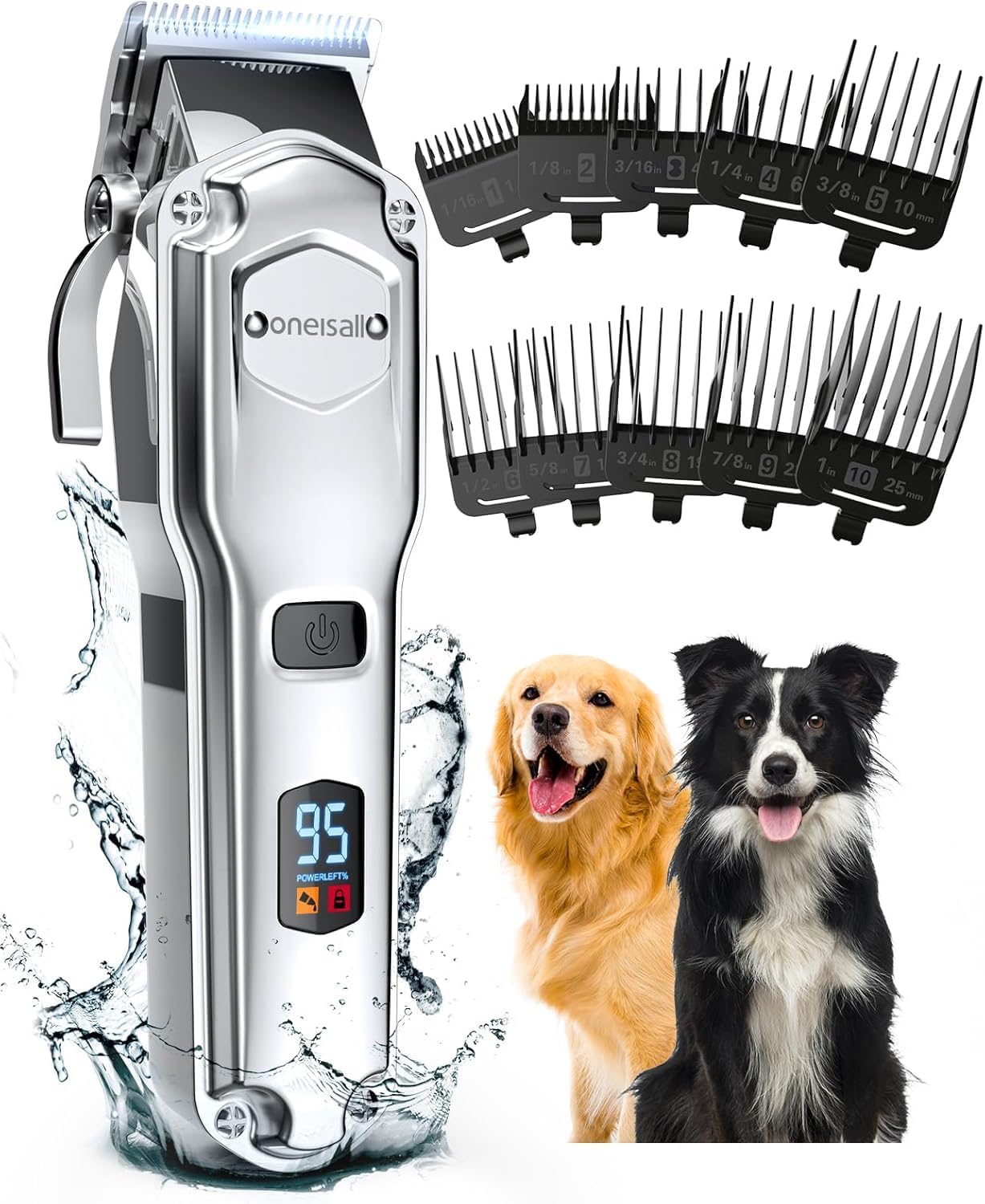
Best for table work: Dog Bath Hammock with Stand, Foldable Grooming Table for Small Pets
I will say this as plainly as I can: grooming on the floor is how backs get wrecked and dogs get cornered. A table changes the dog's behavior. A dog on a raised surface stands differently, settles differently, and stops trying to leave, because there is nowhere obvious to go.
This one is a hammock with a stand, and the hammock part is the smart bit. It cradles the dog instead of letting it slide on a wet surface, and the stand folds down for storage. That combination is why it makes the guide: it is the entry point for someone bathing a small dog in a tub or on a patio, and it costs less than most grooming shears.
Be honest about the limits. It is built for small pets, and that is not a suggestion. A forty-five pound goldendoodle that leans is not the dog for this stand. If you own a lab, a golden, or a husky, save for a proper folding table with a grooming arm, because stability is the entire job of a table and a wobbly one is worse than none.
For a shih tzu, a poodle, a bichon, or a small doodle, this is the tool that turns bath night from a wrestling match into a routine.
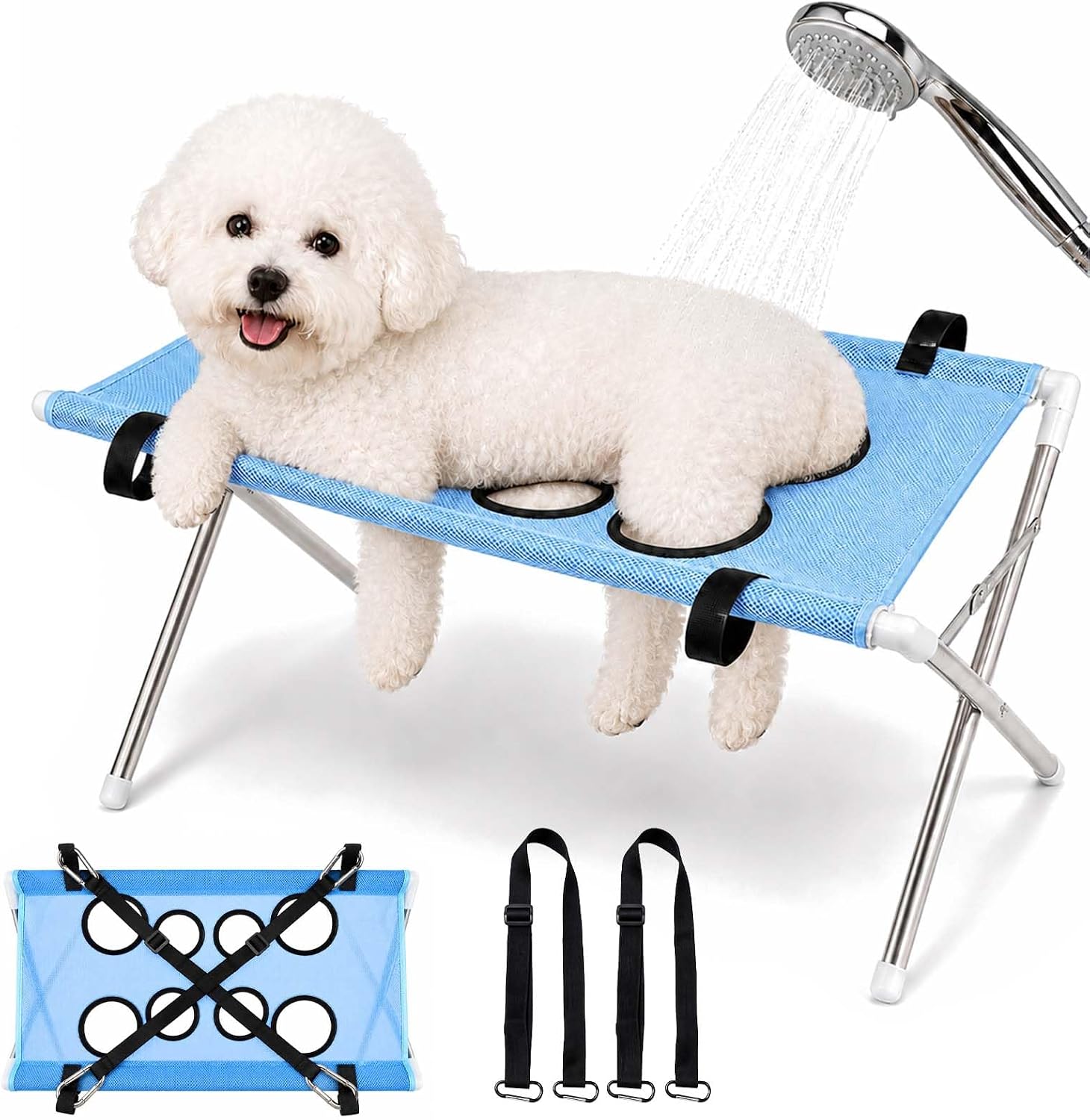
Best nail tool: Coastal Pet Safari Professional Dog Nail Trimmer
Nails are the part of grooming owners skip most, and long nails change how a dog stands, which changes how it walks, which eventually shows up in the shoulders. This trimmer is the cheap fix.
It is a plier-style clipper sized for small and large dogs, which means the handles give you leverage instead of making you squeeze with your fingertips while a wiggling dog pulls away. That leverage is the difference between a clean cut and a crushed nail, and a crushed nail is the thing dogs remember.
Two rules I give everyone. Cut small bites and look at the cut face after each one, because the quick is the pink nerve inside the nail and once you hit it the dog will not forget. And if your dog has black nails, where you cannot see the quick at all, use a grinder or take off slivers. Clippers are faster on calm dogs. Grinders are safer on black nails. I carry both and pick by the dog, not by habit.
This one belongs in the drawer even if you take your dog to a groomer, because nails grow between appointments and a quick touch-up saves the groom. For a puppy or a cat, size down, because these jaws are bigger than a tiny nail needs.
The edge keeper: Work Sharp Precision Adjust Elite Knife Sharpener
This is the odd one out in a pet care guide, and I am putting it here on purpose. Grooming is a cutting job. The clipper does the body, but the scissors do the face, the feet, the furnishings, and the finish, and a dull shear does not cut hair. It drags, folds, and eventually nicks skin, which is exactly how dogs get hurt during scissor work.
The reason this sharpener is the one I would name is that it is a guided, fixed-angle system for knives and other straight edges. Guided means you are not freehanding an angle on a stone and hoping. You set the angle, the rods hold it, and the edge comes back consistent. That is the whole problem with keeping shears and grooming knives sharp at home: consistency, not effort.
Be realistic about the fit. It is designed for kitchen and pocket knives first, and if you own one pair of twenty-dollar shears and nothing else, your money is better spent on a better pair of shears. But if you already do your own edge maintenance, or you keep knives and shears in rotation, this is the tool that stops you from mailing edges out or replacing tools that were only dull. And if you want to know why I care this much about edges, it is the same reason I care about blade temperature: dull and hot are the two ways a tool hurts a dog.
The home grooming tool reference table
This is the table I would hand a client who is setting up at home. It is ordered by what to buy first, not by price, because the order matters more than the shopping list.
| Tool | Best for | What it solves | Notes |
|---|---|---|---|
 Visit on Amazon → Visit on Amazon →oneisall Dog Clippers for Grooming Thick Heavy Coats |
Small to medium dogs with thick or curly coats | Body clipping without stalling on heavy coat | Work in passes and rest the blade when the handle warms |
 Visit on Amazon → Visit on Amazon →Dog Bath Hammock with Stand, Foldable Grooming Table for Small Pets |
Small dogs at bath time | Keeps you off the floor and the dog from bolting | Folds flat, but it is a small-pet stand, not a lab table |
 Visit on Amazon → Visit on Amazon →Coastal Pet Safari Professional Dog Nail Trimmer |
Small and large nails | Leverage for a clean cut instead of a crushed nail | Take small bites, and switch to a grinder on black nails |
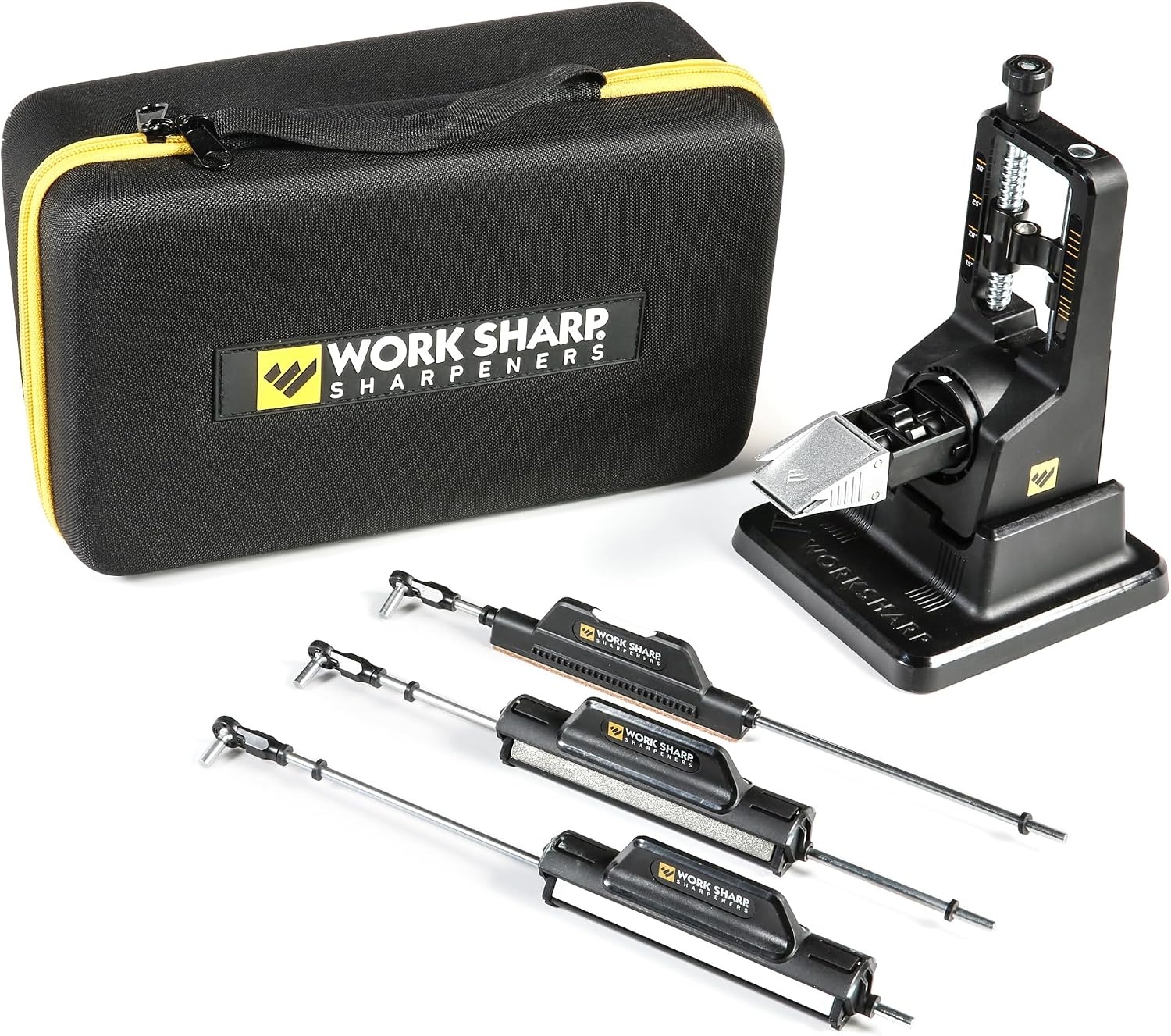 Visit on Amazon → Visit on Amazon →Work Sharp Precision Adjust Elite Knife Sharpener |
Straight edges, shears, and grooming knives | Keeps a consistent angle so edges stop dragging | Guided system built for knives first, shears second |
How I would spend the money, in order
Buy the clipper first. It is the tool that decides whether home grooming works at all, and it is the one that fails loudest when it is wrong for the coat. A clipper that bogs on a doodle's leg leaves you with a half-done dog and no good option, and that is how people end up at my van with a pelt.
Buy the nail trimmer second, because it is the cheapest tool here and the one most owners skip. Nails grow whether or not you have a table, and a dog that cannot stand comfortably on its feet is a dog that fights the rest of the groom.
Buy the table third, and only if you have a small dog. It is the purchase that changes how your dog behaves on bath day, and it is the one I would make before I bought a single extra brush. If you own a large dog, this specific stand is not for you, and you should save for a folding table with a grooming arm instead.
Buy the sharpener last, and only if you already maintain your own edges. It is the tool for someone who is past the starter phase and tired of replacing things that were only dull.
Should you buy the oneisall Dog Clippers for Grooming Thick Heavy Coats?
Yes, for the right dog. If your dog is small to medium with a genuinely thick or curly coat, this is the clipper I would start with, because it is aimed at coat penetration rather than light tidying, and that is the job that actually stops home grooming. If your dog is a Maltese or a short-coated breed you tidy up between salon visits, you can spend less and never notice.
Should you buy the Coastal Pet Safari Professional Dog Nail Trimmer?
Yes. It is the plier-style trimmer that has lived in grooming kits for decades, the handles give you leverage on medium and large nails, and it solves the part of grooming owners avoid. Take small bites, watch the cut face, and switch to a grinder if your dog has black nails. If there is one purchase in this guide that pays for itself in a single avoided groomer visit, it is this one.
Should you buy the Dog Bath Hammock with Stand?
Yes, if your dog is small. The hammock holds a wet, wiggly dog instead of letting it slide, the stand folds away, and it gets you off the bathroom floor. If your dog is a lab, a golden, or a husky, skip it and save for a full-size folding table, because a stand that wobbles when the dog leans is worse than no stand at all.