I have groomed dogs for ten years, the last six out of a converted cargo van I park in driveways all over Austin. In that van there is no wall to absorb noise, no salon sink, and a 3,000-watt inverter that decides which dryers I am allowed to run. That setup turns every gear decision into a measurement, which is why this look at professional dog grooming tools leans on the numbers in my job book instead of the adjectives on the box.
The four tools below do four different jobs, and that is the whole point. One cuts coat. One dries it. Two of them maintain a coat between grooms. Comparing them by price is how people end up with a two-hundred-dollar paperweight and a dog that still sheds on the couch.
The short answer: buy the clipper if you clip full coats, buy the high-velocity dryer if you own a double coat, and buy a brush before you buy either one, because the brush schedule matters more than the bath schedule.
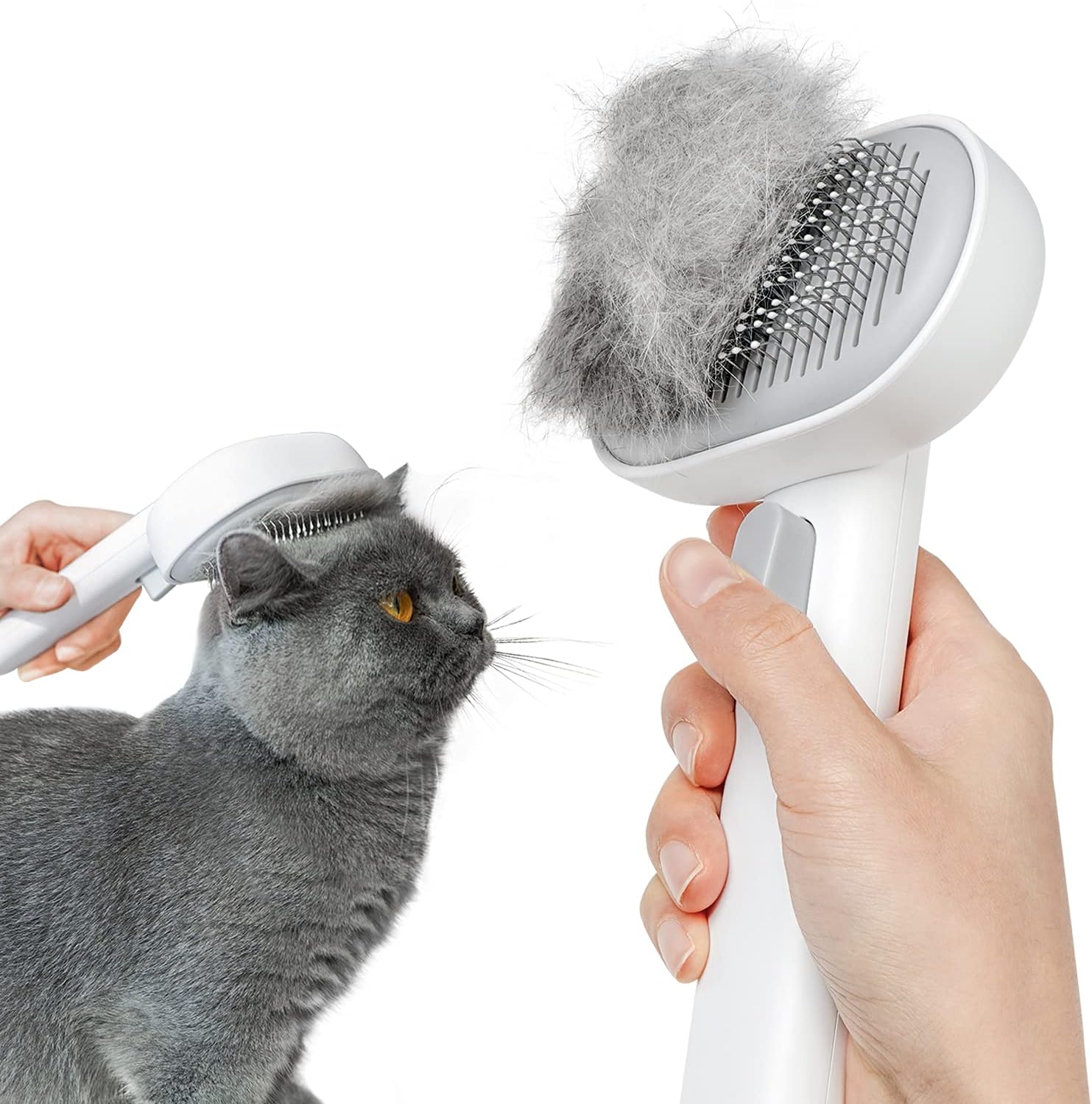
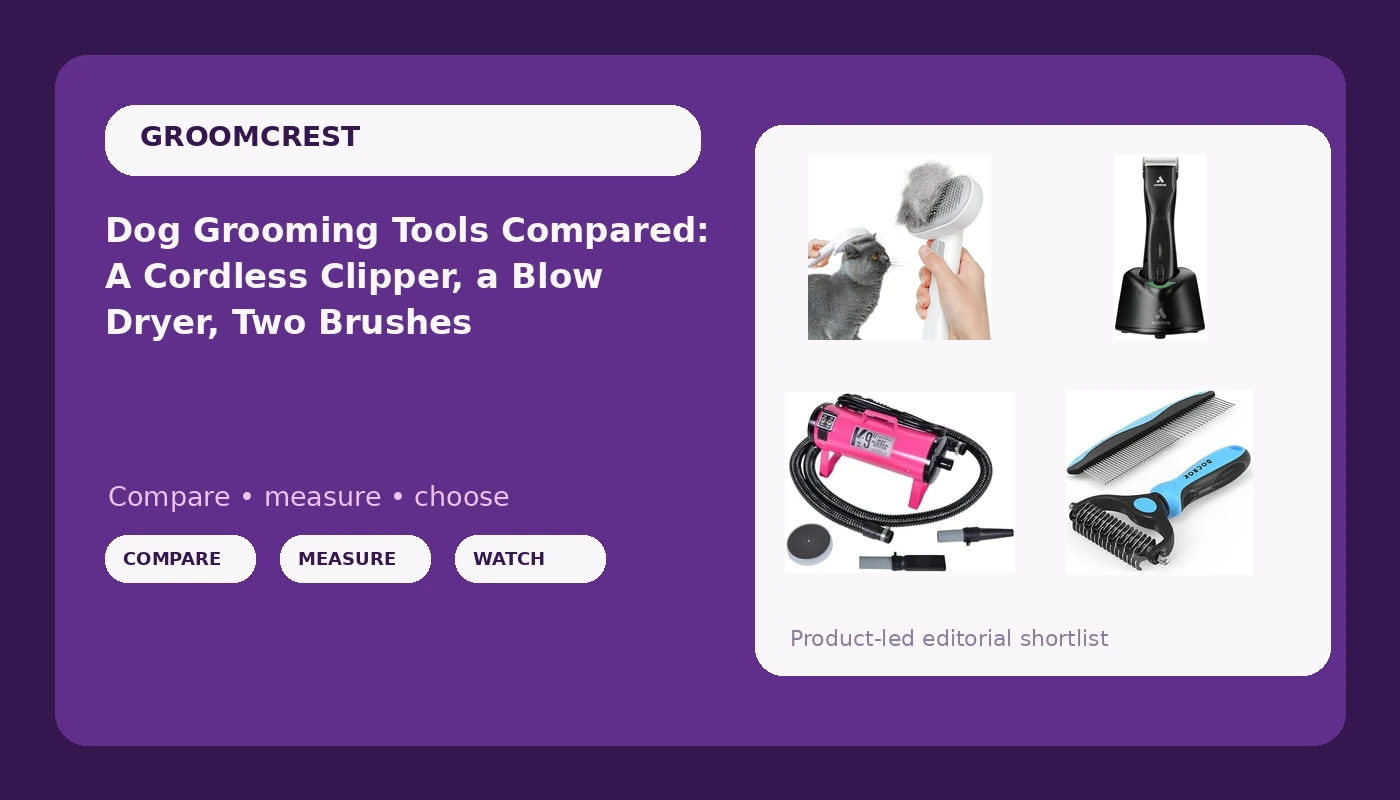
Aumuca Cat Brush for Shedding
Sized for a cat's frame, with a head gentle enough for a cat that hates everything
A loose-fur brush only. Not a dog tool and not a de-matting tool
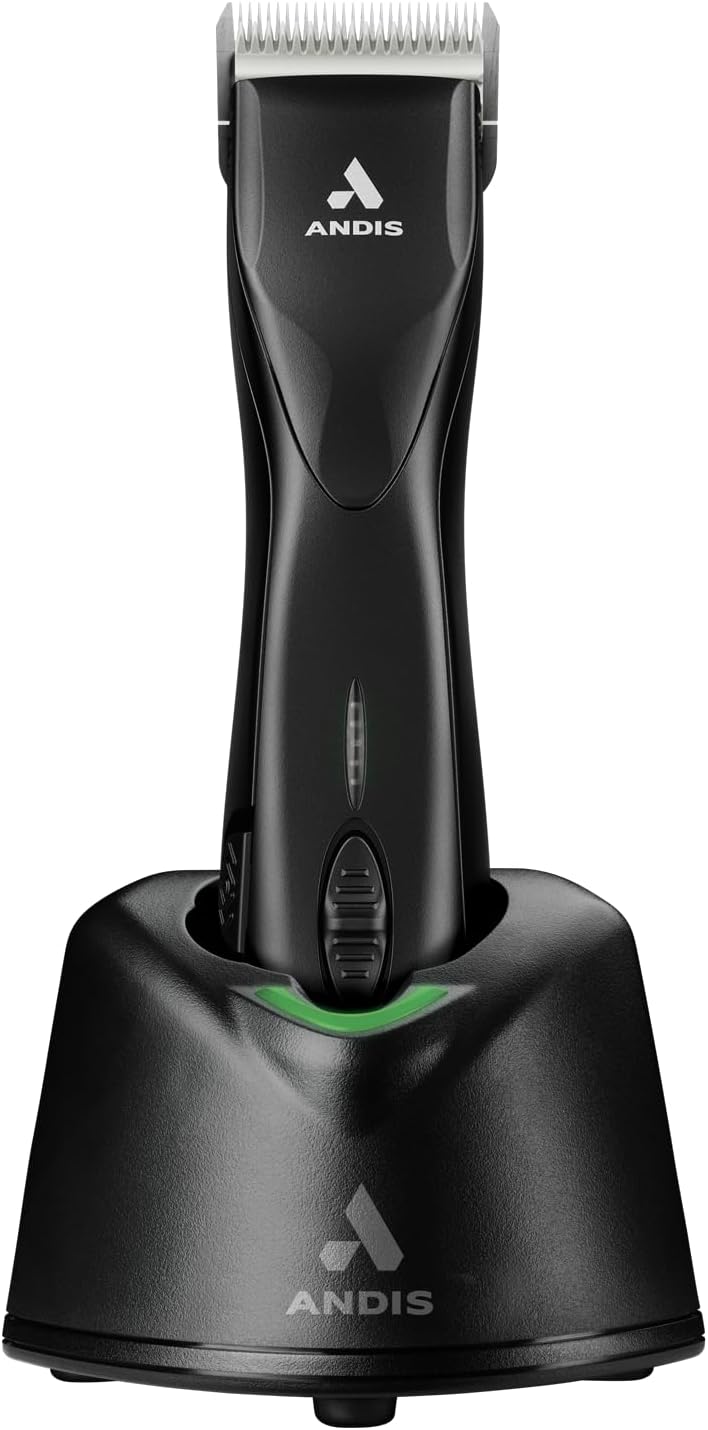
Andis 79170 Pulse Zr II 5-Speed Detachable Blade Clipper
The only cordless I have used that keeps pace with my corded AGC on a full doodle
The price stings, and a cordless handle warms up over a long day
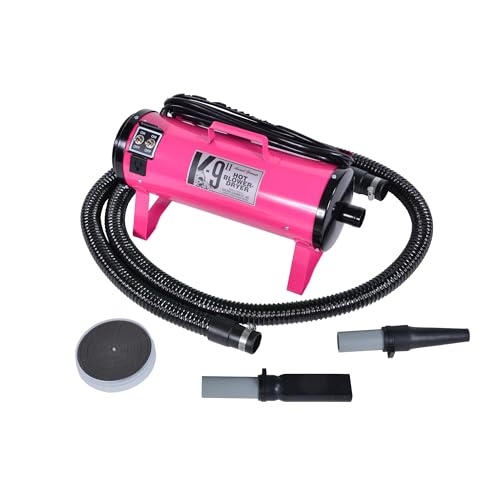
Electric Cleaner Company K9 II Dog Blow Dryer, Heavy Duty, 10' Hose
High-velocity air that lifts undercoat no brush can reach, with a long hose that keeps the motor off the dog
It is loud, and a nervous dog needs a slow introduction and ear protection
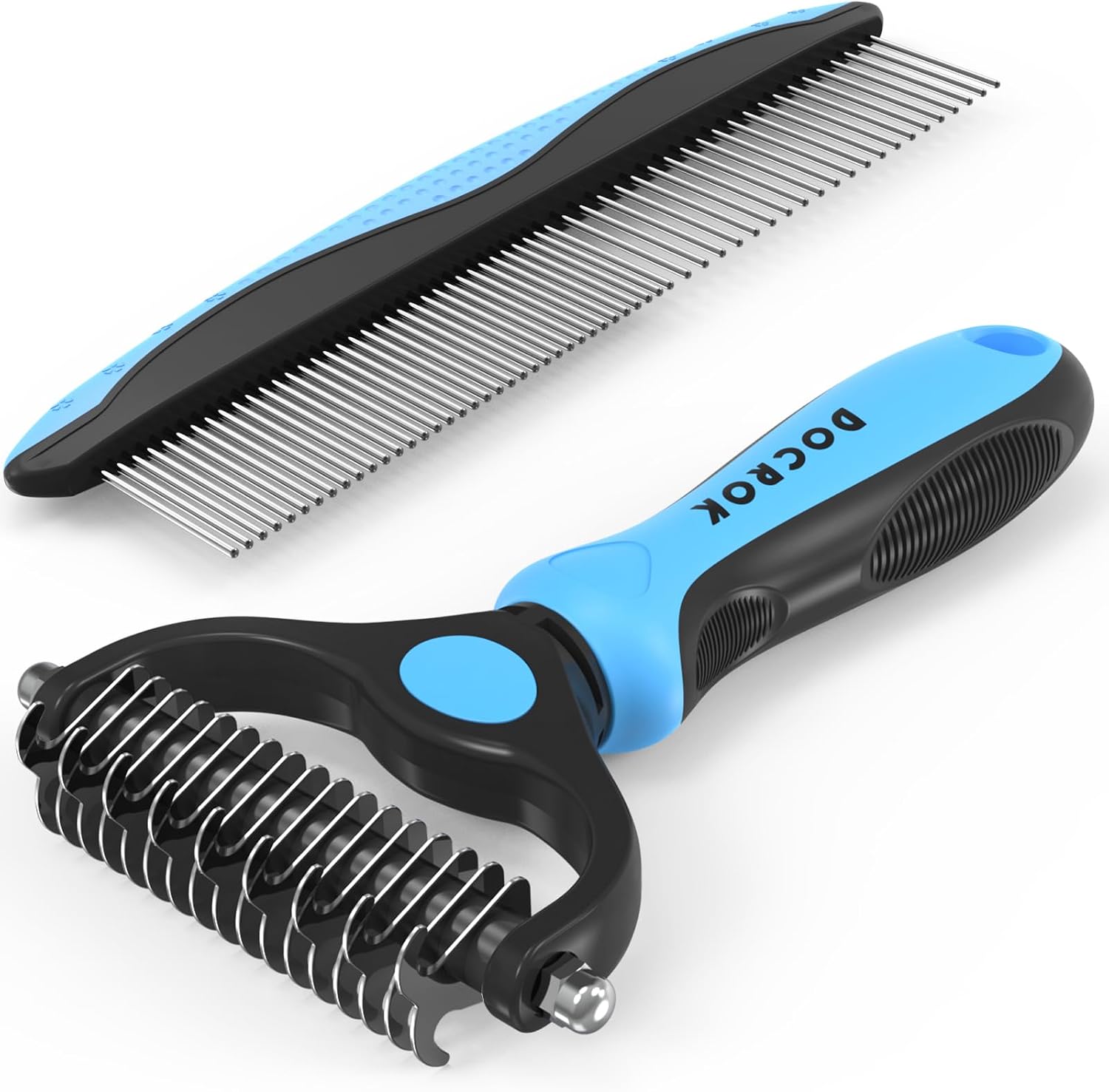
Docrok Pet Grooming Combo, Blue Deshedding Brush with Metal Comb
Two tools in one box: a brush for loose fur and a metal comb for the tangles behind the ears and at the tail base
No tool brushes out a pelt, and this one does not pretend to
Prices and availability were captured from Amazon Creators API and may change.
What I check before a tool earns van space
The clipper and the dryer below are tools I have run through real coats. The two brushes I judge on design and on where they belong in the brush order, because a shedding tool's entire job is decided by the coat it meets.
Every clipper that comes through the van gets a coat test: ten or more dogs, blade temperature logged with an infrared thermometer every ten minutes, and a note on how the dog reacted. I do not care what the box says about speed. I care whether the blade sits under 110°F at minute ten, because a hot A5 blade is how a golden retriever gets a mild burn on a July afternoon. That was the lesson that made me start writing numbers down in the first place.
Dryers get a decibel reading at the dog's ear and a timed dry-down on a wet coat. Runtimes get a stopwatch, full battery to blinking light, with real fur on the dog. Shedding tools get the kitchen scale, because grams of undercoat pulled is the only honest score, and then I check the topcoat afterward for damage. Nail tools get a per-paw time and a stress-signal count. If a dog lip-licks through all four feet, it is a two-person tool, no matter what the listing claims.
And every tool gets one more question: would I use it on a nervous rescue or a puppy? Gear that only works on a bombproof lab is gear I leave at home.
The cordless clipper: Andis Pulse Zr II
The Andis Pulse ZR II is the cordless I reach for when a dog cannot handle a cord, and it is the only battery clipper I have used that does not fade on me mid-coat. Brushless motor, five speeds, and a detachable blade system, which is the part that matters most to me. A detachable blade means I swap blades instead of fighting a dull one, and the blade is the tool. A sharp, cool 10 blade on a modest clipper beats a hot blade on a flagship every single time.
I have had mine three years. It has kept up with my corded workhorse on a full doodle, which is the bar I set for any cordless, because a doodle coat is where cheap motors bog and cheap batteries quit. The five speeds are not decoration either. I run slower on a face and faster on a body, and having that dial on the handle means I am not stopping to change tools mid-dog.
The honest trade-off is money. This is a professional cordless at a professional price, and if you are trimming a poodle face twice a month at home, you do not need it. A solid oneisall or a Wahl Bravura does that job for a fraction. The second trade-off is heat. Cordless heat is worse than corded heat, because the battery cooks the handle, and a warm grip makes your hand cramp by dog three. If the grip is warm in my hand, the dog is feeling it in the blade, so I rotate.
The dryer: Electric Cleaner Company K9 II
If you own a husky, a golden, or a lab, the dryer is the tool that changes your life, and this is the one I have timed. A high-velocity dryer is the jet engine of the trade. On a wet doodle I clocked one drying to about 90% in fourteen minutes flat, and nothing else in my kit comes close to that. The ten-foot hose matters more than it sounds: it keeps the motor and the noise away from the dog's head, which is the difference between a dog that stands and a dog that panics.
Every matted or heavily shedding dog in my van gets a blowout before the bath. The air lifts dead undercoat before shampoo ever touches the coat, and half the shedding complaints in this country are solved with fifteen minutes of high-velocity air rather than any brush. That is not marketing, that is what I do every week on double coats.
Two things to plan for. First, noise. This class of dryer sounds like a leaf blower, in the low 90s on a decibel meter, so the dog and I both get ear protection and the dog gets a slow introduction, starting with the dryer running across the room. Second, power draw. A dryer in this class pulls serious wattage, and a 1,800-watt dryer trips my van inverter mid-dog. Home owners blow breakers for the same reason. Power draw is a spec, and it belongs in the decision, not in the fine print. The other thing worth saying out loud: a human hair dryer is not a dog dryer. It is too hot, too weak, and it takes forty minutes to half-dry a lab.
The deshedding pair: Docrok combo and Aumuca cat brush
These two are the maintenance tools, and they are the ones most people should buy first.
The Docrok Pet Grooming Combo pairs a blue deshedding brush with a metal comb, and the metal comb is the half of the pair I care about. Loose fur on the surface is easy. The trouble spots on a long, mat-prone coat are behind the ears, along the belly, and at the base of the tail, which are exactly the places a dog grooms most and a plastic brush reaches least. A metal comb gets down to the skin and tells you the truth about whether a coat is actually tangle-free. The order matters more than the tool: line-brush, then rake, then slicker, then finish. Most people who tell me their dog hates brushing are skipping the first two steps and yanking on the last one.
The trade-off is the one every brush shares. You cannot fix a matted dog with a gentle tool. A mat so dense it peels off like a jacket is a blade job, and the right conversation is about how to keep the coat from getting there again, not about which brush is softest. This combo is for detangling and light de-matting on a coat that is being maintained, not for rescuing a coat that was ignored for four months.
The Aumuca Cat Brush for Shedding is the cat-sized answer, and cat-sized is the entire recommendation. Cats tolerate a small head far better than a dog brush pressed against their spine, and this one is built for long or short haired cats, kittens, and even rabbits, with a head gentle enough to double as a massage. It removes loose fur without raking skin, and for a cat that will not sit through anything else, that is the win.
Where it stops: it is a loose-fur brush, not a de-matting tool, and it is not a dog tool. Cats mat behind the ears, on the belly, and at the base of the tail, and those mats are a vet visit or a groomer, never a home session with scissors. I have seen too many cat scissor wounds to pretend otherwise.
Where each tool loses points
The clipper loses on price and on handle heat. It is the tool I would buy again with my own money, and it is also the tool I tell most home groomers not to buy, because their dog does not need it. Those two statements are not in conflict.
The dryer loses on noise and on power draw. It is the single most effective de-shedding tool I own, and it is also the tool most likely to scare a dog the first time it runs. If your dog is sound-sensitive, budget for a slow introduction or borrow one before you buy one.
The Docrok combo loses on coat condition. It is a maintenance tool, and maintenance tools fail the moment you hand them a coat that needed a blade two months ago.
The Aumuca brush loses on scope. It is excellent at one thing, and if you buy it expecting it to handle a shedding husky, you will be disappointed by a product that never claimed to do that job.
Matching the tool to the dog you actually own
Every dog is a double coat or a single coat, and the answer is different for each. That is the whole framework.
A double-coated dog, meaning a husky, a golden, or a lab, has a topcoat plus a dense undercoat. Bath them less, brush them more, and blow them out in spring. For that dog, the dryer comes first, then a rake and a metal comb, and the bath schedule is the least important part.
A single-coated dog, meaning a poodle, a doodle, a Yorkie, or a bichon, grows hair continuously, and that hair mats. For that dog, the clipper and the brush come first, and the comb in the Docrok box is doing more work than any deshedding blade.
A cat owner should start with the small brush and a plan for the three mat spots, and should accept that some coats need a professional rather than a gadget.
A home groomer with one small-to-medium dog and a kitchen table should spend money on the brush and a decent clipper, not on a van-grade dryer. Buy the dryer when the coat is thick enough that a towel and a human hair dryer cannot win.
What I would buy first
If you are building a kit from nothing, start with the Docrok combo, because the brush schedule is the part people skip and the part that decides whether the coat survives. Add the Aumuca brush if there is a cat in the house. Add the K9 II the day you bring home a double coat, and add the Andis Pulse ZR II only when you are clipping full coats often enough that a cord has become the annoyance rather than the tool.
That is the order I would spend in, and it is the order I recommend in the van. The gear is the easy part. The dog tells you the rest, if you are watching for it.