Related: Best Dog Clippers for Thick Coats: What Actually Cuts
I groom out of a converted cargo van in Austin, which means every tool I own has to survive a hot afternoon, a curly doodle coat, and a dog that would rather be anywhere else. Forty-odd doodles a week, plus labs, goldens, huskies, and the occasional matted rescue that shows up in a trash bag, will teach you fast what a home dog grooming kit actually needs and what is just a sticker on a box.
The four tools below are the ones I point clients toward when they ask how to stop paying me every six weeks for a bath and a tidy. None of them is a magic wand. Together they cover the three things home grooming fails at: the cut, the loose coat, and the drying.
A quick word on how I think about gear, because it shapes every pick here. A clipper has one job, and that job is to cut coat without burning the dog. The blade is the tool, and a sharp, cool blade on an inexpensive clipper beats a hot blade on an expensive one every single time. Noise is not a preference, it is a stress test. And coat type, double or single, decides almost every answer. Marketing does not know which dog you own.
Best Overall for Most Homes: oneisall Dog Grooming Vacuum Kit with Pet Clipper
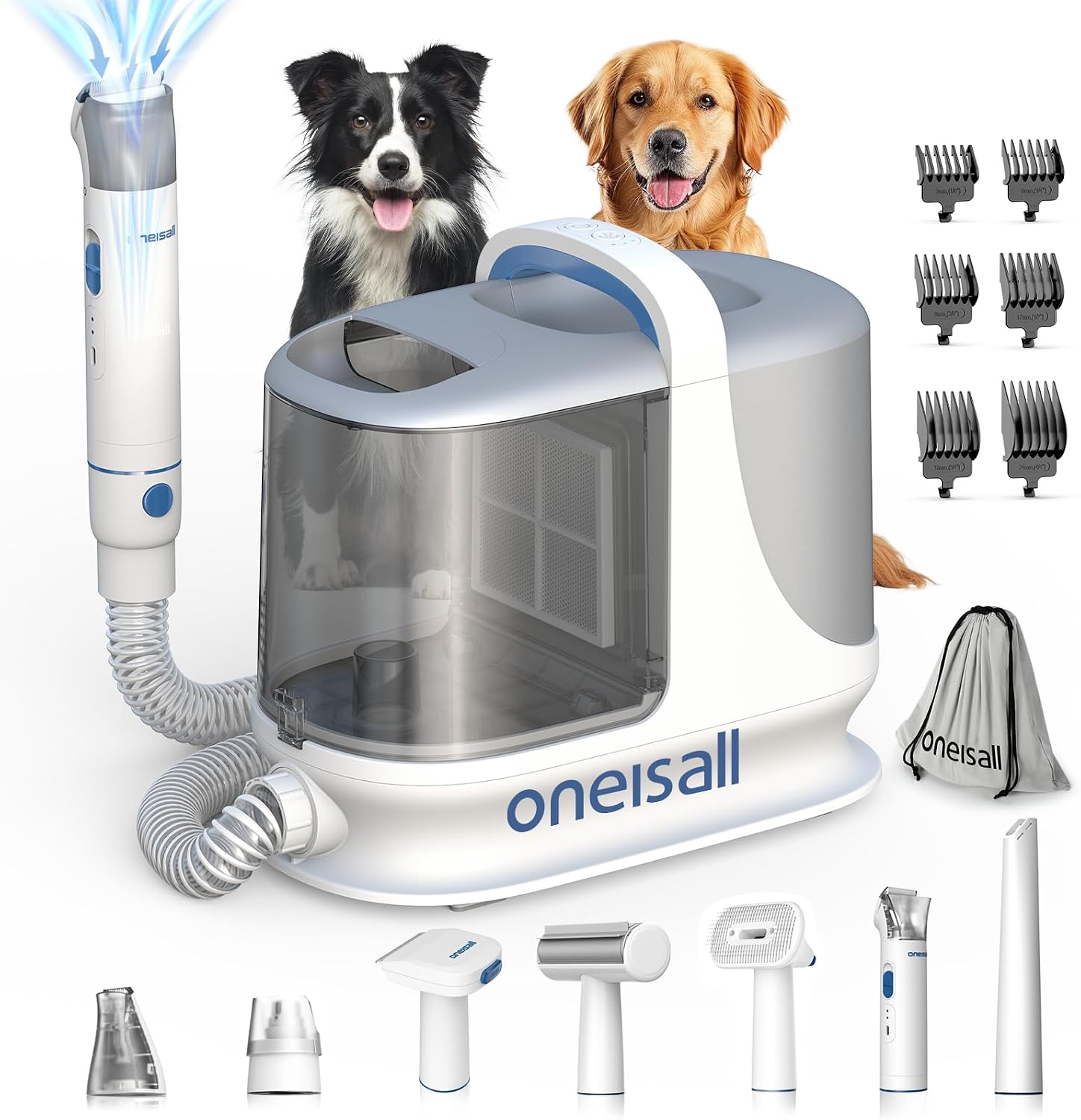
This is the kit clients ask about most, and for one small-to-medium dog it earns its space. You get a grooming vacuum and a clipper attachment in one box, which means the loose fur ends up in a cup instead of on your floor, your couch, and your clothes. The deshedding attachment does real work on a coat that has already been brushed out.
Where it stops is thick, dense coats, where the suction fades, and nervous dogs, where the motor noise is the dealbreaker. That is the category, not this kit specifically. So do the boring thing first. Turn it on across the room while the dog eats a treat. Then move closer. Then touch the back. If your dog lip-licks and yawns at the sound, you have your answer, and the answer is not to try harder.
Buy it if you have one small-to-medium dog with a single coat or a light double coat and you want to stay ahead of shedding between grooms. Skip it if you own a husky, a malamute, or a heavy-coated doodle. For those dogs a high-velocity dryer lifts more undercoat in fifteen minutes than a vacuum will in an hour, and no attachment changes that.
Best for Thick, Curly, and Matted Coats: Professional Dog Clippers for Grooming Thick Curly Matted Coats
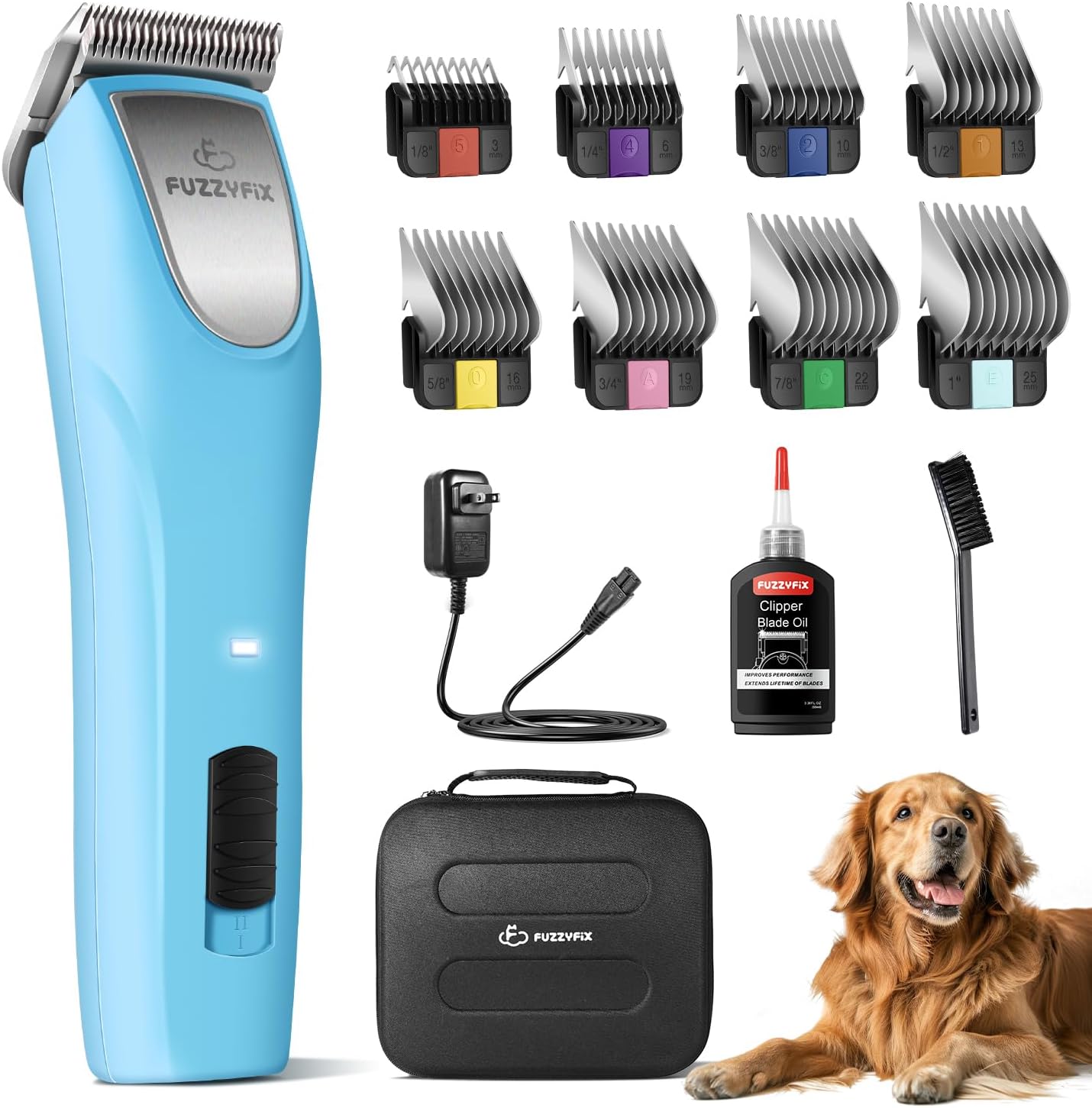
If you own a doodle, a poodle, or a rescue that arrived matted, this is the category that matters, and it is the one place I tell people not to shop on price alone. Curly coats are dense, they are unpredictable, and they bog a weak motor in the middle of a leg. A clipper built for thick, curly, and matted coats is built to keep the blade moving when the coat fights back.
Here is what I check before I recommend any clipper. Does it take detachable blades, or does it lock you into one length forever? Does the comb stay on when the dog spins? Cheap snap-on combs pop off mid-leg, and a comb that pops off mid-leg turns a tidy into a bald patch. Does the body stay cool enough to hold against the back of my wrist after ten minutes of continuous work? That last one is the whole reason I own an infrared thermometer. Blade burn is the injury nobody prints on the box.
One honest thing about mats, and I will keep saying it. You cannot brush out a pelt. A pelt is a mat so dense it peels off the dog like a jacket, and the humane answer is to clip underneath it and start over. A clipper that does that in one pass without pulling skin is worth more than three tools that advertise themselves as gentle. If your dog is already pelted, book the shave-down, then buy this for the regrowth.
Best Budget Cordless for Faces, Feet, and Nervous Dogs: HEAPETS Dog Grooming Clippers
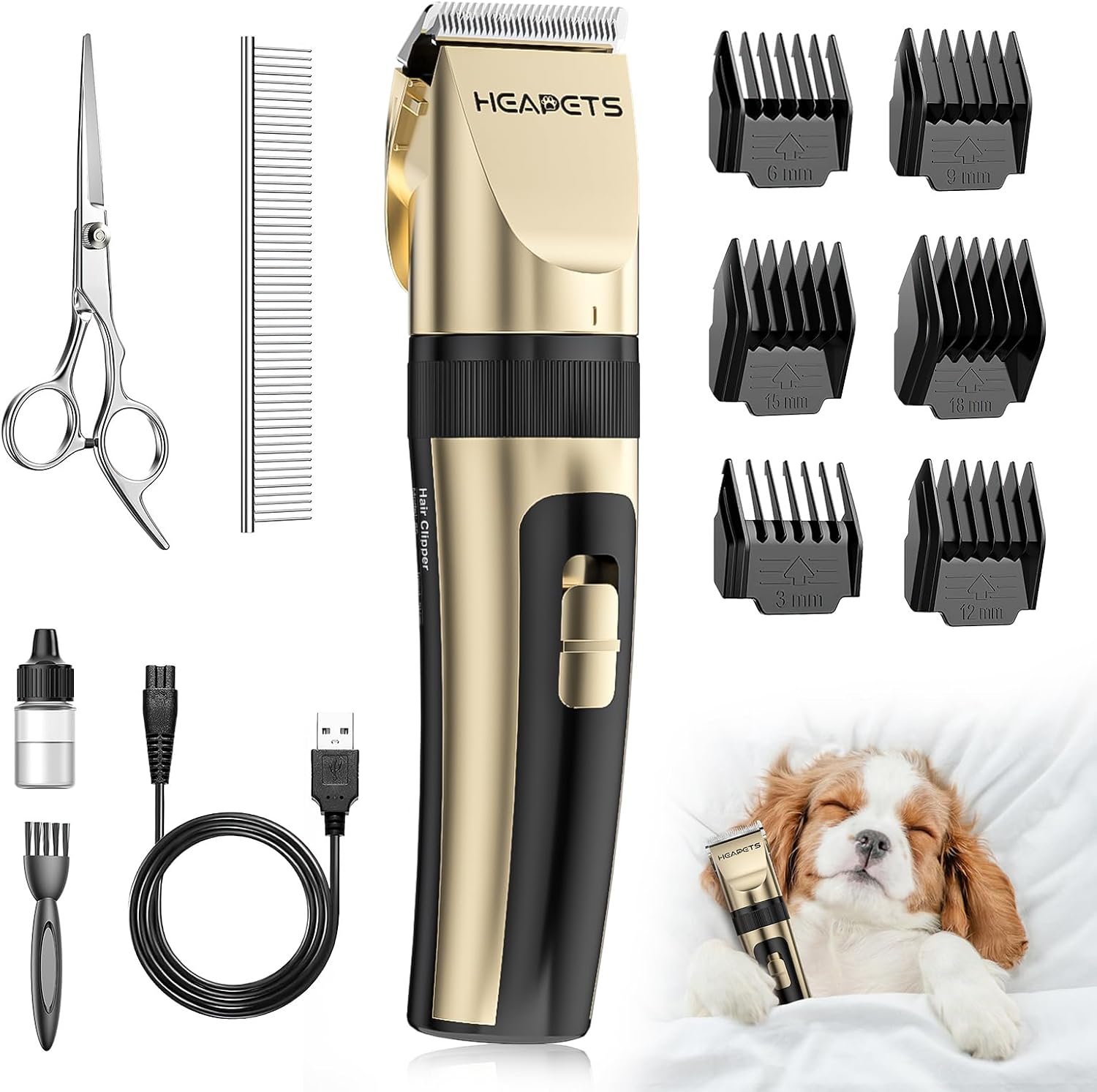
A low-noise cordless clipper with an adjustable comb is the tool I reach for on a dog that is already stressed, and it is the right second clipper for a home kit. Cordless means no cord to step over while the dog is on the table, and quiet matters more than most people think. A dog that is lip-licking and yawning through a groom is telling you the tool is too loud.
The adjustable comb gives you length options without swapping blades, which is handy for faces, feet, paw pads, and sanitary trims, and those small areas are the easiest place to learn. Be realistic about the rest of the job, though. Inexpensive clippers are a lottery ticket. Some cut a Yorkie face beautifully for a season; most bog down on a doodle's leg, and the blade arrives dull out of the box. Use this one for touch-ups and tidy work between full grooms, and keep it away from a thick, wet, matted coat. Run it for a minute in the next room first so the dog hears it before it touches skin.
The Tool Nobody Talks About: 2 Pack Microfiber Dog Towels
Every grooming conversation goes straight to clippers and skips the towel, which is a mistake. Drying is half the job. A dog that goes into the dryer dripping wet takes far longer to dry than a dog that has been toweled hard first, and a dog that stays damp stays cold, and a cold dog stops cooperating.
Microfiber does the work here. It pulls water off the coat instead of pushing it around, and it keeps pulling after you wring it out, so two towels get you through a bath without a laundry break. Use one towel for the body and one for the head, ears, and legs, which is also how you keep water from running into the ear canal. Two things I tell everyone: skip the fabric softener, because it coats the fibers and kills absorbency, and wash these separately from anything with velcro. Then towel until the coat stops dripping, and only then reach for the dryer. Half of the "my dog hates the dryer" complaints I hear are really "my dog was still soaked when the dryer started."
How I test, and what I refuse to recommend
Every tool I put my name on has to clear the same bar. A clipper gets run through a real coat, not a patch, with blade temperature checked as I go. A cordless tool gets run until the light blinks, because runtime claims are measured in dogs in my book, not minutes. A dryer or a vacuum gets a decibel reading at the dog's ear, since that is the distance that actually matters, and a wet coat gets timed to see how long it takes to dry.
Noise and heat are the two specs that decide whether a dog tolerates a groom, and they are the two specs the boxes hide best. "Whisper quiet" gets printed on plenty of tools that make a nervous dog shake. "Warm" on a cheap dryer can be hot enough to bother a shaved belly. That is why a cheap dB meter and an infrared thermometer live in my van, and why I do not quote a runtime or a noise figure I have not measured myself.
What I will not do is pretend a grooming vacuum replaces a bath, or that a budget clipper replaces a real one on a matted coat. If a tool only works on a cooperative dog with a perfect coat, it is not a tool, it is a treat.
Analysis: what actually decides your picks
Coat type comes first. A double coat, like a husky, golden, or lab, has a topcoat plus a dense undercoat. Those dogs need fewer baths, more brushing, and a blowout before the bath. A single coat, like a poodle, doodle, Yorkie, or bichon, grows continuously, so it needs regular clipping and a brush-out every two to three days or it mats. Almost every "which tool should I buy" question is really a coat question.
Noise comes second, and it is not a preference. Watch the dog, not the box. Lip licks, yawns, and the whites of the eyes showing are stress signals, and they appear before the shaking does. If you see them, change the plan: shorter session, quieter tool, or a break.
Drying comes third. A high-velocity dryer moves water and loose undercoat out of a coat in a way no towel or vacuum matches, and a blowout before the bath lifts dead coat that would otherwise end up on your floor. The vacuum here is a maintenance tool, and the towels are the first step of drying. Both of them make a real dryer work better.
Then comes the cut. Match the clipper to the coat, keep blades cool and clean, and clip matted dogs short instead of fighting the mat. Everything else is marketing.
The home grooming kit reference table
| Tool | Best for | Coat type | What to know |
|---|---|---|---|
 Visit on Amazon → oneisall Dog Grooming Vacuum Kit with Pet Clipper |
One small-to-medium dog, shedding between grooms | Single coat or light double coat | Suction fades on thick coats; introduce the noise slowly |
 Visit on Amazon → Professional Dog Clippers for Thick Curly Matted Coats |
Doodles, poodles, matted rescues | Curly and dense | Detachable blades and a motor that does not bog matter more than price |
 Visit on Amazon → HEAPETS Dog Grooming Clippers |
Faces, feet, sanitary trims, nervous dogs | Any coat, small areas | Adjustable comb, cordless, quiet; not a full-body tool on thick coats |
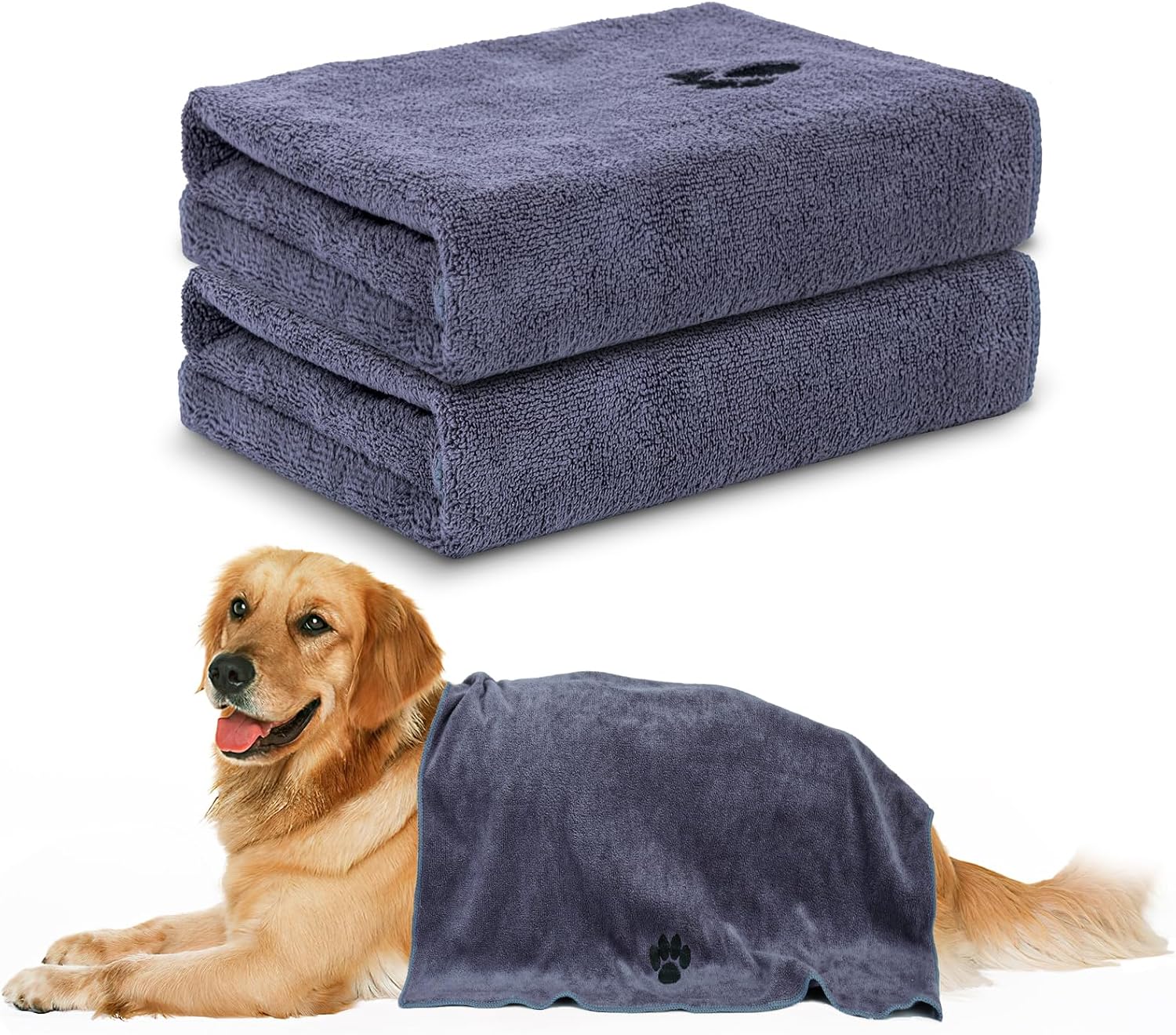 Visit on Amazon → 2 Pack Microfiber Dog Towels |
Drying after the bath | Any coat | Microfiber, two pack, no fabric softener |
The order in that table is also the order I would buy them in. Drying towels first, because they are the cheapest fix for the longest part of a bath. Then the clipper that matches your dog's coat. Then the vacuum if you have a shedding dog that tolerates the noise. Then the quiet cordless for faces and feet.
Should you buy the oneisall grooming vacuum kit?
Yes, for one small-to-medium dog. It turns shedding into a five-minute habit instead of a battle with a brush, and the fur goes in a cup. Just respect the two limits: thick coats and noise-sensitive dogs. Run it near the dog before you run it on the dog, and if the dog says no, listen.
Should you buy the professional clippers for thick, curly, matted coats?
Yes, if you own the coat this was built for. A doodle or a poodle will bog a weak motor, and a matted dog needs a tool that cuts under the pelt in one pass. This is the purchase where spending more is the cheaper decision, because a clipper that stalls mid-groom is how dogs get nicked.
Should you buy the HEAPETS cordless clippers?
Yes, as your second clipper. Low noise and a cordless body make faces, feet, and sanitary trims easier on a nervous dog, and the adjustable comb saves you a blade swap. Do not ask it to do a full body on a thick coat, because that is not the job it was built for.
Should you buy the microfiber towels?
Yes, and buy them before anything else on this list. Two towels, no fabric softener, and a real towel-down before the dryer. It is the least glamorous purchase here and the one that changes the most grooms.