Most dogs do not need a salon every month. They need fifteen minutes a week, a grooming vacuum that lifts the loose coat before it mats, and a pair of nail clippers small enough to control in one hand. That is the whole system. Dog grooming vacuum and nail clippers, used in the right order on the right schedule, will keep a doodle, a lab, or a short-haired terrier out of the pelt-and-shavedown cycle that turns a routine trim into an emergency appointment.
I have groomed dogs for ten years, and the home grooms that fail almost never fail because the owner bought the wrong tool. They fail because the tools get used in the wrong order, on a coat that was never brushed out, by a person kneeling on a kitchen floor with a nervous dog backed into a corner. Fix the order and the setup, and most dogs can be maintained at home with two purchases.
The two tools below cover the parts of a groom that happen most often: nails and loose coat. Everything else is technique, and technique is free.
Why you should trust me
I have groomed dogs for ten years, the last six out of a converted cargo van I park in driveways all over Austin. I started at nineteen as a bather at a strip-mall salon, and on my third week the only groomer quit in the middle of a shih tzu that was already half pelted with the owner waiting in the lobby. I finished that dog with a 10 blade and a bruised thumb, and I have been finishing other people's dogs ever since.
Forty-odd doodles a week is a normal load for me, plus labs, goldens, huskies, and the occasional matted rescue that arrives in a trash bag. I am fear-free certified, which in practice means I read the lip licks, the yawns, and the whale eye, and I change my plan when a dog tells me the tool is too much. I keep an infrared thermometer in the van and a job book that logs blade temperatures, runtimes, and how many dogs each tool survived. If a tool does not survive the dogs, it does not survive the review.
How I picked and how I tested
Two questions decide everything for me. Does the tool cut or lift coat without hurting the dog, and does it still work on the third dog of the day. I do not care what the box says about quiet, gentle, or professional. I care about blade temperature after ten minutes of continuous clipping, the decibel reading at the dog's ear, and whether the tool bogs on a curly coat or a thick double coat.
For this guide I am looking at the two tools that do the most work between full grooms: a grooming vacuum that handles deshedding, clipping, and paw work in one unit, and a set of manual nail clippers sized for a hand that is also holding a wiggling dog. Both of the tools below are ones I would hand to a home groomer without a caveat, and I explain where each one stops so you know when to reach for something else.
A grooming vacuum is not a replacement for a bath or a full clip-down. It is the maintenance tool that keeps a coat from getting to the point where it needs one. Manual clippers are not a replacement for a grinder on black nails. They are faster on calm dogs and they never run out of battery. Know what each tool is for before you buy it, and you will not be disappointed by what it does not do.
The tool that does the heavy lifting
Most home grooming fails at the same step. The coat never gets fully brushed out, so it mats at the collar, behind the ears, and at the base of the tail. A grooming vacuum with a deshedding head and a clipper attachment addresses loose hair and light coat work in one pass, without a table full of separate tools.
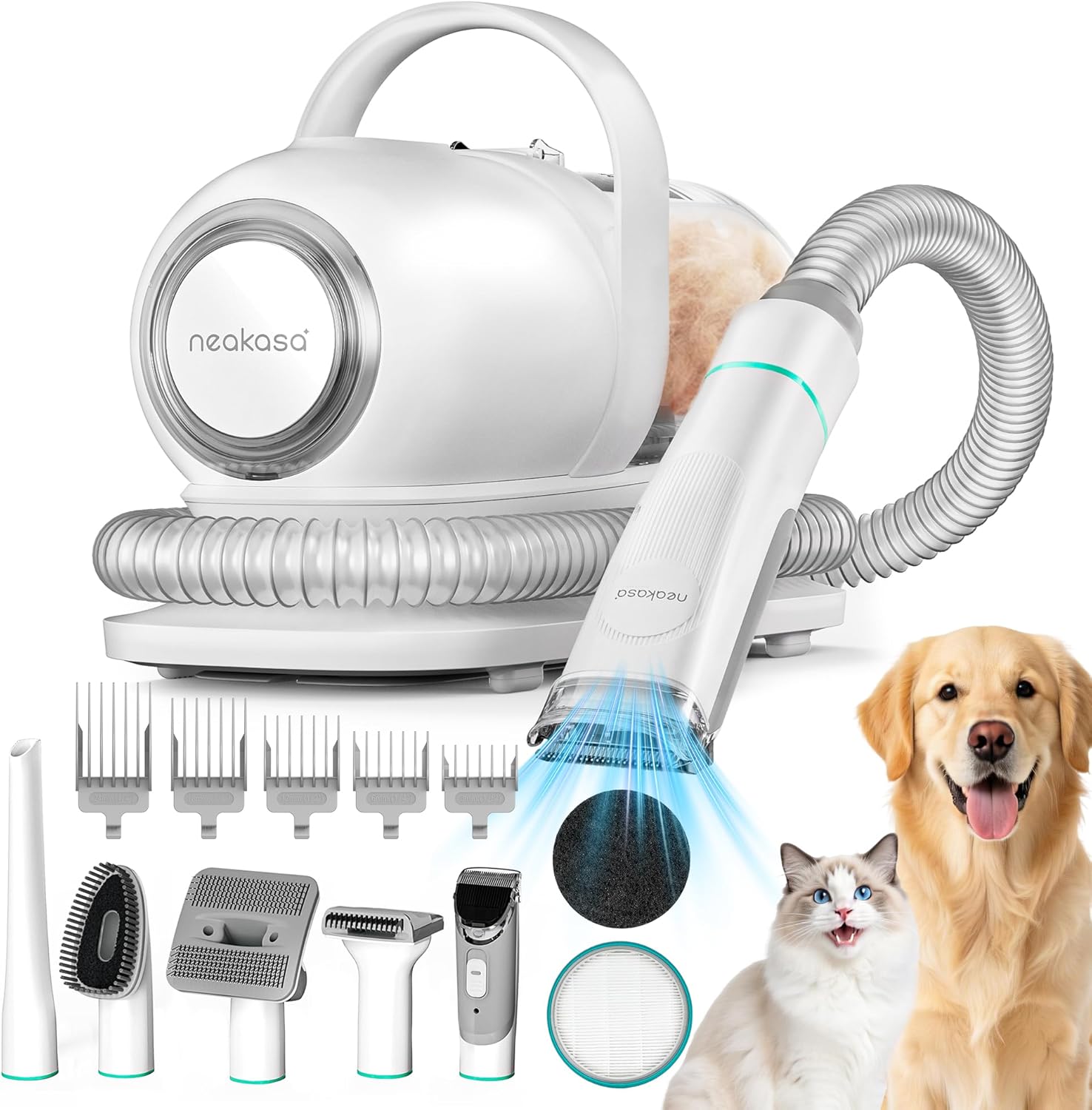
The all-in-one pick: Neakasa P1 Pro Dog Grooming Vacuum, 6-in-1 Kit, 2-Year Protection Plan
 Visit on Amazon →
This is the grooming vacuum I actually use on cats and small dogs. Real suction, a clipper attachment that does not yank hair, and a dust cup that does not clog every five minutes. It is the rare gadget that earns its counter space in the van, and the 6-in-1 kit means the deshedding head, the clipper head, the grinder, and the nozzle attachments all live in the same box instead of rolling around under the seat.
Flaws but not dealbreakers: it is a maintenance tool, not a full groom. Suction fades on thick double coats, and no vacuum reaches the undercoat the way a high-velocity dryer does. Noise is the real dealbreaker on any vacuum, and this is one of the quieter units I have measured, but a nervous dog will still hear it. Introduce it running, across the room, with treats, before you ever touch the dog with it.
If you own a cat, a toy breed, or a small-to-medium dog that sheds, this is the one. If you own a husky, buy a dryer for the spring blowout and use this for touch-ups.
The tool for the last inch
Nails are where home groomers get hurt. Not the dog, the person. A dog that has had the quick nicked once remembers it for years, and a clipper that is too big for the hand makes that nick more likely, not less.
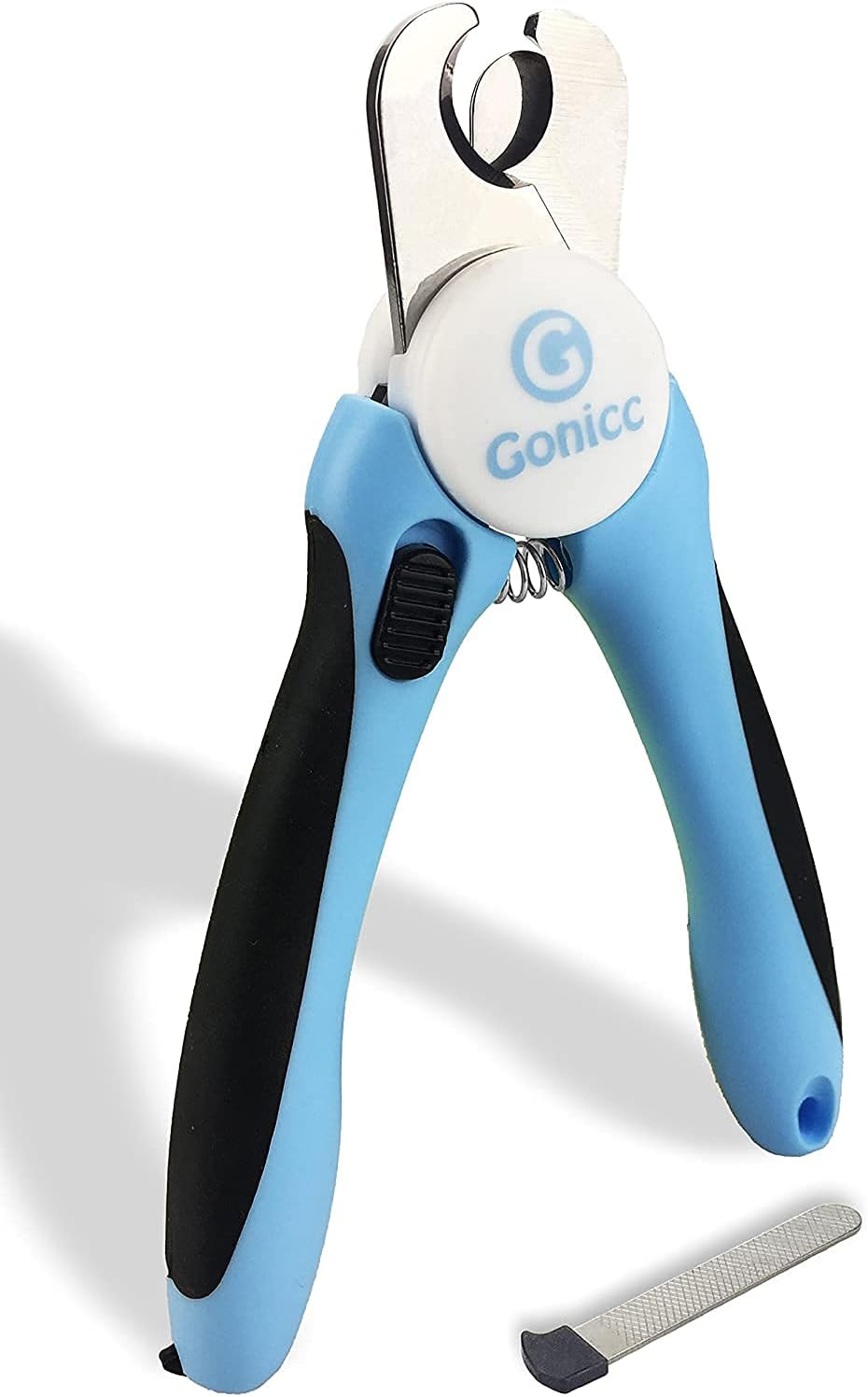
The safety pick: gonicc Professional Dog & Cat, Small Animals Nail Clippers & Trimmers
 Visit on Amazon →
Manual clippers like these are what I hand to a first-timer, because you can feel the nail under your fingers and you can stop the squeeze halfway if the dog moves. The gonicc set is built for dogs, cats, and small animals, which means the jaw is sized for a nail you can actually see, not a lab's whole paw. If your dog has white nails, you can see the pink quick through the nail and stop a millimeter short. If your dog has black nails, take thin slices off the tip and look at the cut surface after each one. When you see a gray, chalky dot in the center, you are close to the quick. Stop there.
Flaws but not dealbreakers: manual clippers crush thick nails a little, so on a dog with heavy, brittle nails take smaller bites. They also do not smooth the edge, so if your dog scratches hardwood, a grinder or a few passes with a file finishes the job. Keep them sharp or replace them. A dull clipper is the tool that causes quicks.
Anyone who wants to do nails at home without a battery, a cord, or a learning curve should start here.
The actual grooming workflow
Now the part you came for. This is the order I use in the van, and it works in a kitchen or a garage just as well as it does on a table.
Step one: set the dog up before the tools come out. Grooming on the floor is how backs get wrecked and dogs get cornered. If you do not own a table, use a nonslip mat on a counter-height surface with a second person holding, or work on the floor with the dog on a bath mat and your knees on a cushion. Have treats within reach. Have the vacuum off and unplugged.
Step two: read the coat before you touch it. Every dog is a double coat or a single coat, and the answer is different for each. A double coat, like a husky, golden, or lab, has a dense undercoat that sheds hard twice a year and needs a blowout and a rake, not a close clip. A single coat, like a poodle, doodle, Yorkie, or bichon, grows continuously, mats instead of shedding, and needs regular clipping and brushing. If you clip a double coat short to fix shedding, it can grow back patchy and the shedding is not fixed anyway.
Step three: do the nails first, while the dog is still calm. Nails are the hardest part, so they get your freshest patience. Hold the paw from underneath, press the pad so the nail extends, and take the tip off with the clippers. Small cuts, look, repeat. If you are unsure, take less than you think you need. You can always take more tomorrow.
Step four: brush and comb out every mat before anything else touches the coat. Clippers and vacuum attachments do not go through a mat, they go around it, and the result is a shaved stripe next to a knot. Work from the skin out with a slicker and a comb, and if the mat is tight against the skin, stop. Matted dogs do not get brushed out. They get shaved down and started over.
Step five: run the vacuum over the coat for loose hair. Turn the vacuum on across the room first, let the dog hear it, then bring it close. Use the deshedding head with slow, overlapping strokes in the direction the coat grows, and never hold it in one spot. Empty the dust cup when suction drops. For a short-haired dog this step replaces a lot of brushing. For a doodle it is a maintenance pass between real brush-outs.
Step six: clip if the coat needs it. Use the clipper attachment on a clean, brushed coat, and go with the growth of the hair, not against it. Keep the blade cool. Blade temperature is the number nobody prints on the box, and it is the number that causes blade burn. After ten minutes of continuous clipping most blades are hot enough to irritate skin, so stop, let it cool, and rotate. If your hand feels warm, the blade is warmer than your hand.
Step seven: the detail work on eyes, feet, and sanitary areas. This is the part of the groom nobody wants to talk about and everybody needs. Use the smallest guard or the bare blade, keep your fingers between the blade and any skin fold, and go slow around the eyes. Poodle feet, meaning shaved pads and toes, keep a dog from tracking in half the yard, and a sanitary trim keeps a long-coated dog clean.
Step eight: finish with a look at the ears and a treat. Clean the visible part of the ear only. The canal is L-shaped, and a cotton swab just packs wax deeper, so fill the ear with a cleaner, massage the base, and let the dog shake it out. Then pay the dog. Every groom ends with food, even the bad ones.
The mistakes that turn a groom into a shave-down
Clipping over mats. Every time. A matted dog that gets clipped without the mats being addressed ends up shaved to the skin, and that is a groomer's visit, not a home job.
Using a human hair dryer. It is too hot, too weak, and a wet double coat stays wet against the skin, which is how hot spots start.
Cutting nails on a dog that is upside down or held in a headlock. Flip a dog on its back for nails and you lose the nail and the trust in the same minute.
Vacuuming a nervous dog without an introduction. Noise is a stress test, not a preference. If the dog is lip licking and yawning, the tool is too loud or too close, and the fix is distance, not more treats.
Bathing a double coat too often. Shampoo strips the natural oils that keep the undercoat healthy, so over-bathing makes shedding worse, not better. Double coats go six to eight weeks between baths. Single coats can go three to four.
The competition and why it lost
A corded professional clipper is a better clipping tool than any vacuum attachment, and it always will be. It is also a bigger purchase, and it does nothing about shedding. If you clip a full coat every four weeks, buy the clipper. If you are maintaining a coat between salon visits, the vacuum does more jobs on one plug.
A high-velocity dryer beats every grooming vacuum at deshedding a double coat. Air lifts undercoat that suction cannot reach. But a real dryer is loud, it draws serious power, and it is a two-tool system with the brush. If you own a husky or a golden, that is the correct purchase. If you own a doodle, a cat, or a small dog, it is overkill.
A nail grinder is safer than manual clippers on black nails because it takes off hair-thin layers instead of a slice. It is also slower, louder, and useless on a dog that will not hold still for it. Manual clippers are faster on calm dogs and they never run out of battery. I carry both, and the tool I pick depends on the dog.
Cheap all-in-one kits from unknown brands are a lottery ticket. Some cut a Yorkie's face fine for a season, most bog on a doodle's leg, and the blade comes dull out of the box. You never know which one you got until the dog is half done. That is why the vacuum above is a real unit and not a kit with one good tool and three paperweights.
What this all costs
The honest math for a home groomer is simple. The vacuum is a one-time purchase that covers deshedding, clipping, and paw work, and the clippers are a small one-time buy, which means the setup pays for itself the first time it saves you a groom appointment. Check the current Amazon price on both, because that number moves.
What does not move is the schedule. Brushing is the real schedule, not bathing. Double coats get a line brush and a rake twice a week. Single coats get a full brush-out every two to three days. A bath every six to eight weeks for a double coat, every three to four for a single coat, and nails every two to three weeks with a small amount taken off each time. That routine, plus the two tools above, is what keeps a dog out of the pelt-and-shavedown cycle.
That is the job. Start with the nails, finish with the treat, and let the dog tell you when the tool is too much.