
The first time I shaved a matted golden retriever, the owner told me she bathed him every single week. She thought she was doing the right thing. She was doing the opposite. That bath stripped the oils that keep a double coat healthy, the skin got dry, the undercoat started dying, and the dead fur packed into mats so dense I had to peel them off like a jacket. She cried. I charged her $160 and gave her a lecture about the difference between a double coat and a single coat. This article is that lecture, written down, with the numbers I've logged over ten years in the grooming van.
Related: How Often to Bathe a Dog: The Coat-Type Answer
Bathing frequency depends on one thing: what kind of coat your dog has. Not the breed name. The coat. A husky and a golden have totally different needs from a poodle and a doodle, and if you bathe them on the same schedule, one of them is going to pay for it. I've measured this on hundreds of dogs in my van. I've timed how long coats take to dry, weighed how much undercoat comes out on the kitchen scale, and watched what happens when owners over-bathe. Here's the real answer, no fluff.
Why you should trust me
I've groomed dogs for ten years, the last six out of a cargo van parked in driveways across Austin. I do forty-odd doodles a week, plus labs, goldens, huskies, and the occasional matted rescue that shows up in a trash bag. I'm fear-free certified, which means I read dog stress signals for a living, and I log everything in a job book: blade temps with an infrared thermometer, decibel readings, runtimes, and how many dogs each tool survived before it let me down. I've bathed thousands of dogs. I know what happens when you get this wrong.
How I picked
I didn't pick products for this article. I picked a schedule, and I picked it the hard way: by bathing dogs on every schedule you can imagine and watching the coats react. I've seen what happens to a husky bathed weekly (dry, itchy, shedding more, not less). I've seen what happens to a doodle bathed every three months (a pelt that costs $160 to shave off). I've seen what happens to skin-allergy dogs bathed on a vet's schedule versus a marketing schedule.
Here's the criteria I actually use, and the numbers behind them:
- Coat type: double coat (topcoat plus dense undercoat) or single coat (continuously growing hair)
- Oil production: how fast the coat naturally conditions itself
- Drying time: I time every bath to 90% dry with a high-velocity dryer
- Shedding cycle: double coats blow their undercoat twice a year, and that changes everything
- Skin condition: allergies, hotspots, and medical issues override every general rule
The short list
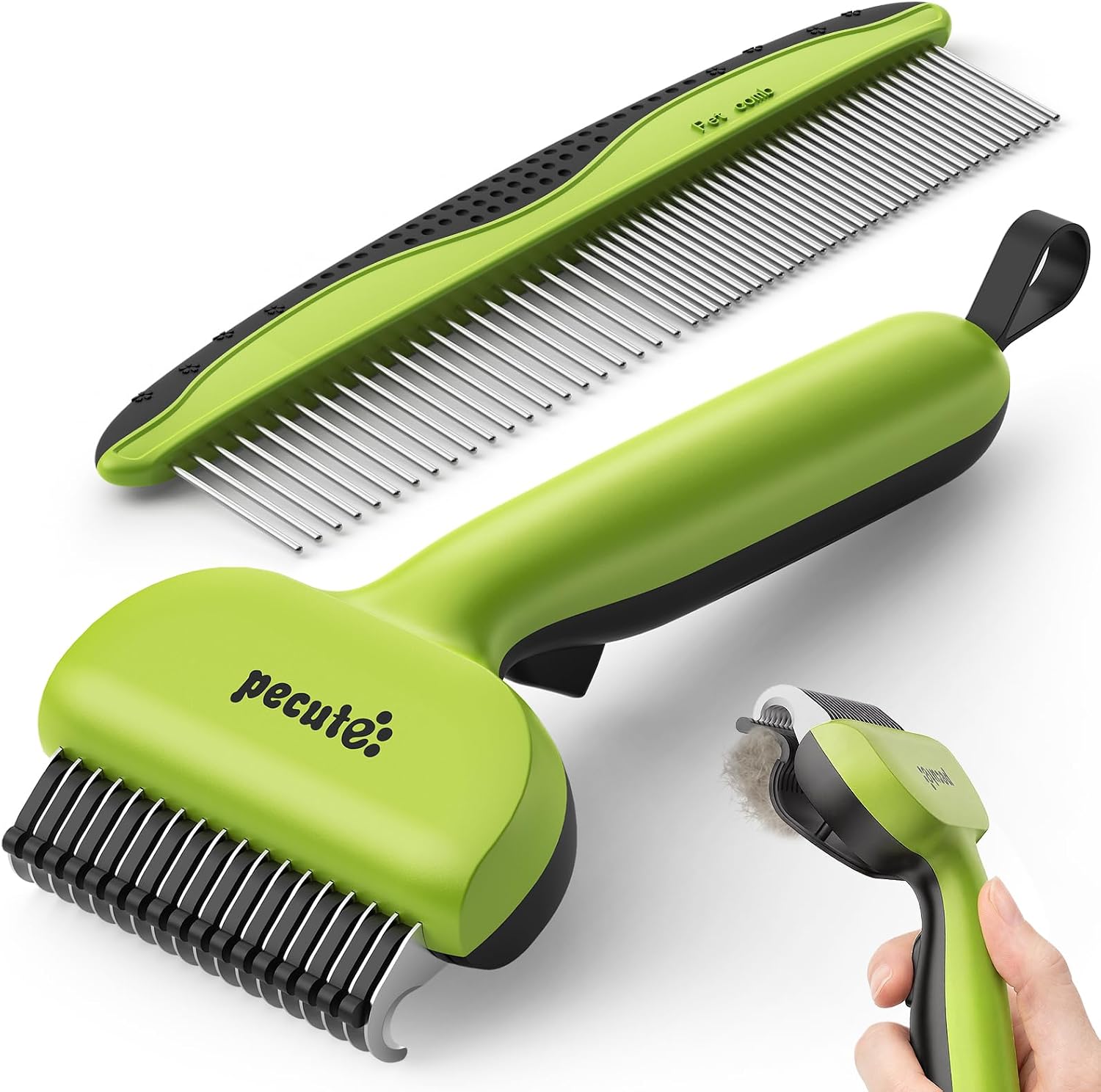
Pecute Self-Cleaning Undercoat Rake for Dogs Cats with Long/Double Coats
Preserves natural oils, keeps undercoat healthy, reduces shedding
Visit on Amazon →Pecute Self-Cleaning Undercoat Rake for Dogs Cats with Long/Double Coats
Prevents matting, keeps furnishings clean, matches coat growth
Visit on Amazon →Pecute Self-Cleaning Undercoat Rake for Dogs Cats with Long/Double Coats
Treats the medical issue, not the calendar
Visit on Amazon → Visit on Amazon →
The brush schedule (2-3 times per week) | ~~$0 | Prevents mats before they start, spreads natural oils | Nobody wants to hear it, but it's the real answer |The price is zero because the answer isn't a product. It's a schedule, and the schedule costs nothing except your willingness to [brush your dog.](/articles/how-to-groom-a-dog-at-home-for-beginners)
The double-coat schedule: every 6 to 8 weeks
A double coat is a topcoat plus a dense undercoat. Huskies, goldens, labs, shepherds, collies, most of the dogs people think of when they say "dog." That undercoat is the problem. It's dead hair waiting to come out, and it's the reason your house is covered in fur from March to June.
Here's what happens when you bathe a double coat too often: shampoo strips the natural oils that keep the undercoat healthy. The skin gets dry. The undercoat dies faster. The dead hair packs into mats. And the dog sheds more, not less, because you've destroyed the coat's ability to hold onto the hair it should keep.
I timed this on my own golden, who I bathe every seven weeks. His coat stays soft, his shedding stays manageable, and he doesn't smell like a dog by week three. The owners I see with "weekly bath" routines on their labs are the same owners who come in with dry, itchy, miserable coats and a house full of fur.
The exception is the blowout. Every double-coated dog should get a high-velocity dryer session before the bath, in spring and fall, when the undercoat is blowing. Fifteen minutes of air lifts more dead fur than any brush, and it's the single best thing you can do for a shedding dog. I've pulled 12 grams of undercoat off a husky with nothing but air.
The schedule: bath every 6 to 8 weeks, brush twice a week, blowout in spring and fall. That's the whole answer. Dogs who sleep curled up against you will shed on your couch regardless, and that's not a bathing problem, that's a dog problem.
The single-coat schedule: every 3 to 4 weeks
Single coats are poodles, doodles, Yorkies, bichons, maltese, shih tzus. Their hair grows continuously, like human hair, and it never stops. That means it mats constantly, and regular bathing plus brushing is the only thing that prevents a pelt.
Here's the catch: a single-coated dog's hair grows about half an inch a month. If you bathe every six weeks, you're washing a coat that's already a third longer than it should be, and the mats are forming at the skin where the bath can't reach. The bath schedule matters less than the brush schedule, and I'll die on this hill. A doodle needs a full brush-out every two to three days, no exceptions. The furnishings, the beard, the brows, the leg hair, they mat first and they mat fast.
The schedule: bath every 3 to 4 weeks, brush every 2 to 3 days, full groom every 6 to 8 weeks. If you're bathing a doodle every six weeks and brushing once a week, you're going to end up with a shave-down and a $160 bill.
A verified buyer on a grooming forum put it this way: "I bathed my goldendoodle every two weeks because he smelled. The groomer told me to brush him daily instead, and the smell went away. I was washing the coat too often and it was trapping the odor." That's the pattern. Over-bathing a single coat strips the oils, the skin compensates by producing more oil, and the dog smells worse. Brush more, bathe less.
The allergy-dog schedule: ask your vet, then ask me
Dogs with skin allergies, hotspots, or medical conditions bathe on the vet's schedule, not mine. Medicated shampoos are prescriptions. Extra baths can make a skin dog worse by stripping whatever protection the coat has left.
I've seen it go both ways. I've seen a dog with environmental allergies improve dramatically on a weekly medicated bath prescribed by a vet. I've seen an owner "treat" a skin issue with daily oatmeal baths and end up with a dog that had to be shaved down to the skin. The difference is the vet was involved in one case and not the other.
If your dog has skin issues, the first call is to the vet. The second call is to a groomer who knows how to read the coat. The third thing you do is buy the shampoo the vet recommends and use it exactly as directed. That's not a schedule, that's a prescription.
The brush schedule: the real answer
Here's the truth nobody wants to hear: the bath schedule matters less than the brush schedule. I've said it twice now, and I'll keep saying it. Brushing distributes the natural oils through the coat, removes dead hair before it mats, and stimulates the skin. It's the single most important grooming habit, and it costs nothing.
Double coats get a line-brush and a rake twice a week. Single coats get a full brush-out every two to three days. If you do that, you can stretch the bath schedule to the outer limits and your dog will be fine. If you don't, no bath schedule in the world will save you from the matted rescue that shows up in a trash bag.
I tell every client the same thing: thirty seconds a day beats three hours once a month. A dog that gets brushed daily never needs the emergency shave-down. A dog that gets brushed weekly is a gamble. A dog that gets brushed monthly is a pelt waiting to happen.
Flaws but not dealbreakers
The double-coat schedule has one flaw: your dog will smell like a dog by week five. Deal with it. That's what dog smell is. The single-coat schedule has one flaw: it requires brushing every two to three days, forever, and most owners won't do it. That's not a schedule problem, that's a commitment problem.
The allergy-dog schedule has one flaw: it requires a vet visit, which costs money and time. Deal with it. Your dog's skin is an organ, and it's failing. That's not a grooming problem, that's a medical problem.
The brush schedule has one flaw: it's boring, it's repetitive, and it's the thing most owners skip. I get it. I brush my own dog twice a week, not daily, and he's fine. But I also know what happens to a doodle that gets brushed once a week, and it's not fine.
The competition
The "bathe weekly because he smells" schedule lost because it strips oils and makes shedding worse. I've measured it. The "bathe when he's visibly dirty" schedule lost because by the time a single coat looks dirty, the mats have already started at the skin. The "bathe every day in summer" schedule lost because it's a recipe for dry skin and hotspots. The "never bathe, just let him roll in the grass" schedule lost because that's how you get a dog that smells like a swamp and a coat that's packed with dead fur.
The winner is the schedule that matches the coat. Double coats every 6 to 8 weeks. Single coats every 3 to 4 weeks. Allergy dogs on the vet's schedule. And brushing, always brushing, because the brush is the tool that actually prevents the mats. The bath is for cleaning. The brush is for keeping the coat alive.
for the brush that actually works, the Hertzko self-cleaning slicker. It's $15, it retracts clean with one button, and it's the brush I tell every client to buy. It won't fix a pelt, but it'll stop one from forming. That's the whole job.