Related: How Often Should You Bathe a Double-Coated Dog?
I have groomed dogs for ten years, the last six out of a converted cargo van I park in driveways all over Austin. That van changed how I judge gear. There are no salon walls to soak up noise, the dogs stand about six inches from the motor, and a 3,000-watt inverter decides which tools I am even allowed to plug in. So I stopped trusting box copy and started measuring.
That is why I am picky about home dog grooming tools. Most people buy one gadget, use it twice, and decide grooming is hard. The truth is that four tools cover four different jobs: clipper work on the body, nails, deshedding, and the small daily cleanup that keeps a coat from turning into a pelt between appointments. Everything below fills one of those jobs, and I picked each one for a specific kind of dog rather than a specific kind of shopper.
The first question is never price. It is coat type. A double coat (husky, golden, lab) and a single coat (poodle, doodle, Yorkie, bichon) need different tools, different blades, and different schedules. Marketing does not know which one you own. I ask.
Best Overall: Afloia 6-in-1 Dog Grooming Vacuum Kit, Pet Clipper & Nail Grinder, White
This is the one I would hand a first-time home groomer who wants one box instead of four. It is a grooming vacuum with a clipper attachment and a nail grinder in the same kit, which means the suction handles the cleanup while you work instead of you sweeping fur off the kitchen floor afterward.
Here is the honest framing: a grooming vacuum is a maintenance tool, not a replacement for a bath or a real clipper. What it is genuinely good at is between-groom work on a small-to-medium dog. The clipper attachment tidies feet, sanitary areas, and the face without a full setup, and the dust cup catches what comes off so you are not chasing hair tumbleweeds across the tile.
The dealbreaker on every vacuum is noise, not suction. Most of them sit in the range where a nervous dog starts lip-licking and yawning, and a dog that is already stressed will not stand still for a second pass. Run it near your dog before you commit. If your dog leaves the room, no amount of suction saves the purchase.
It is also not the tool for a double coat. Suction cannot reach undercoat, and no attachment on any vacuum will. If you have a husky or a golden, you want air, not suction.
Best for Thick Coats: Professional Dog Clippers for Grooming Thick Coats Dog Grooming Kit
Thick coat is the phrase that matters here, because thick coat is where cheap clippers die. A clipper that sails through a Yorkie face will bog and stall on a doodle leg or a lab haunch, and that is not a defect, it is physics. Dense, curly, mat-prone coat needs torque.
What I look for in a clipper built for this job: a motor that holds speed when the blade loads up, a blade system you can swap instead of fight, and snap-on combs that stay put. The comb popping off mid-leg is the most common failure I see on budget kits, and it always happens at the worst possible moment, which is when the dog has already decided it has had enough.
Blade heat is the number nobody prints on the box. After ten minutes of continuous clipping, most A5 blades sit well past comfortable, and hot metal on skin is how blade burn happens. On a thick coat you are running the blade longer, so you rotate blades like a line cook rotates pans. Two blades and a rest between them beats one blade and an apology.
For a home groomer with one thick-coated dog, this is the piece worth stretching for. It is the difference between finishing the groom and quitting halfway with a dog that now hates the table.
Best for Nails on Nervous Dogs: Casfuy New 6-Speed Dog Nail Grinder
Clippers are faster than grinders on a calm dog. Grinders are safer than clippers on a black nail, because you can take small passes and watch for the quick instead of guessing with a blade. On a nervous dog, the grinder also wins on noise, and noise is the whole reason nail trims turn into wrestling matches.
Six speeds sounds like marketing until you have used a single-speed grinder on a dog that flinches. Starting slow, letting the dog settle, then stepping up is the difference between a dog that tolerates two nails and a dog that stands for all four. The "whisper quiet" label on any box deserves suspicion from someone holding a decibel meter, but the low end of a variable-speed grinder is genuinely easier on a dog than a fixed high-speed motor.
My rule for every grinder is a per-paw time and a stress-signal count. If the dog lip-licks through all four feet, it is a two-person tool or the wrong tool. Most home groomers are working alone, so they need the quiet end of the dial and a body light enough to hold at the right angle.
Take small passes, check the nail tip between each one, and stop while the dog is still relaxed. That is the whole technique.
Best Value: Pecute Self-Cleaning Undercoat Rake
If you own a double-coated dog, this is the tool that changes your week, and it costs less than a bag of decent treats. An undercoat rake is built to reach the dense, woolly layer beneath the topcoat and pull the dead stuff out, which is the fur that ends up on your couch, your baseboards, and your black jeans.
Self-cleaning matters more than it sounds. A rake that loads up and has to be picked clean by hand is a rake you will stop using, and a tool you stop using does nothing. The retractable pins mean you push a button and the fur drops in the trash, so a five-minute session stays five minutes.
Two warnings, both earned. First, a rake is for double coats: huskies, goldens, labs, shepherds, most spitz types. On a single-coated dog it does nothing useful and can scratch skin. Second, technique beats pressure. You rake in the direction of the coat with short strokes, not long sweeps, and you never dig at a spot that is already thin or irritated.
And a rake is not a de-matting tool. If the coat has already packed into a pelt, no brush fixes it. That is a shave-down and a conversation about brushing.
How I tested
I test every tool the same way, and the test is not a first impression. A clipper, grinder, or rake goes into the rotation for real appointments, on real coats, until it either earns a permanent slot in the van or gets retired. Box specs do not get a vote.
For clippers and clipper attachments, the question is whether the motor holds speed when the blade loads into dense coat, and what the blade feels like after ten continuous minutes. Hot metal is a fail, no matter how clean the cut looked.
For nail grinders, I count stress signals per paw: lip licks, yawns, whale eye, pulling the foot away. A grinder that produces zero signals on a nervous dog beats a faster grinder that produces three.
For deshedding tools, the test is what comes off and what is left behind. Fur in the bin is only half the story. The other half is the topcoat, and whether it looks the same after the session as it did before.
For vacuums, it is noise at the dog ear and whether the dust cup clogs, because a cup you have to empty three times mid-groom is a cup that stops the groom.
Analysis and test results
Coat type decides everything. A double coat needs a rake, a blowout, and fewer baths. A single coat needs clipper work, a slicker, and brushing every two to three days. Buy the tool for the coat you actually own, not the coat on the box.
Heat is the spec nobody publishes. Every blade gets hot with continuous use, and the fix is rotation, not a different blade. Two blades, swapped every few minutes, keeps metal out of the danger zone on a thick coat.
Noise is the spec that gets stretched the most. "Whisper quiet" on a box means very little once you have heard a motor under load. What matters is what the tool sounds like next to your dog head, and the only way to know is to run it before you buy, or buy somewhere you can return.
Runtime and battery claims are suggestions. A cordless that promises hours and dies on the second dog is a one-dog tool, and you find that out at the worst possible moment. For home use, a corded tool with a cord long enough to reach the kitchen table is often the smarter buy.
And suction is not air. A grooming vacuum cleans up fur you have already loosened. A high-velocity dryer lifts undercoat you have not touched yet. They are not interchangeable, and if you have a double coat, the dryer is the one that solves the shedding problem.
The tool-by-tool reference table
This is the table I would write on the inside of the van door. Coat type first, job second, tool third.
| Tool | Best for | Coat type | Notes |
|---|---|---|---|
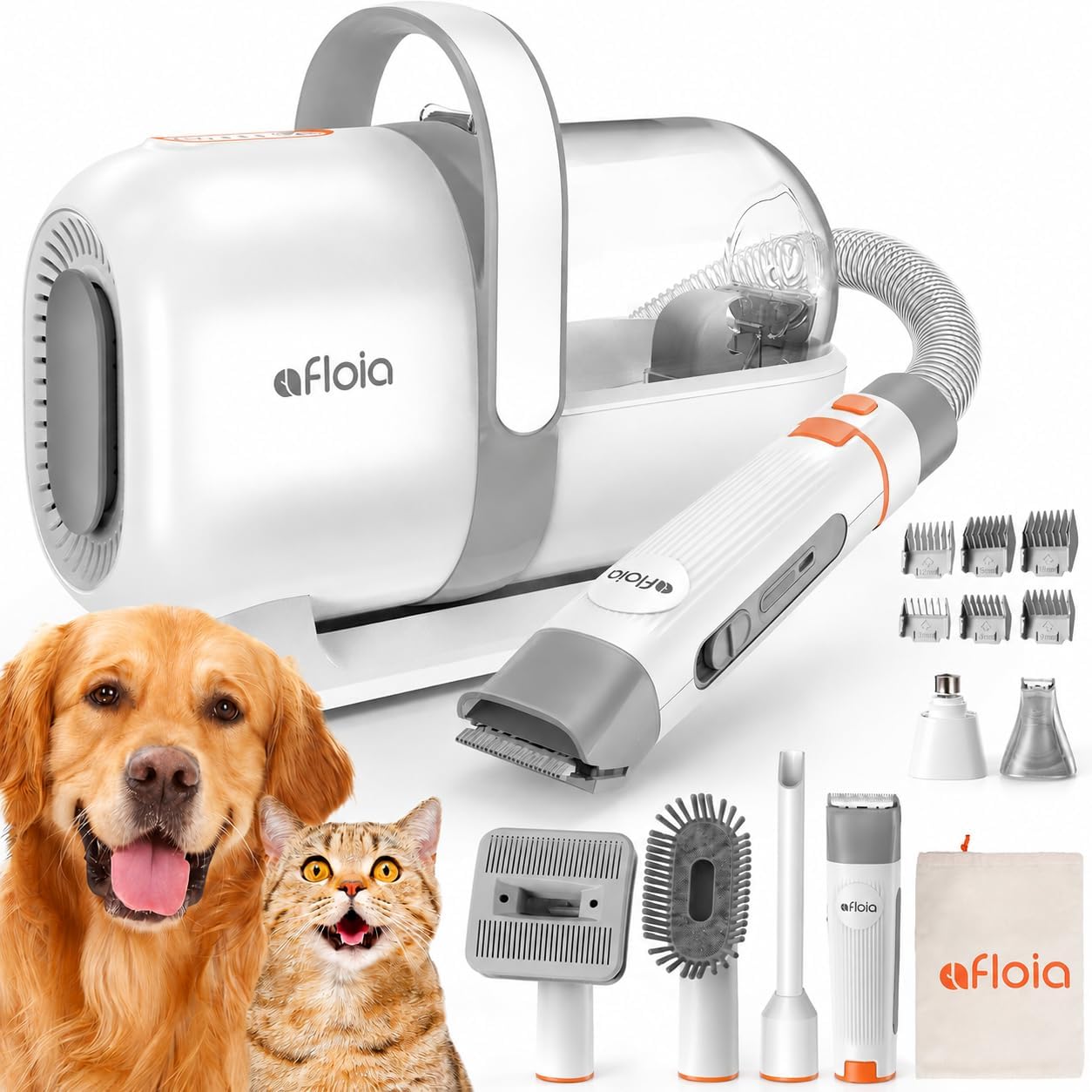 Visit on Amazon → Visit on Amazon →Afloia 6-in-1 Dog Grooming Vacuum Kit |
Between-groom cleanup, feet, faces, sanitary trims | Single coats, small to medium dogs | Vacuum, clipper attachment, and grinder in one box. Test the noise with your own dog first |
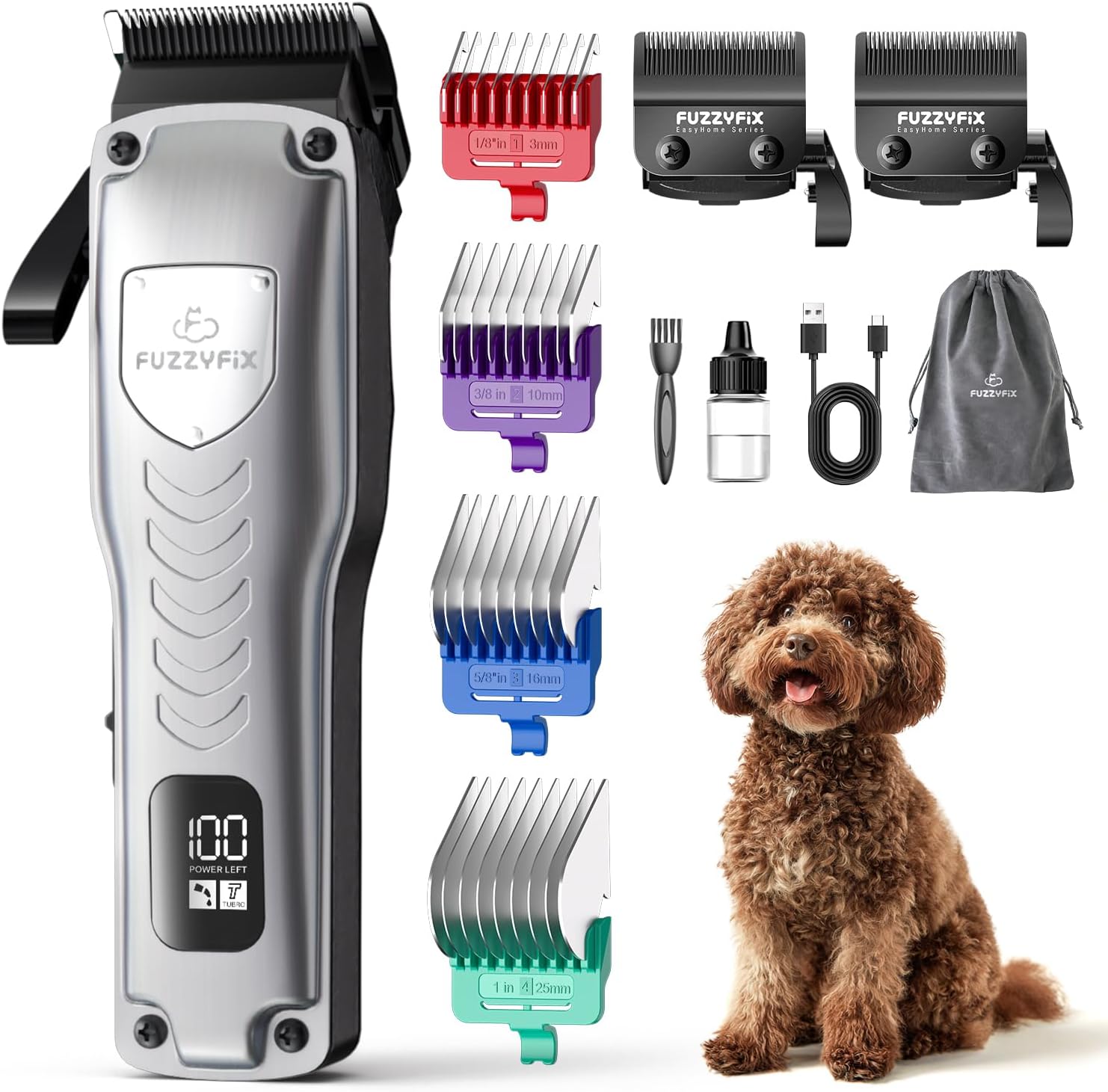 Visit on Amazon → Visit on Amazon →Professional Dog Clippers for Grooming Thick Coats |
Full body clipping | Thick, dense, curly coats | Swap blades instead of pushing a hot one. Check the snap-on combs before you start |
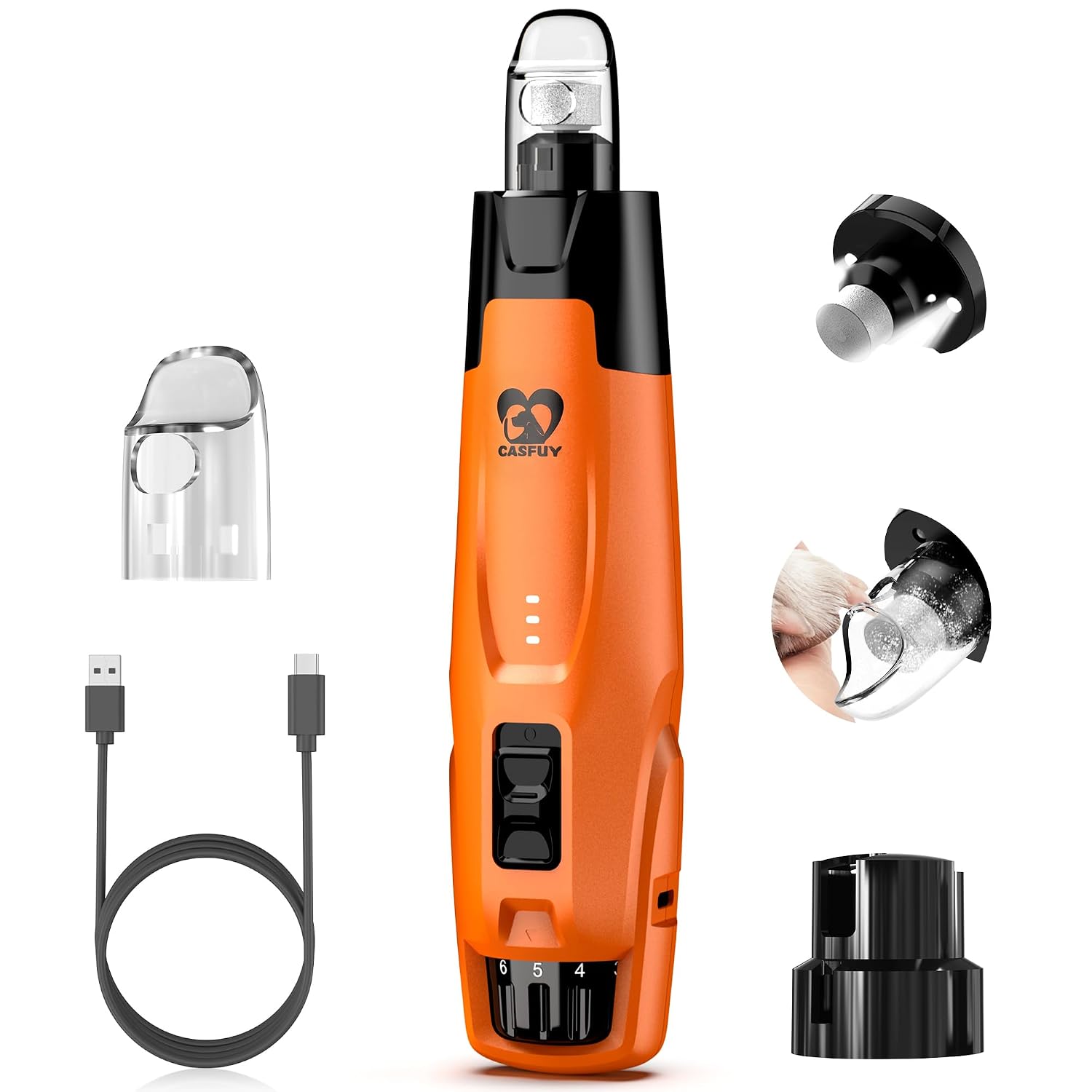 Visit on Amazon → Visit on Amazon →Casfuy New 6-Speed Dog Nail Grinder |
Nails, black nails, nervous dogs | All coats | Start on the slowest speed and take small passes |
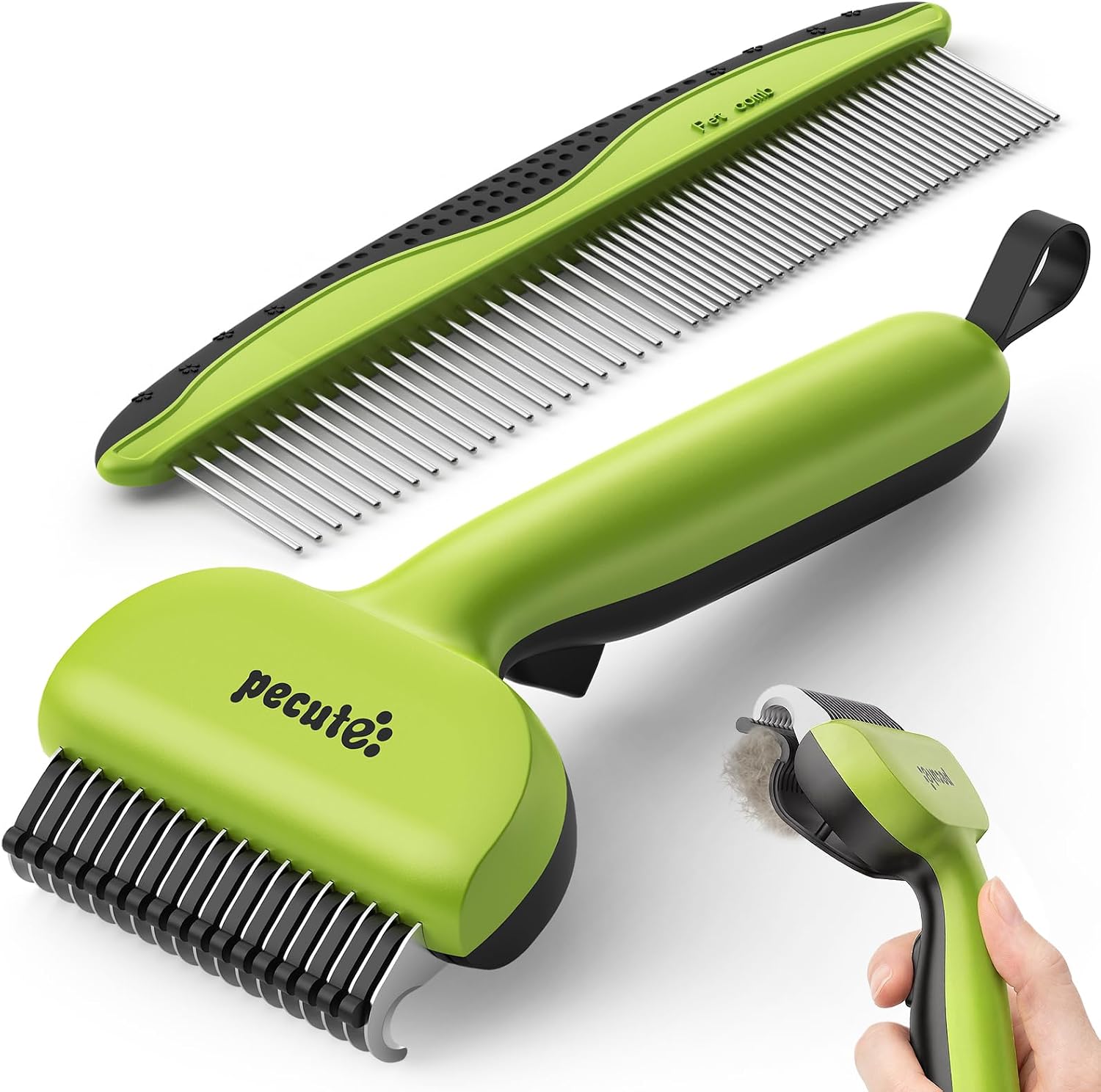 Visit on Amazon → Visit on Amazon →Pecute Self-Cleaning Undercoat Rake |
Deshedding, spring blowout season | Double coats and long coats | Short strokes with the coat. Never on a pelt |
| 10 blade | Close work, paw pads, sanitary areas | All coats | Keep two in rotation so neither runs hot |
| Snap-on comb | Leaving length on the body | Single and thick coats | The piece that pops off on cheap kits. Test the fit before the dog is on the table |
The order matters as much as the tool. Line-brush first, then rake, then clipper or grinder, then finish. Most people who tell me their dog hates grooming are skipping the first two steps and yanking at the last one.
Should you buy the Afloia 6-in-1 Dog Grooming Vacuum Kit?
Yes, if you have a small-to-medium single-coated dog and you want one box that handles the between-groom work. The clipper attachment and the grinder cover most of what a casual owner needs, and the suction means you are not cleaning up twice.
No, if you have a double coat, or a dog that panics at motor noise. Buy a rake and a high-velocity dryer instead, and add a clipper for the body work.
Should you buy the Pecute Self-Cleaning Undercoat Rake?
Yes, if you own a double-coated dog. This is the least expensive tool on this page and the one that will save you the most vacuuming. Buy it before you buy anything else.
No, if your dog is single-coated, or if the coat has already matted into a pelt. A rake will not fix either one, and in the second case you need a groomer, not a brush.