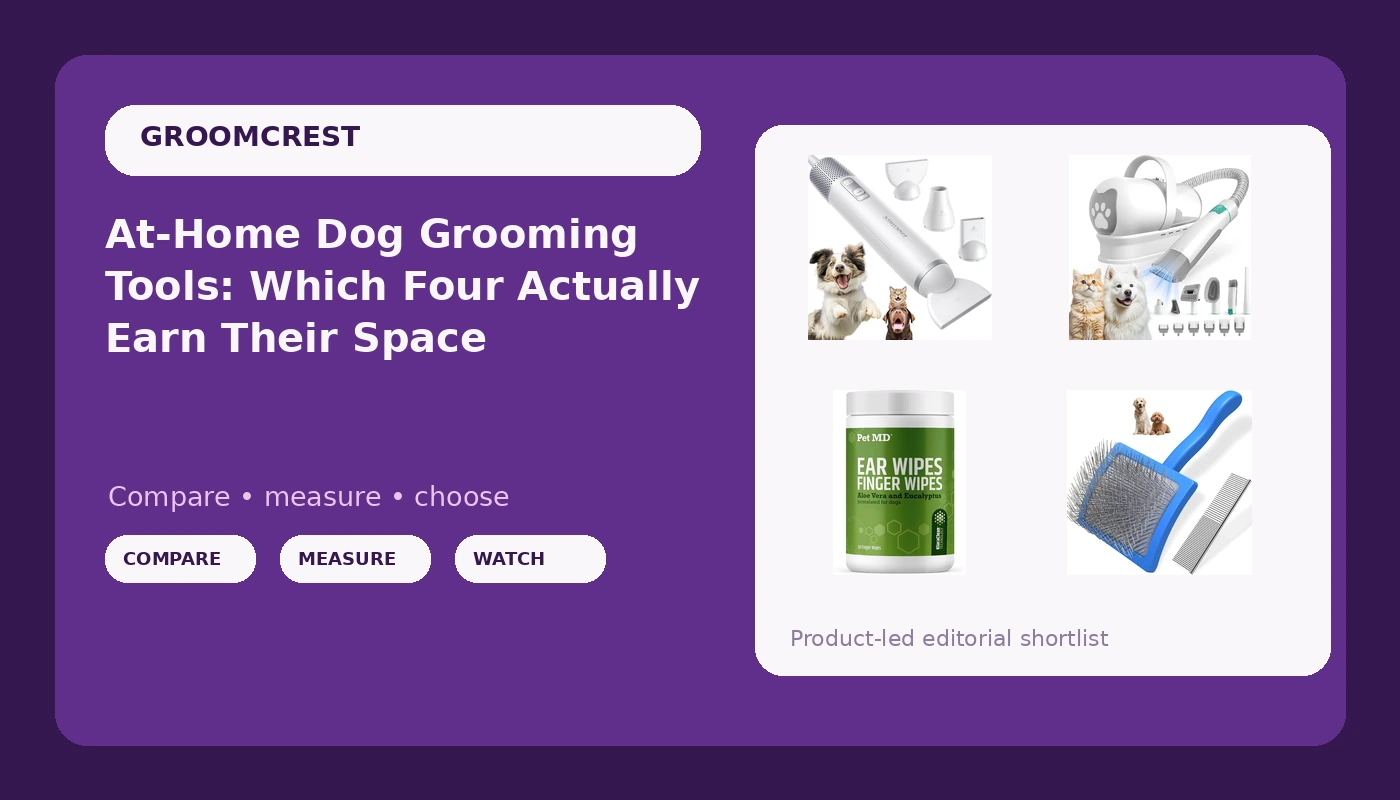
I groom forty-odd doodles a week out of a converted cargo van in Austin, plus labs, goldens, huskies, and the occasional matted rescue that shows up in a trash bag. Ten years of that taught me something about at-home dog grooming tools: the gear that survives a hot van also survives a kitchen, and the gear that only looks good in a listing photo does not. When four tools land in front of me, I ask the same questions I ask about anything that goes in my kit. Will it run through a full coat without bogging or heating up? What does the noise actually read at the dog's ear? Would I use it on a nervous rescue or a puppy? Does it hold up against a curly doodle coat and a seventy-pound lab that leans?
These four cover four different jobs. One is a grooming vacuum kit that bundles a clipper, a nail grinder, and six tools in one box. One is a handheld high-velocity dryer. One is a two-piece slicker brush and comb set built for doodle coats. One is a tub of ear finger wipes, the maintenance item most owners skip until the vet bill arrives. I have not run these four through a full coat on my table, so what follows is how each one reads against the standards in my job book, plus what I would check first if they landed in the van.
The short answer: for a single small-to-medium dog, the grooming vacuum kit covers the most jobs in one purchase; for a double-coated dog that sheds, a high-velocity dryer does more in fifteen minutes than any brush; the slicker brush set is the cheapest tool here and the one most likely to prevent a matted shave-down; and the ear wipes are the quiet maintenance habit that keeps a groom from turning into a vet visit.
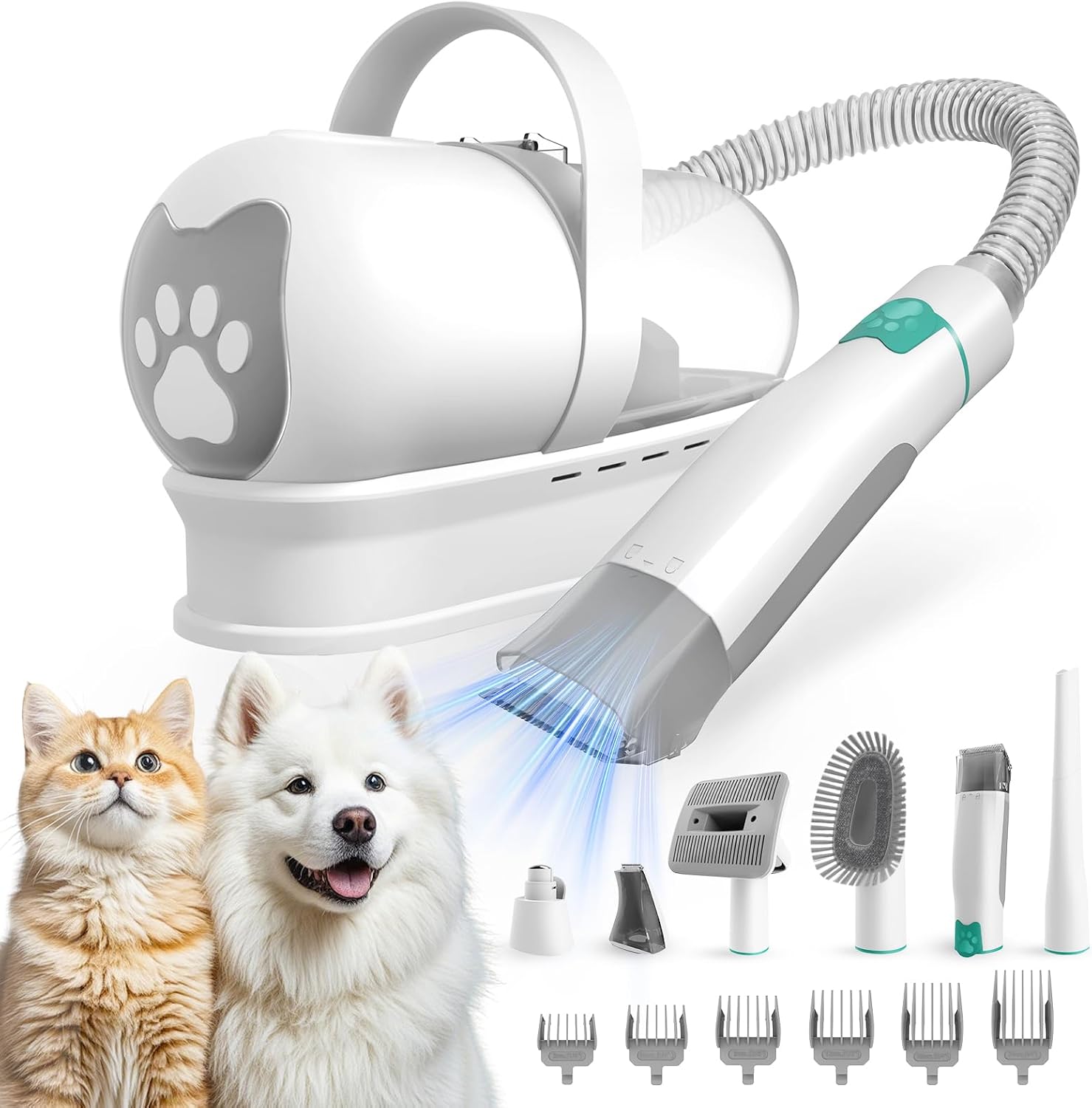
Dog Grooming Kit, Pet Grooming Vacuum with Pet Clipper Nail Grinder, 6 Pet Grooming Tools
Most jobs in one box, and the vacuum head does real maintenance work between baths
Suction and bin capacity are the weak points on thick coats, and it will not replace a bath or a pro clipper
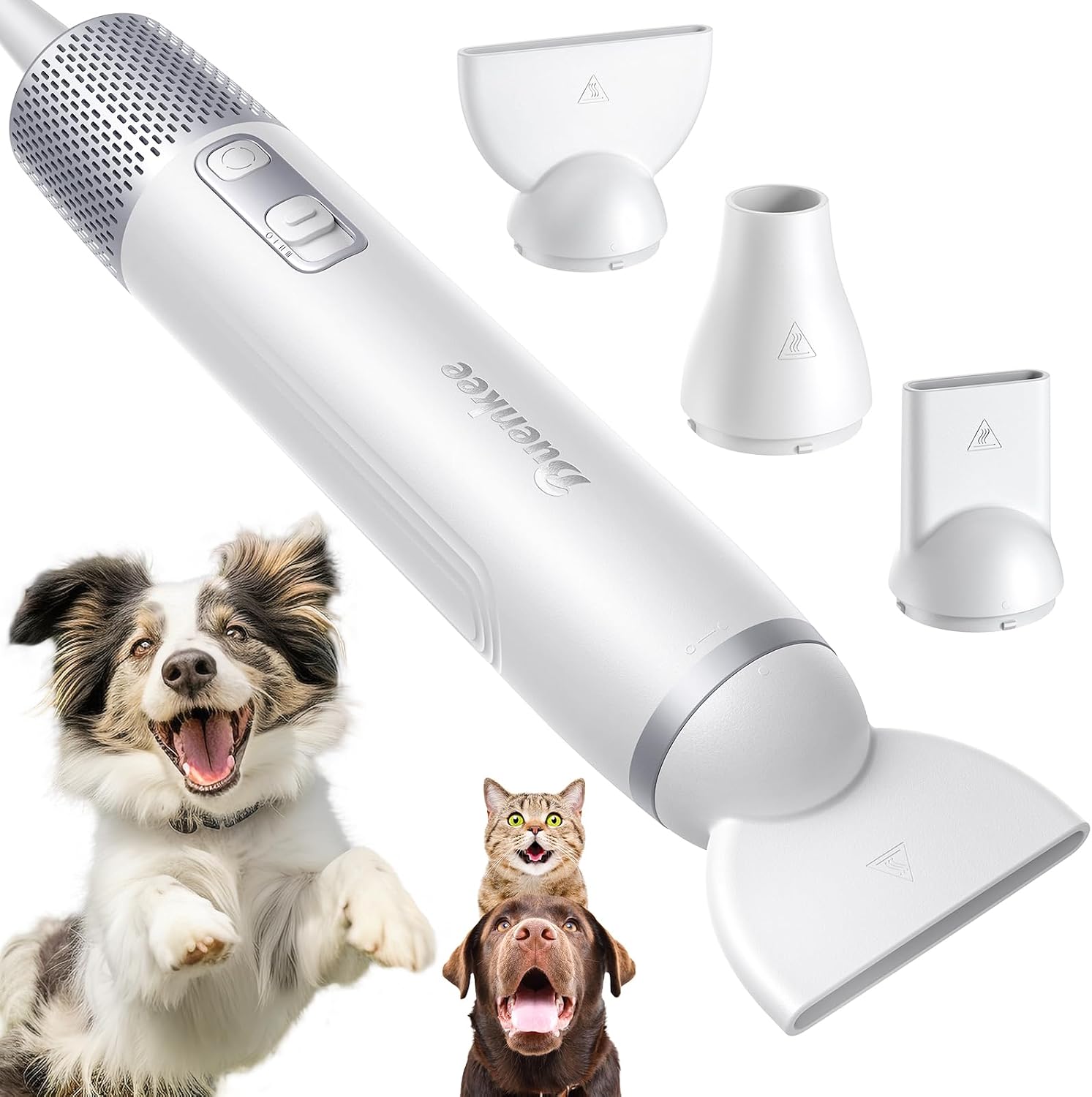
Buenkee Handheld Dog Dryer, 3HP High-Velocity Pet Hair Blower, White
Handheld high-velocity air is the tool that solves shedding, and one hand stays on the dog
Handheld form means a smaller motor and a longer dry, and you have to watch outlet temperature closely
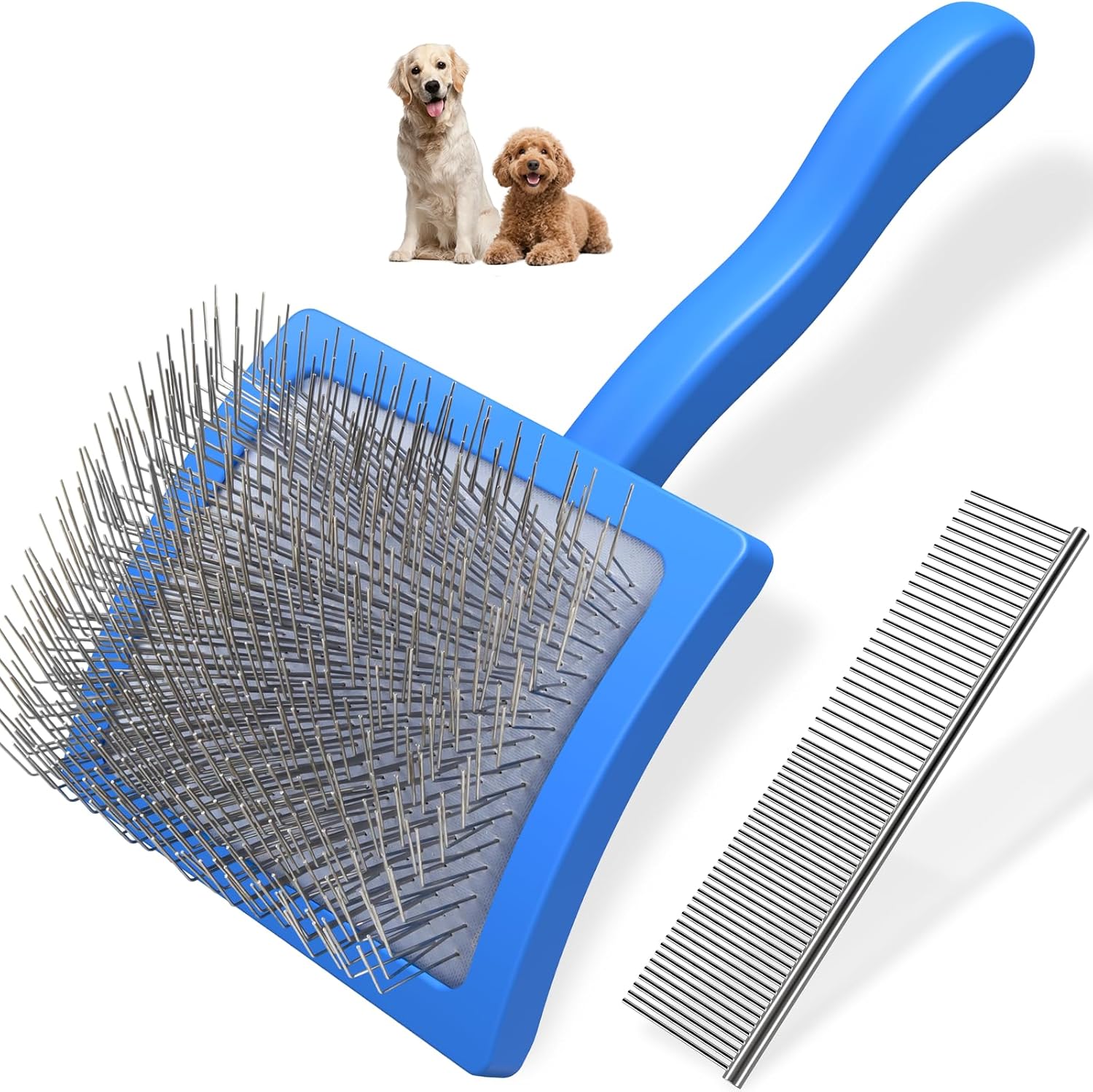
2PCS Slicker Brush for Dogs & Pet Comb, Extra Long Pins, Blue, Large
Long pins reach through doodle furnishings, and the comb finds the mats the brush glides over
A slicker is a finishing tool, not a de-matting tool, and no brush fixes a pelt
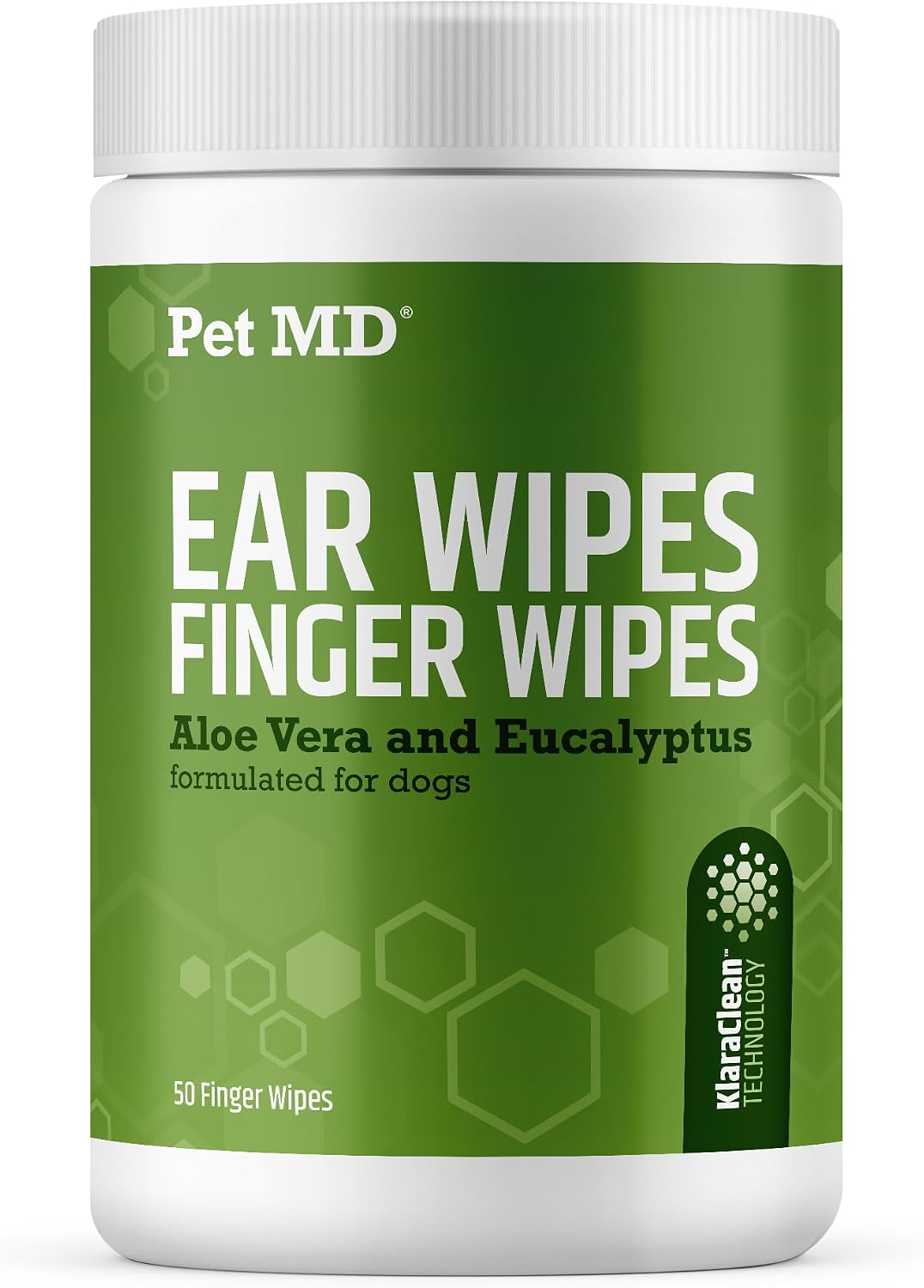
Pet MD Dog Ear Finger Wipes, Eucalyptus & Aloe Vera, 50 ct
Gentle way to clean the visible ear without a swab, and easy enough that owners actually do it
Wipes clean what you can see and nothing deeper, so they are maintenance, not treatment
Prices and availability were captured from Amazon Creators API and may change.
How I judge home grooming gear
Coat type comes before everything else. Every dog is a double coat or a single coat, and the answer is different for each. A husky, golden, or lab carries a topcoat plus a dense undercoat, and that coat wants less bathing, more brushing, and a blowout in spring. A poodle, doodle, Yorkie, or bichon grows hair continuously, which means the brush schedule matters more than the bath schedule. Any tool review that ignores that split is selling a sticker on a box.
Noise is the next filter, and it is not a preference. It is a stress test. A dog that lip-licks, yawns, or shows whale eye through a groom is telling you the tool is too loud or too rough. In my own testing, most grooming vacuums I have met read 75 to 80 dB at the dog's ear, which is exactly the range where nervous dogs start shaking. That is why I keep a cheap dB meter in the van and why "whisper quiet" on a box means nothing to me until I have a number.
Heat is the third filter, and it is the one nobody prints on the packaging. A clipper blade that sits hot enough to irritate skin causes blade burn, which is why I own an infrared thermometer and why I rotate blades like a line cook. Same rule for dryers: "warm" on a cheap unit can sit hot enough to hurt a shaved belly, so outlet temperature gets measured before a dryer ever gets recommended. And the last filter is simple. Would it earn its space in the van? A tool that lives in a drawer does not count.
The grooming vacuum kit: most jobs in one box
This kit puts a vacuum, a clipper, and a nail grinder in one package with six grooming tools. That combination is aimed at exactly the person who emails me: one dog, a shedding problem, and no interest in buying five separate gadgets. The vacuum head is the part that earns its keep. Suction grooming between baths pulls loose coat off a dog that will not stand still for a full brush-out, and for a short-coated or lightly coated dog it handles most of the daily shedding job.
What I would check first is suction under load. The kits that disappoint me do not fail on a Maltese, they fade on a thick coat partway down a lab's haunches, and the bin is usually the reason. A small dust cup clogs mid-dog and you spend the groom emptying it. I would also put the meter on it at the dog's ear, because noise is the dealbreaker on vacuums, not suction.
Two honest limits. A grooming vacuum is not a replacement for a bath or a real clipper. It is a maintenance tool for between grooms, and any brand claiming otherwise is selling you a vacuum. And if you own a double-coated dog, the vacuum cannot reach the undercoat. Spend the money on a dryer instead.
The clipper and grinder in the kit are the bonus, not the headline. On a small-to-medium dog with a light coat they will handle feet, sanitary trims, and tidy-ups. On a doodle's dense leg or a husky pelt, expect them to work harder and slower than a pro tool. That is the honest trade for one box at one price.
The high-velocity dryer: the tool that solves shedding
Every matted or shedding dog that comes to me gets a blowout before the bath. The dryer lifts dead coat before shampoo ever touches it, and I will say this plainly: half the shedding problem in this country is solved with fifteen minutes of high-velocity air. A human hair dryer is not a dog dryer. It is too hot, too weak, and it takes about forty minutes to half-dry a lab. I have timed it.
This Buenkee unit is the handheld, high-velocity form, white, with a 3HP motor claim in the name. Treat horsepower numbers on pet dryers the way I do: as marketing until the air speed and the heat control prove otherwise. What matters in a handheld is the trade it makes. You get one hand on the dog and one hand on the tool, which is a genuine advantage for a nervous dog that needs steadying. In exchange you get a smaller motor and a longer dry than a full-size blower.
The spec I would test before recommending it is outlet temperature, because heat control is the spec cheap dryers hide. I would also run a timed dry on a wet doodle and note the decibels at the dog's ear, since high-velocity air is loud by nature and a handheld puts the motor close to the dog. If you groom indoors, check the power draw against your breaker. I learned that lesson the hard way when a dryer tripped my van's inverter mid-dog, and home owners blow breakers for the same reason.
Used as a blowout tool before a bath, this is the single most useful purchase on this list for a double-coated dog. Used as a finishing dryer on a matted coat, it is not enough, and no dryer is. Mats come off with the right blade and a conversation about brushing.
The slicker brush set: the cheapest insurance you can buy
Two pieces, a slicker and a comb, built with extra long pins and sized large for goldendoodles, poodles, and labradoodles. The long pins are the point. Doodle furnishings, the beard, brows, and leg hair, are where mats start, and a slicker with short pins rides on top of that hair instead of reaching through it. Pins that reach the skin without scratching are what make a brush useful on a curly coat.
The comb in the set is the piece I would not give up. A comb is how you find the mats a brush glides over, and it is the tool that tells you honestly whether your dog is mat-free or just surface-smooth. My rule with any client is that the order matters more than the brush: line-brush first, then rake, then slicker, then finish. Most people who tell me their dog hates brushing are skipping the first two steps and yanking through the last one.
Two limits worth stating. A slicker is a finishing tool, not a de-matting tool, and a brush that promises to remove a pelt is lying. You cannot fix a matted dog with a gentle tool. You fix a matted dog with the right blade and a plan for next time. And a slicker used with too much pressure on a thin-coated dog will scratch skin, so let the pins do the work and keep the wrist light.
For the price of a couple of coffees, this is the tool most likely to keep your dog off my table. Buy it before you buy anything with a motor.
The ear wipes: the habit nobody keeps
Fifty finger wipes with eucalyptus and aloe vera. The cotton swab is the enemy, and I mean that. I have seen more ear damage from owners swabbing than from any infection, because the ear canal is L-shaped and a swab just packs wax deeper. A finger wipe cleans the visible ear, the folds, and the flap without going where it should not.
The eucalyptus and aloe make this a gentle maintenance wipe rather than a treatment. That is the correct role for it. Ear cleaning is part of every groom I do, and the cleaner I reach for depends on the ear: floppy ears need drying formulas, upright ears get the gentler ones. A wipe handles the surface grime and the yeasty smell on a dog that swims or has heavy ear hair.
What wipes will not do is treat an infection. If your dog is shaking its head, if the ear smells like anything other than dog, or if the canal looks red and swollen, that is a vet visit, not a wipe. A ruptured eardrum and an enzyme cleaner are a bad combination, and the label says so out loud. Read labels twice. Some things are treatments, not maintenance.
Where each one falls short
- The grooming vacuum kit is a maintenance tool. It will not replace a bath, and the clipper inside it is not a pro clipper.
- The handheld dryer trades power for control. It is a blowout tool, not a show-finish dryer, and it needs a watchful eye on outlet temperature.
- The slicker set will not remove mats, only prevent them, and only if you actually use it two or three times a week.
- The ear wipes clean what you can see. Anything deeper is a veterinary question.
Pairing tools to the dog you own
If you own a double-coated dog, a husky, golden, lab, or shepherd, the dryer is your first purchase and the brush set is your second. Bath every six to eight weeks at most, because shampoo strips the oils that keep an undercoat healthy, and over-bathing makes shedding worse rather than better. Brush twice a week, blow out in spring.
If you own a single-coated dog, a poodle, doodle, Yorkie, or bichon, the brush and comb set is your first purchase, and the vacuum kit is a reasonable second for a small-to-medium dog. Their hair grows continuously, so brushing every two to three days is what keeps them from matting into a pelt. Bath every three to four weeks.
If you own a nervous dog or a puppy, noise decides your list. Run the meter or your own ears before you commit, and watch for lip licks, yawns, and whale eye while the tool is running. A tool that scares the dog costs more than the tool that does not.
If you own a cat, the vacuum kit's suction head and the ear wipes are the two pieces here that transfer, and the dryer is not. Cats get matted behind the ears, on the belly, and at the base of the tail. Those mats are a groomer or a vet, not a home scissor job.
What I would buy first
Buy the slicker and comb set first. It is the cheapest item on this list and the one that prevents the expensive appointment. Add the ear wipes second, because ear maintenance is the habit that saves the most money over a dog's life. Then pick one powered tool based on coat: the dryer for a shedder, the vacuum kit for a small-to-medium dog that needs between-groom tidy-ups and nail work.
Home grooming fails at the same three steps every time: no table, wrong blade, and skipping the dryer. Fix those and a decent kit handles most dogs at home. Skip them and no purchase on this page will save the groom.