Related: Blade Temperature: Why Your Clipper Gets Hot and How To Fix It
I keep two kinds of edges in my van: the ones that touch a dog and the ones that touch everything else. Dog grooming shears belong to the first group. Kitchen knives, utility blades, and the honing rod in the door pocket belong to the second. Confusing the two is how people wreck a decent pair of shears with a tool that was never built for them, and it is the most common mistake I see in home grooming setups.
I have groomed for ten years, the last six out of a converted cargo van parked in driveways around Austin. I do forty-odd doodles a week, plus labs, goldens, huskies, and the occasional matted rescue that arrives in a trash bag. Everything in this guide has a job in that van, or it does not get written about. That leaves four tools: a five-piece shear set for scissor work, a grooming vacuum for between-groom cleanup, and two sharpeners I am going to describe honestly, because neither one is a shear sharpener and I will not pretend otherwise.
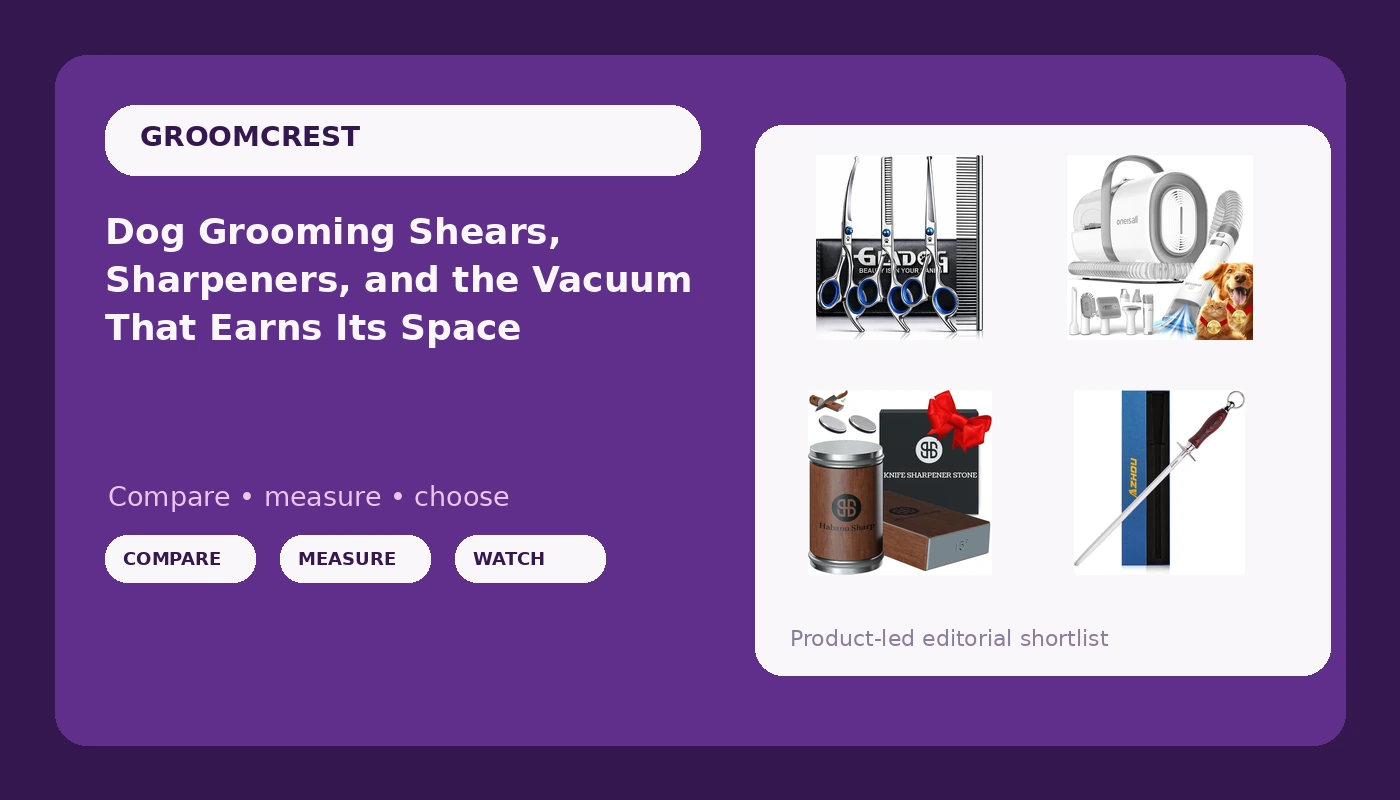
The Shears: GLADOG Professional 5 in 1 Dog Grooming Scissors Set
Scissor work is the difference between a groom and a haircut. Clippers set the body, and shears finish the parts where a blade cannot go: the furnishings, the beard, the brows, the rounded top of a doodle's head, the hair between the eyes. That is the work this set is for, and the detail I care about most is in the name. Safety round tips.
The shears that worry me on a table are the ones that come to a sharp point and then travel toward an eye. A rounded tip does not make a shear safe by itself, and no shear is safe in a hand that is rushing, but it removes the specific accident I have seen twice in ten years. For a home groomer trimming around a face for the first time, that matters more than steel grade.
My first test on any shear is a sheet of copy paper. It should cut cleanly from the pivot all the way out to the tip with no drag and no snag. A shear that drags on paper will drag on a face, and drag is how dogs get nicked. Do that test before the first trim, and do it again every month or so, because a shear that starts skipping at the tip is telling you it needs service.
Here is the honest math on a budget set. It will trim faces, paws, and furnishings for a household doing monthly trims, and the heavy-duty build handles curly doodle coat better than the flimsy craft-store shears people show up with. What it will not do is hold a razor edge through a full week of doodles the way a pro pair does. Check the tension screw, keep the tips protected in a case or a drawer where nothing else rattles against them, and expect to sharpen or replace it sooner.
The Coat Cleanup: oneisall Dog Grooming Vacuum, 7 in 1 Grooming Kit
Grooming vacuums are the gadgets clients ask me about most, and the oneisall kits are the ones they name. For a single small-to-medium dog, this is a genuinely good buy. The deshedding attachment works, the kit covers the between-groom jobs, and it is the rare gadget that earns its counter space instead of becoming a $90 shelf ornament.
Two limits, and I want you to hear both before you order. First, suction fades on thick coats. It will do a Maltese all day and it will stall on a lab's haunches. Second, noise. On my meter, most grooming vacuums land in the 75 to 80 dB range at the dog's ear, and that is the range where nervous dogs start lip-licking and shaking. A dog that lip-licks through a vacuum session is telling you the tool is too loud, and no amount of suction makes up for a dog that is now afraid of the grooming table.
The other thing I say to every client: a grooming vacuum is a maintenance tool, not a replacement for a bath or a real clipper. It lifts loose surface coat between grooms, it handles sanitary touch-ups, and it is excellent on cats and small dogs that hate the whole process. If you own a husky or a golden, put the money toward a high-velocity dryer instead, because air reaches undercoat that suction never will.
If you can borrow one before you buy one, do that. Ten minutes with a vacuum on your own dog answers more than any review, including this one.
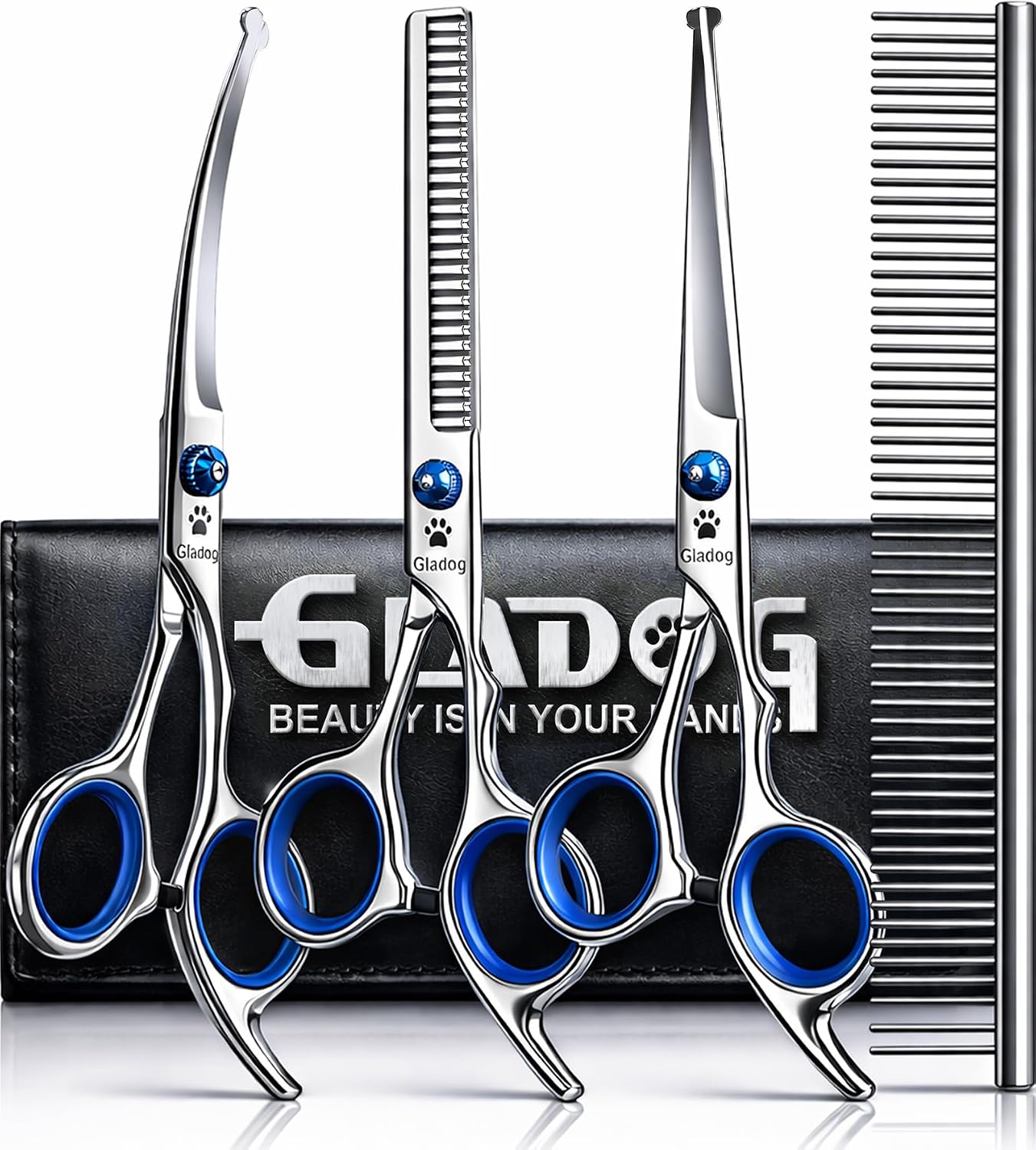
The Edge You Realign: Azhou 12" Professional Knife Sharpener Fine Honing Rod
A honing rod does not sharpen. It realigns. The edge on a working blade rolls over with use, and a few passes on a fine rod stands it back up so the knife cuts again. That is the whole job, and it is the job this rod does well. Twelve inches gives you clearance on a long blade and keeps your knuckles away from the counter, and the fine grit is the right grade for maintenance rather than repair.
Why is it in a grooming guide? Because every groomer I know also cooks, and because the question I get most about shears is whether a rod will bring them back. It will not. Shears have a bevel set by the factory or by a sharpening service, and dragging one down a rod at a random angle is how people knock that bevel out of alignment on a pair that was cutting fine an hour earlier. The old groomer who taught me to sharpen a blade on a stone by feel would tell you the same thing, right before she called my infrared thermometer cheating.
Buy the rod for the kitchen knives and the utility blades in the van drawer. Send the shears to someone with the right jig, or replace them when they stop passing the paper test.
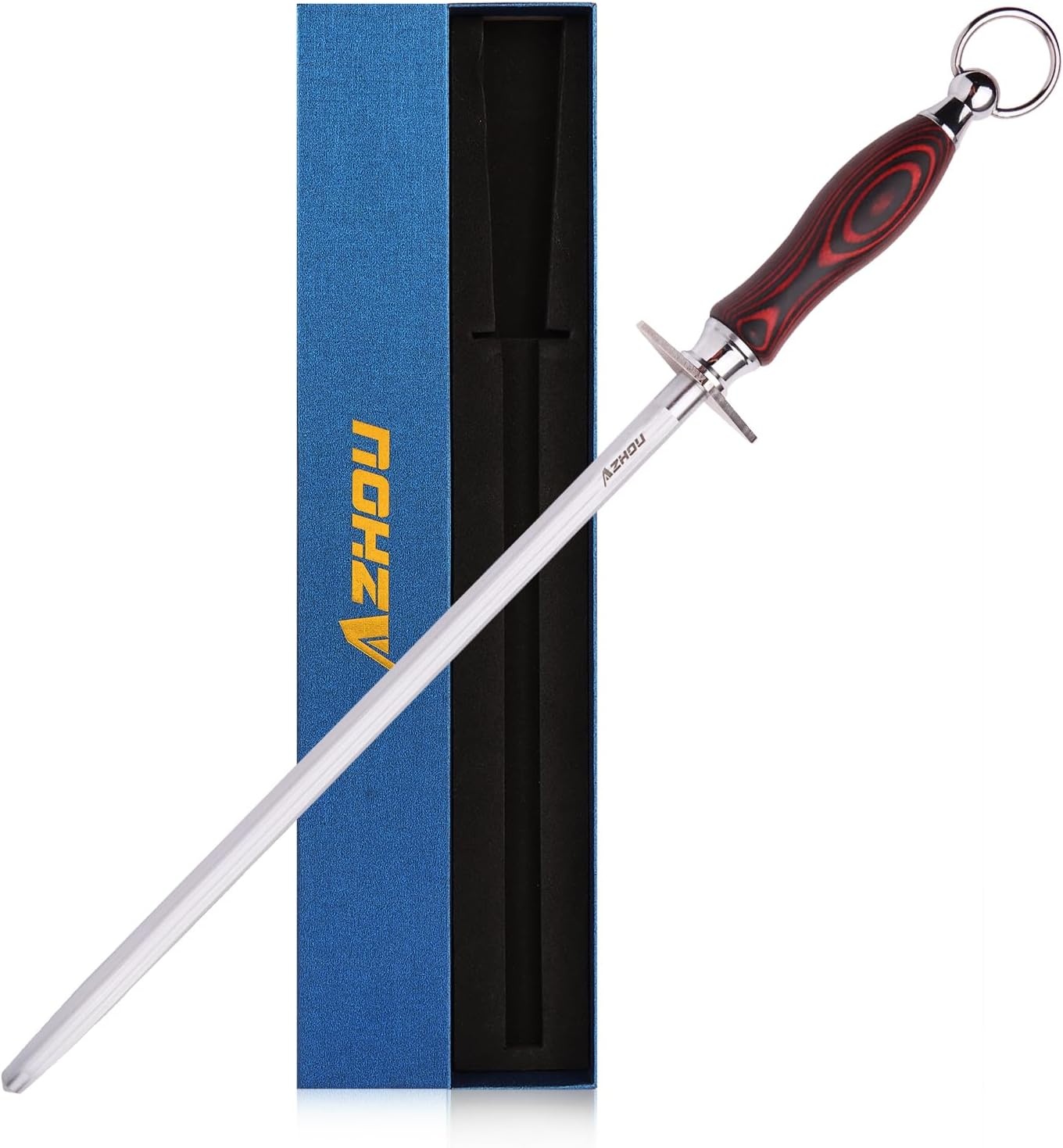
The Kitchen Edge: Rolling Knife Sharpener Kit with 15 and 20 Degree Angle Support
The reason I like this kit is the magnetic angle support. Freehand sharpening fails for one reason: nobody holds a consistent angle, and an inconsistent angle is a rounded edge no matter how good the stone is. Here the knife locks to the support at 15 or 20 degrees and the rolling diamond head does the rest. The diamond abrasive cuts steel of any hardness, which means it does not care whether your knives are soft Western steel or something much harder.
Fifteen degrees is the thinner, slicier edge. Twenty is the sturdier one that survives a cutting board and a sink. Pick one, set it, and stop guessing.
And the honest part, the same honest part as the rod: this is a kitchen tool. Nothing in this box will help a pair of dog grooming shears, and anyone telling you a rolling sharpener is a shear sharpening system is selling you a ruined pair of shears. If your shears are dull, that is a service appointment, not a kitchen gadget.
How I tested
Every shear gets the paper test first, pivot to tip, on copy paper. If it drags, it does not go near a dog's face. Then it goes to work on real trims, because paper tells you about the edge and the dog tells you about everything else: whether the finger rest sits where my hand wants it, whether the tension holds through a long session, whether the tips are rounded enough that I can work near an eye without holding my breath.
The vacuum went through normal van life on small and medium dogs, with the meter out for noise and a note on every stress signal I saw: lip licks, yawns, whale eye, a tail that tucks when the motor starts. The two sharpeners were tested the way anyone actually uses them, on kitchen knives and utility blades, checking whether the edge came back and whether it stayed back after a week of cooking.
I do not print a number I did not take, and I do not recommend a tool I have not lived with. That is the whole method.
Analysis and test results
The pattern across all four tools is that edge work is specific. A shear edge, a knife edge, and a clipper blade are three different geometries with three different jobs, and the tool that maintains one will damage the others. The honing rod realigns a rolled knife edge. The rolling kit with angle support cuts a new bevel at a fixed angle. Neither belongs anywhere near a shear.
Round tips are the other thing worth paying attention to. On a five-piece budget set, the safety point is the feature that changes what you can safely do, not the finish on the handles. Shears that end in a needle point are for people who have trimmed a thousand faces, and even then we get nicked.
On the vacuum, the tradeoff is clear. Suction that handles a short or medium coat will fade on a dense double coat, and noise in the 75 to 80 dB range at the ear is the number that decides whether a nervous dog tolerates the session or learns to hate the table. A quiet tool on a calm dog beats a powerful tool on a scared one, every single time. If your dog is a husky, a golden, or a lab, the money is better spent on air, not suction.
The edge and coat care reference table
| Tool | What it does | Best for | Notes |
|---|---|---|---|
 Visit on Amazon → GLADOG 5 in 1 shear set |
Scissor work | Faces, paws, furnishings | Paper test first |
 Visit on Amazon → oneisall grooming vacuum |
Between-groom coat cleanup | Short to medium coats, cats, small dogs | Not a bath or clipper replacement |
 Visit on Amazon → Azhou 12 inch honing rod |
Realigns a rolled edge | Kitchen knives, utility blades | Never for shears |
 Visit on Amazon → Rolling sharpener kit |
Cuts a new bevel at a fixed angle | Kitchen knives | 15 degrees thin, 20 degrees sturdy |
| A5 clipper blade | Cuts coat at the skin | Bodies, sanitary trims | Rotation keeps heat down |
| Snap-on comb | Leaves a longer finish over a blade | Legs and bodies on a guard cut | Check the fit before the dog is on the table |
Should you buy the GLADOG 5 in 1 shear set?
Yes, if you are trimming faces, paws, and furnishings on your own dog. The round safety tips are the reason I would hand this set to a first-timer, and the heavy-duty build handles curly coat better than the craft-store shears most people start with. It is a budget set and it behaves like one, so check the tension screw, keep the tips protected, and expect to sharpen or replace it sooner than a pro pair. Run the paper test before the first trim.
Should you buy the oneisall grooming vacuum?
Yes for one small-to-medium dog, with conditions. The deshedding attachment does real work, the kit covers the between-groom jobs, and it earns its space. It will not pull undercoat out of a thick double coat, and it is not a replacement for a bath or a real clipper. Noise is the dealbreaker, since most grooming vacuums sit in the 75 to 80 dB range at the dog's ear, and that is where nervous dogs start shaking. Borrow one before you buy one.
Should you buy the Azhou 12 inch honing rod?
Yes, for straight-edged kitchen knives and utility blades, which is what a honing rod is for. It realigns a rolled edge and it does not cut a new one, so it will not bring a dull shear back. Dragging shears down a rod is how people knock the bevel out of alignment on a pair that was cutting fine an hour earlier. Buy it for the kitchen drawer and let a professional handle your shears.
Should you buy the rolling sharpener kit?
Yes, if you want kitchen knives maintained at a repeatable angle without learning to freehand a stone. The magnetic support holds the bevel at 15 or 20 degrees, the diamond head handles hard steel, and consistency is the whole game. It is not a shear sharpener, and nothing in the box will help a pair of grooming shears. That is the honest answer, and it is the reason this one lives in the kitchen and not in my van.