Related: How Often Should You Bathe a Double-Coated Dog?
I groom forty-odd dogs a week out of a converted cargo van parked in driveways around Austin, and most of them are doodles. That means most of my working life is curly, dense, mat-prone coat, and most of my opinions about home dog grooming tools come from watching which ones survive a coat that fights back. A clipper has one job: cut coat without burning the dog. Everything else on the box is a sticker.
So when someone asks me what to buy for a thick-coated dog at home, my answer is short. You need something that cuts dense fur without stalling, something that finishes the face and feet, a shampoo you can actually rinse out, and a way to move air through the undercoat. That is the whole list. The rest is marketing.
The four tools below are the ones I would hand a first-time home groomer with a doodle, a husky, a golden, or a matted rescue. None of them is the most expensive thing in its category. All of them do a specific job, and the order you use them in matters more than the brand names.
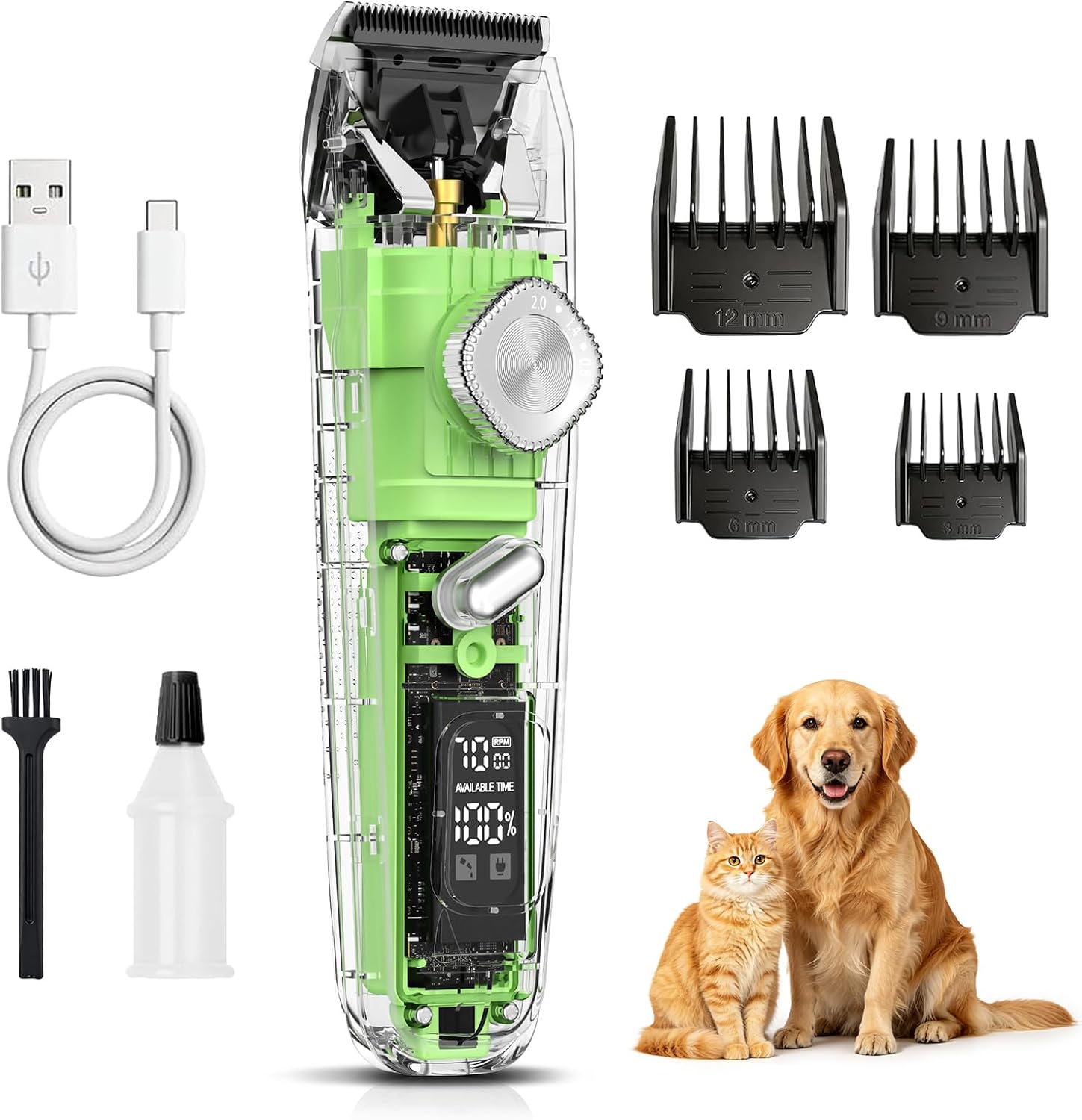
Best Overall: Dog Clippers for Grooming Thick Hair, Curly Coats, Matted Fur
This one is aimed squarely at the coat most home groomers give up on: thick, curly, matted fur. That is not an accident of naming. Dense doodle and poodle coat is the hardest thing in the trade to push a blade through, because it is not one layer of hair, it is felt. A clipper that handles that will handle a lab, a shih tzu, and a spaniel without working up a sweat.
Here is what I want to know about any clipper before it goes near a dog. First, does the blade stay comfortable through a full body clip, because blade burn is the injury nobody photographs and everybody causes. Second, does the motor hold speed when the blade hits a dense back leg, because a clipper that bogs leaves a staircase in the coat and takes three passes to fix. Third, can you replace or swap the blade, because a dull blade is the real problem, not the motor. Fourth, how loud is it at the dog's ear, which is a very different number from how loud it is on a kitchen counter.
A few honest notes. Guard combs and snap-on attachments pop off mid-leg on curly coats, so do not plan your whole groom around them. If the coat is already pelted tight against the skin, no clipper on the market is gentle, and the kind thing is a shave down and a fresh start. And if you are trimming a face twice a month, you probably do not need a full-size clipper at all, you need a small quiet trimmer.
For a dog with real coat, though, this is the tool the whole routine is built around. Everything else on this list is support.
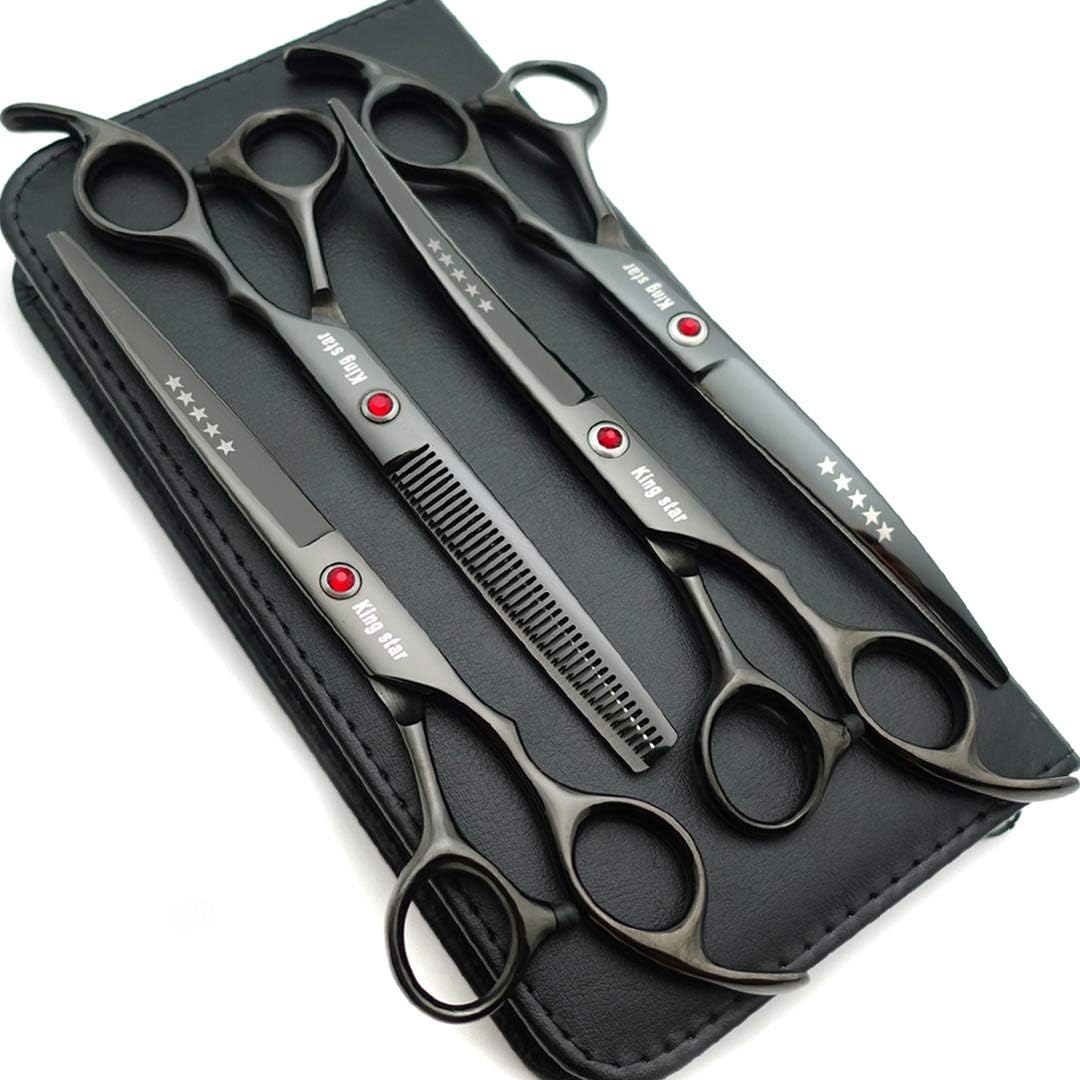
Best for Faces and Feet: 7.0in Titanium Professional Dog Grooming Scissors Set
Scissor work is what separates a groom from a haircut, and it is also the part home groomers skip, because clippers are faster and shears are intimidating. This four-piece set covers the three cuts you actually make: a straight pair for outline and body work, a curved pair for round faces and poodle feet, and a thinning pair for blending the lines between them.
Seven inches is a good length for a home groomer. Long enough to reach across a table without leaning into the dog, short enough to control around an eye. Titanium-coated shears hold an edge longer and resist the rust that kills cheap shears sitting in a bathroom drawer.
The test I run on every pair is a sheet of copy paper. It should cut cleanly from the pivot to the tip with no drag and no snag. A shear that drags on paper will drag on a face, and that is exactly how dogs get nicked. The other habit that matters: keep the tension screw adjusted, dry them after every bath, and never let them fall on a tile floor. Dropped shears do not cut, they chew.
Use them for the face, the feet, the sanitary areas, and the blend lines. Use the clipper for bulk. That division of labor is what makes a home groom look intentional instead of homemade.
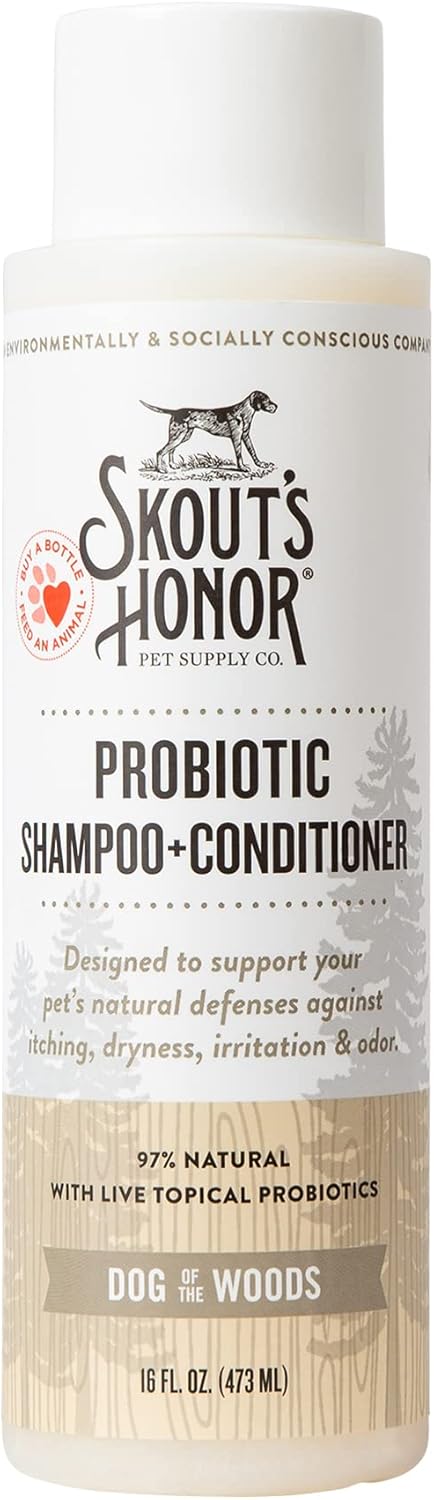
The Bath: SKOUT'S HONOR Probiotic Dog Shampoo and Conditioner
Rinse time is the spec nobody prints on the bottle, and it is the one that decides whether your dog ends up with residue that turns into mats. I time every shampoo to a clean rinse, meaning no squeak and no slick feel when I run a hand down the coat. Formulas that need four passes to stop feeling soapy are leaving product behind, and product behind is a mat waiting to happen.
This one is a shampoo and conditioner in a single 16-ounce bottle, built around probiotic ingredients rather than heavy fragrance. For a home groomer, a two-in-one saves a step and a bottle, which matters when you are wrestling a wet doodle in a bathtub instead of a raised tub with a sprayer.
Two things to know before you buy. Sixteen ounces goes fast on a big dog, so match the bottle size to the dog you own. And this is a maintenance shampoo, not a treatment. If your dog has hot spots, a yeasty smell, or a diagnosed skin condition, that is a conversation with your vet and possibly a medicated shampoo, not an upgrade to something fancier from a store shelf.
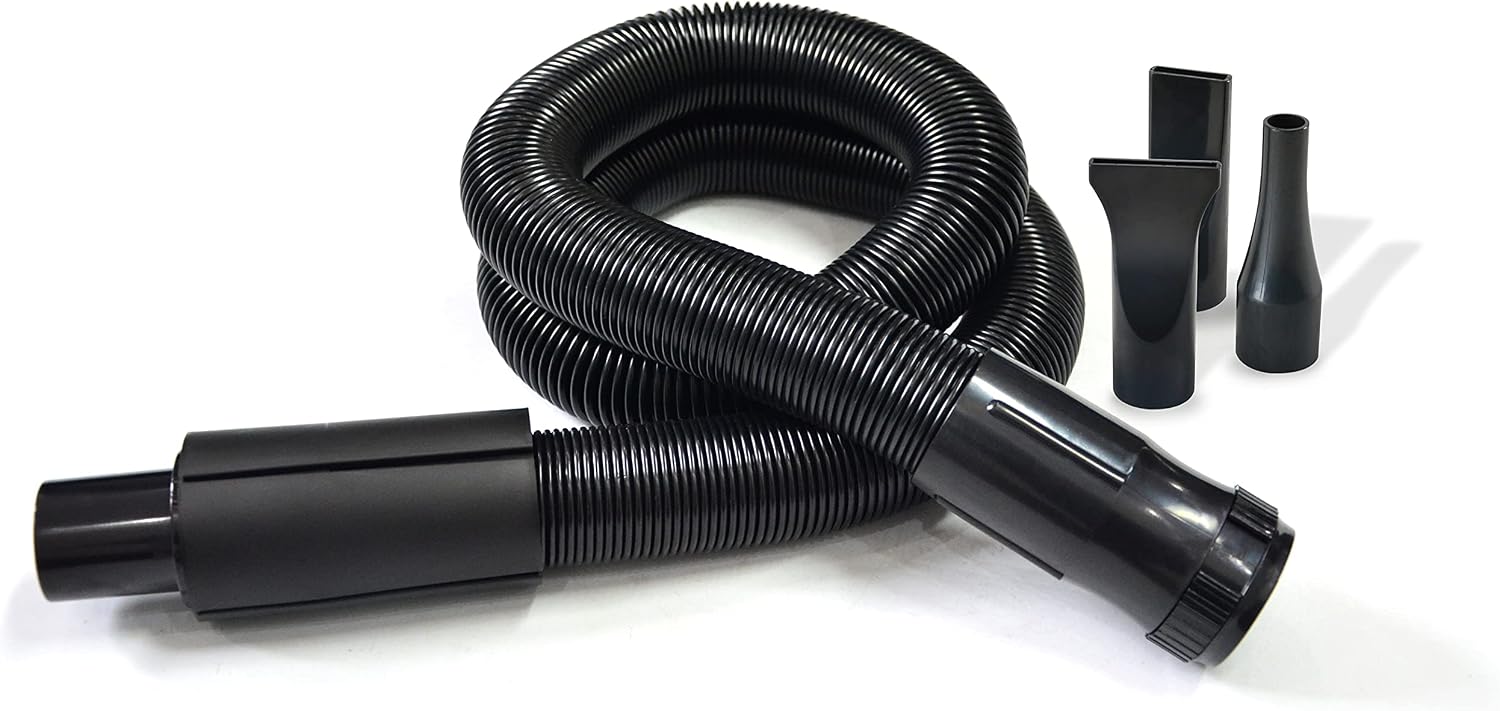
The Upgrade Nobody Buys: SHELANDY Pet Dryer Hose, Special Used for Single Motor Dog Dryers, Extended
This is the least exciting item on the list and the one that changes the most about how a groom feels. It is an extended hose made specifically for single-motor dog dryers, the kind most home groomers own.
Stock dryer hoses are short and stiff. That means you hold a screaming motor at your dog's shoulder for twenty minutes, which is loud for the dog, heavy for your arm, and awkward for reaching a belly or a rear leg. A longer hose lets you set the dryer on the floor and walk the air around the dog. Noise at the dog's ear drops, both hands are free, and the undercoat actually gets blown out instead of dampened down.
Two checks before you buy. Confirm your dryer is a single-motor model, because this is not a universal part, and confirm the outlet size matches your unit. If you own a high-velocity dryer and have never replaced the hose, this is the cheapest real improvement available to you, and it is the difference between a blowout that lifts dead coat and a blowout that just makes noise.
How I judge gear like this
Every tool I recommend has to survive the same questions. Does it run through a full coat without heating up or bogging? What is the real decibel reading and the real runtime, measured rather than printed? Would I use it on a nervous rescue or a puppy? Does it survive a curly doodle coat and a seventy-pound lab that leans? Would it earn its space in the van?
Blade temperature is the number that never appears on a box. After ten minutes of continuous clipping, blades get hot enough to irritate skin, which is why I rotate blades like a line cook instead of pushing one until it is uncomfortable. If a tool forces you to run one blade continuously, that is a design flaw, not a technique problem.
Noise is not a preference, it is a stress test. A dog that lip-licks and yawns through a groom is telling you the tool is too loud or too rough. Watch the dog, not the clock.
And runtimes are measured in dogs, not minutes. A cordless tool that claims four hours and dies at the end of a second doodle is a two-dog tool, and you should know that before the third dog is on the table.
What the analysis usually shows
Coat type decides everything. A double coat, meaning a topcoat plus a dense undercoat, gets bathed less, brushed more, and blown out hard in spring. A single coat, meaning continuously growing hair like a poodle, doodle, Yorkie, or bichon, gets bathed more often and brushed constantly, because that hair mats into felt if you skip three days.
Home grooming fails at the same three steps every time: no table, wrong blade, and skipping the dryer. Fix those and you can groom most dogs at home with a modest kit. The tools on this list address two of the three directly, and a stable non-slip surface addresses the third.
There is also a hard truth about matting. Matted dogs do not get brushed out. They get shaved down and started over, because brushing a pelt pulls skin and teaches the dog that grooming hurts. A groomer who promises otherwise is selling you a second appointment.
The reference table
This is how the four tools split the work. Match the tool to the coat in front of you, not to the breed name on the paperwork.
| Tool | What it is for | Best coat type | Price |
|---|---|---|---|
 Visit on Amazon → Visit on Amazon →Dog Clippers for Grooming Thick Hair Curly Coats Matted Fur for Pets |
Bulk coat removal on dense, curly, and matted fur | Thick, curly, matted | $32.99 |
 Visit on Amazon → Visit on Amazon →7.0in Titanium Professional dog Grooming Scissors set, Straight and Thinning and Curved scissors 4pcs set for Dog grooming (Bright black) |
Faces, feet, sanitary areas, and blend lines | Any coat that grows continuously | $37.99 |
 Visit on Amazon → Visit on Amazon →SKOUT'S HONOR Probiotic Dog Shampoo and Conditioner, DOTW, 16 oz |
Bath day, shampoo and conditioner in one step | All coat types, maintenance only | $21.49 |
 Visit on Amazon → Visit on Amazon →SHELANDY Pet Dryer Hose, Special Used for Single Motor Dog dryers, Extended |
Reaching the undercoat with a single-motor dryer | Double coats and thick curly coats | $29.95 |
The order of operations is the part people get wrong. Blow the dead coat out before the bath, not after, because fifteen minutes of air lifts more fur than an hour of brushing. Clip the bulk. Finish the face and feet with shears. Then bathe, rinse until the coat squeaks clean, and dry completely, because a damp undercoat is how a dog ends up with hot spots.
Should you buy the dog clippers?
Yes, if you own a dog with real coat and you plan to groom at home more than once. It is built for the coat that stalls cheap clippers, and that is the whole reason to own it. Pair it with a blade rotation habit and you will get through a doodle without cooking the skin.
No, if your dog is a short-coated breed that needs a sanitary trim twice a month, or if you already own a pro clipper you like. And no if the coat is fully pelted. In that case, book a groomer or shave down at home and start the brushing routine before you spend money on tools.
Should you buy the rest of the list?
The shear set is the best value here, because scissor work is what makes a home groom look deliberate, and a four-piece set with straight, curved, and thinning shears covers every finish cut you will make. The shampoo is a sensible everyday bottle for a dog that gets bathed regularly, as long as you match the size to your dog and keep it away from any skin condition that needs a vet. The extended dryer hose is the one I would buy first if you already own a single-motor dryer, because it costs the least and changes the most.
Start with the tool that matches the coat in front of you, learn it properly, and add the next one when the dog tells you it is time. That is how a home grooming setup actually gets built.