Most people who decide to groom a dog at home quit somewhere around the tenth minute, and it is almost never the dog's fault. The table is too low, the brush is wrong for the coat, and the dog is standing on a slick floor while someone chases a mat with a dull blade. Two jobs cause most of that trouble: loose coat and dirty ears. A dog grooming vacuum handles the first without a fight, and a medicated ear wash handles the second in about a minute per ear.
I groom out of a converted cargo van in Austin, which means every tool I own has to work six inches from a dog's face with no salon walls to absorb the noise. That constraint has changed what I recommend more than any brand ever has. What follows is the maintenance routine I hand to clients who want to stretch the time between appointments without letting the coat go to a pelt.
This is a how-to, not a shopping list. If your dog is matted to the skin, if the ears are red, swollen, or full of discharge, or if the dog snaps when you touch its head, stop here and book a groomer or a vet. Everything below is for healthy dogs with healthy coats and healthy ears.
Why you should trust me
I have groomed dogs for ten years, the last six in the van, and I am fear-free certified, which is a formal way of saying I read the dog before I read the tool. My week runs forty-odd doodles plus labs, goldens, huskies, and the occasional matted rescue that arrives in a trash bag. I keep a job book where every tool gets a note about which dog it worked on and whether the dog tolerated it.
That last part matters. Gear that works in a quiet salon and gear that works in a hot van with the motor running are not the same gear. Everything in this guide has to survive the van, a curly coat, and a dog that would rather be somewhere else.
How I judge home grooming gear
Three questions decide it for me.
Does the tool get louder or rougher as the job goes on? Most do. A vacuum that starts quiet and turns into a drone by the third pass is a vacuum the dog will learn to hate, and a dog that hates the tool is a dog you cannot groom.
Does it bog down on a real coat? A doodle leg, a husky haunch, and a lab's thick neck are the three tests. Tools that stall on those are fine for a Maltese and useless for anything else.
Can you clean it without a screwdriver? A grooming vacuum that clogs every five minutes and needs a teardown to empty is a tool that lives in the closet. The dust cup has to come off, dump, and go back on with one hand while the other hand is holding a dog.
For anything that goes into an ear, I add a fourth question: what does the label actually claim? A product that says it treats infection is doing something different from a wash that says it cleans. Read the label twice, then ask your vet which one your dog needs.
What you need before the first groom
You need a non-slip surface at roughly waist height, which for most people means a table or a counter with a bath mat on it. You need a brush that matches the coat, a way to manage loose hair, and an ear wash. Clippers are optional if you are only maintaining, and mandatory if you are cutting length.
The two tools I would buy first are below.
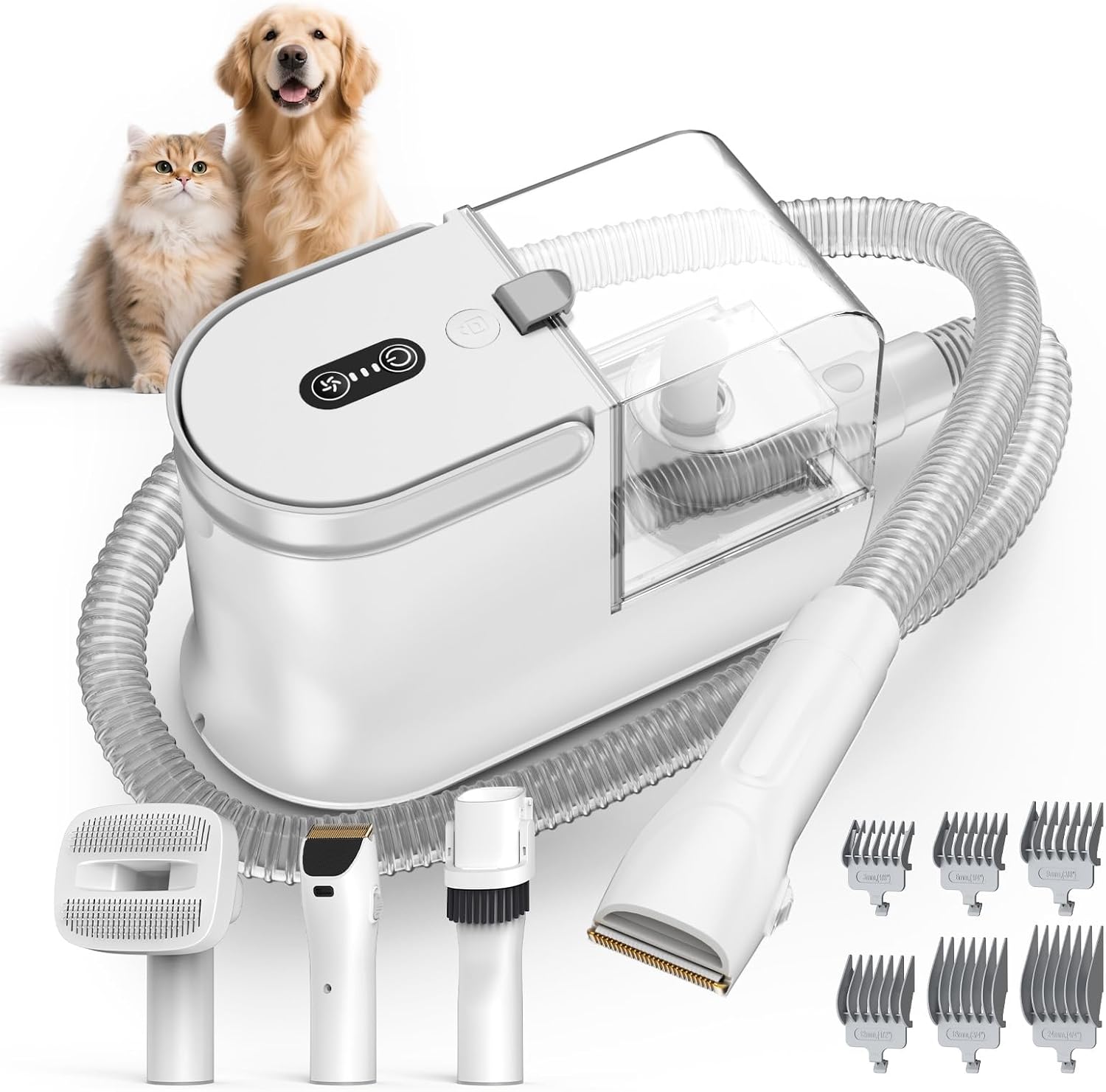
The maintenance tool: Dog Grooming Vacuum, Dog Grooming Kit, 3 Suction Modes Dog Brush Vacuum with 5 Pet Grooming Tools (Wheaten)
 Visit on Amazon →
This is a grooming vacuum kit, which means a canister with a hose and five attachments rather than a single brush. The three suction modes are the feature that makes it usable: start on the lowest setting with a nervous dog, let the dog hear the motor with the head nowhere near its body, then work up as the dog settles. The brush attachment pulls loose hair straight into the cup instead of scattering it across the room, which is the entire reason a vacuum beats a slicker on a shedding dog.
Where it fits: short, frequent sessions on a dog that sheds, plus tidy-up work between baths. Where it does not fit: a double coat in full spring blowout, and any coat that is already matted. Suction lifts surface hair and dander. It does not reach the undercoat the way moving air does, and it will not get through a mat. If you own a husky or a golden, treat this as a between-grooms tool, not a replacement for a dryer.
Check current Amazon price before you commit, and check that the attachments match the coat you actually own. A kit with five tools is only a bargain if three of them fit your dog.
Flaws but not dealbreakers: The noise is real, and it is the part that decides whether your dog tolerates it. Introduce it the way you would introduce a clipper: powered on, across the room, treats, no contact. Some dogs take to it in one session. Some take a month. A few never will, and that is a fact about the dog, not about the tool.
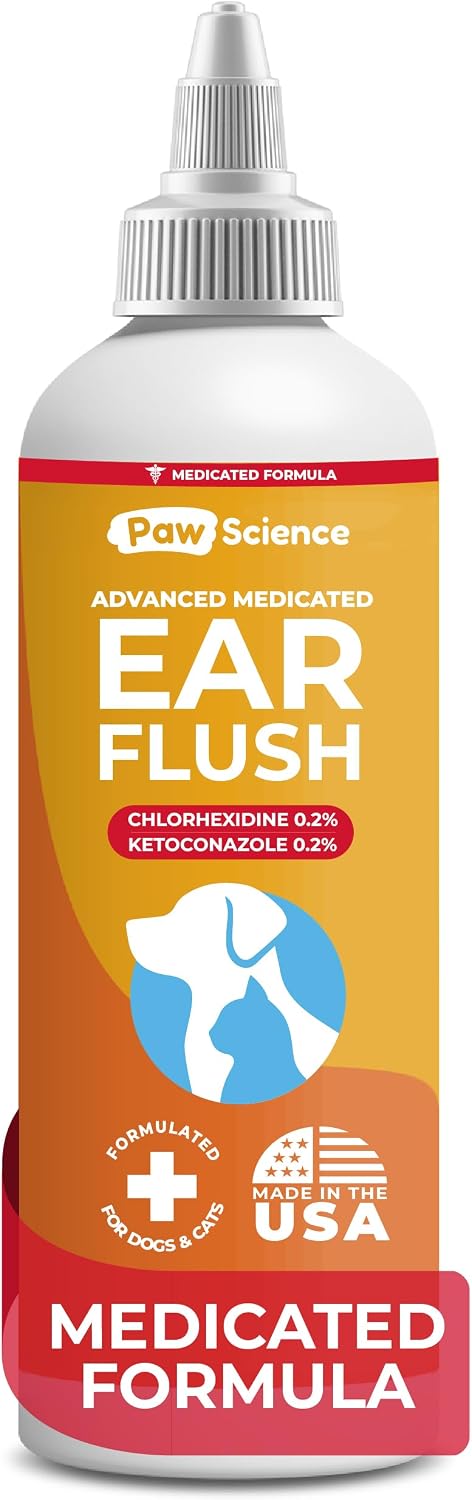
The ear staple: Paw Science Dog Ear Cleaner - Cat & Dog Ear Infection Treatment - Medicated Pet Ear Wash, Flush, and Cleaning Solution for Dogs and Cats - Remedy for Itchy Yeast Relief
 Visit on Amazon →
A medicated wash is the right tool for the dog that shakes its head, scratches at an ear, or smells yeasty at the base of the canal. It is a flush and a cleaner, which means you fill the canal, massage the base, and let the dog shake the loosened wax out onto your floor. That shake is the cleaning, and it is why a flush works better than anything you can do with a cloth.
One caution matters more than any recommendation: a wash is not a diagnosis. If the ear is red, hot, swollen, painful to touch, or producing thick discharge, or if the dog yelps when you lift the flap, that is a vet visit. Cleaning over a ruptured eardrum or a deep infection at home makes it worse. If your vet has already looked at the ear and told you to maintain it, this is the kind of product they mean.
Check current Amazon price, and read the label for how often it should be used. Some medicated washes are for a short course. Some are for weekly maintenance. They are not interchangeable.
The home grooming routine, step by step
Step one: read the dog first. Before a single tool comes out, watch for the three stress signals I look for: lip licking, yawning when nothing is funny, and the whites of the eyes showing. A dog doing those things is telling you the plan is wrong, not that the dog is stubborn. Change the plan. Do half the job today.
Step two: brush the coat out, all the way to the skin. Work in lines, lifting the hair and brushing from the skin outward instead of over the top. A double coat gets an undercoat rake and then a slicker. A curly coat gets a slicker and a comb, because a slicker can glide over a tangle that a comb will find. If the comb stops, you have a mat, and mats do not come out with brushing. They come out with a blade.
Step three: vacuum pass. Turn the unit on away from the dog and let it run. Start on the lowest suction mode and touch the hose, not the brush head, to the dog's shoulder. Then work the brush attachment in short strokes in the direction the coat grows. Do the back, the sides, and the haunches, and skip the face, the ears, and the tail tip until the dog is completely comfortable. Keep sessions under ten minutes. Two short sessions a week beat one long one.
Step four: bath, on the right schedule. Double coats (husky, golden, lab) get bathed every six to eight weeks, because shampoo strips the oils that keep the undercoat healthy and over-bathing makes shedding worse. Single coats (poodle, doodle, Yorkie, bichon) can go every three to four weeks, because that hair grows continuously and regular washing plus brushing is what keeps it from matting. Rinse until the water runs clear and the coat stops feeling slick. Residue is what turns into mats.
Step five: dry all the way down. This is the step home groomers skip, and it causes the most problems. A damp undercoat packs against the skin and starts to smell. Towel dry, then use a dryer or the vacuum's blow setting if your kit has one, working the coat with your hand so the air reaches the skin. If the dog is afraid of the dryer, towel as dry as you can, keep the room warm, and finish with a vacuum pass once the coat is mostly dry.
Step six: tidy the details. Feet, face, and sanitary areas. If you are using clippers, keep the blade cool and check it against the back of your wrist. A blade that is uncomfortable on your wrist is a blade that will burn a belly. If you are not confident with clippers around eyes and feet, leave those to a groomer. A nick on a face costs more than a professional tidy.
Step seven: ears, every time. Ear cleaning belongs in every groom, not just when the dog smells. Details below.
Step eight: pay the dog. Treats, a walk, a game, whatever that dog loves. The last thing a dog remembers about grooming is what happened after it, and that memory is what makes the next session easier.
How to clean a dog's ears without making it worse
Look and smell first. Lift the flap. You are looking for pale pink skin, a little light wax, and no odor. Brown wax, a yeasty smell, redness, or swelling are all reasons to stop and call the vet.
Fill the canal, do not swab it. Hold the ear flap up, put the tip of the bottle at the opening of the canal, and squeeze. Then let go. The canal is L-shaped, so you cannot see the bottom of it, and a cotton swab just pushes wax deeper and scratches the lining on the way. The swab is the enemy. The wash and the shake do the work.
Massage the base. With the flap closed, massage the base of the ear, right where the jaw meets the skull, for about ten seconds. You will hear a wet sound. That is the wash breaking up wax you cannot see.
Let the dog shake. Step back. The shake is what brings the loosened debris up and out, and it will land on you, the wall, and the dog's own head. Have a towel ready.
Wipe the visible part only. A cotton ball or a soft cloth on the inside of the flap and the parts you can see with your eyes. Nothing goes into the canal.
Reward, then repeat on the other side. Two ears, one minute each, done.
If the dog has been shaking its head for more than a day, if one ear smells noticeably worse than the other, or if the dog is holding an ear down, stop the home routine and get it looked at. An ear problem left alone for a week turns into an ear problem that takes a month.
Where home grooming goes wrong
The same failures show up in almost every home groom I get called to fix.
No table. Grooming on the floor puts you at a bad angle, makes the dog feel cornered, and wrecks your back. A non-slip surface at waist height changes a dog's behavior more than any tool you can buy.
The wrong blade or the wrong brush for the coat. A short blade on a double coat is a shave-down you cannot undo, and a slicker on a matted coat just polishes the top of the mat. Match the tool to the coat, not to the photo on the box.
Skipping the dry. A dog that goes to bed damp gets a hot spot or a smell, and the coat mats as it dries. Dry to the skin.
Chasing a mat with a brush. Mats tighten as they dry. If a comb will not pass through, the coat is matted, and the honest fix is a blade and a conversation about brushing frequency.
Going too long in one session. Twenty minutes of calm work beats an hour of wrestling. Break the job into two sessions if the dog needs it, and end on something the dog likes.
What this all costs
The two tools in this guide sit at the cheap end of home grooming, and they cover the two jobs that make the biggest difference between appointments. A grooming vacuum kit handles the hair that ends up on your couch, and a medicated ear wash handles the ear that makes your dog shake its head at midnight.
- Dog Grooming Vacuum, Dog Grooming Kit, 3 Suction Modes Dog Brush Vacuum with 5 Pet Grooming Tools (Wheaten): Check current Amazon price
- Paw Science Dog Ear Cleaner, medicated pet ear wash: Check current Amazon price
What you are really spending is time. Ten minutes of vacuuming twice a week, a bath on the right schedule for your dog's coat, and one minute per ear. That routine keeps most healthy dogs comfortable and out of a salon between appointments, and it makes the appointments you do book shorter and cheaper.
The rest is reading the dog. Every dog tells you what it needs, and the tool is the easy part.