Related: Best Dog Grooming Brush for Shedding Season
Every pet grooming tool in my van has to answer one question before it earns a hook on the wall: does it still work on dog number four, in August, in a hot driveway in Austin? I have groomed for ten years, the last six out of a converted cargo van, and a van is a harsher test than any salon. There are no walls to absorb noise, the inverter limits what I can plug in, and the dog is six inches from the motor instead of across the room. That setup changes which pet grooming tools are worth carrying and which are shelf decoration.
This guide covers the four tools I reach for most in that van: a high-velocity dryer that does the heavy lifting before the bath even starts, a quiet clipper kit for matted cats and small dogs, a self-cleaning slicker brush that works on both coat types, and a medicated shampoo for the skin cases that show up at the door. None of them are the fanciest version of themselves. They are the ones that finish the dog.
Best Overall: Dog Dryer High Velocity Pet Dog Grooming Force Hair Dryer/Blower
The single biggest upgrade to any grooming routine is a high-velocity dryer, and it is the tool I would buy first if I could only buy one. A human hair dryer is too hot and too weak, and it takes the better part of an hour to get a lab half dry. This blower moves air at speed instead of heat, which is the whole point: it parts the coat down to the skin, lifts the dead undercoat out, and pushes water off the hair instead of cooking it.
On a double-coated dog I blow the coat out before the bath, and half of what an owner calls a shedding problem leaves the dog in the driveway. On a doodle, the same air gets the coat most of the way dry before I pick up a clipper, which matters because a wet curly coat mats while it dries. It is loud. I put a cotton ball in each ear, I wear ear protection, and I do not point it at a nervous dog's face until the dog has settled. Warm air on a shaved belly is a burn risk, so I keep the nozzle moving. 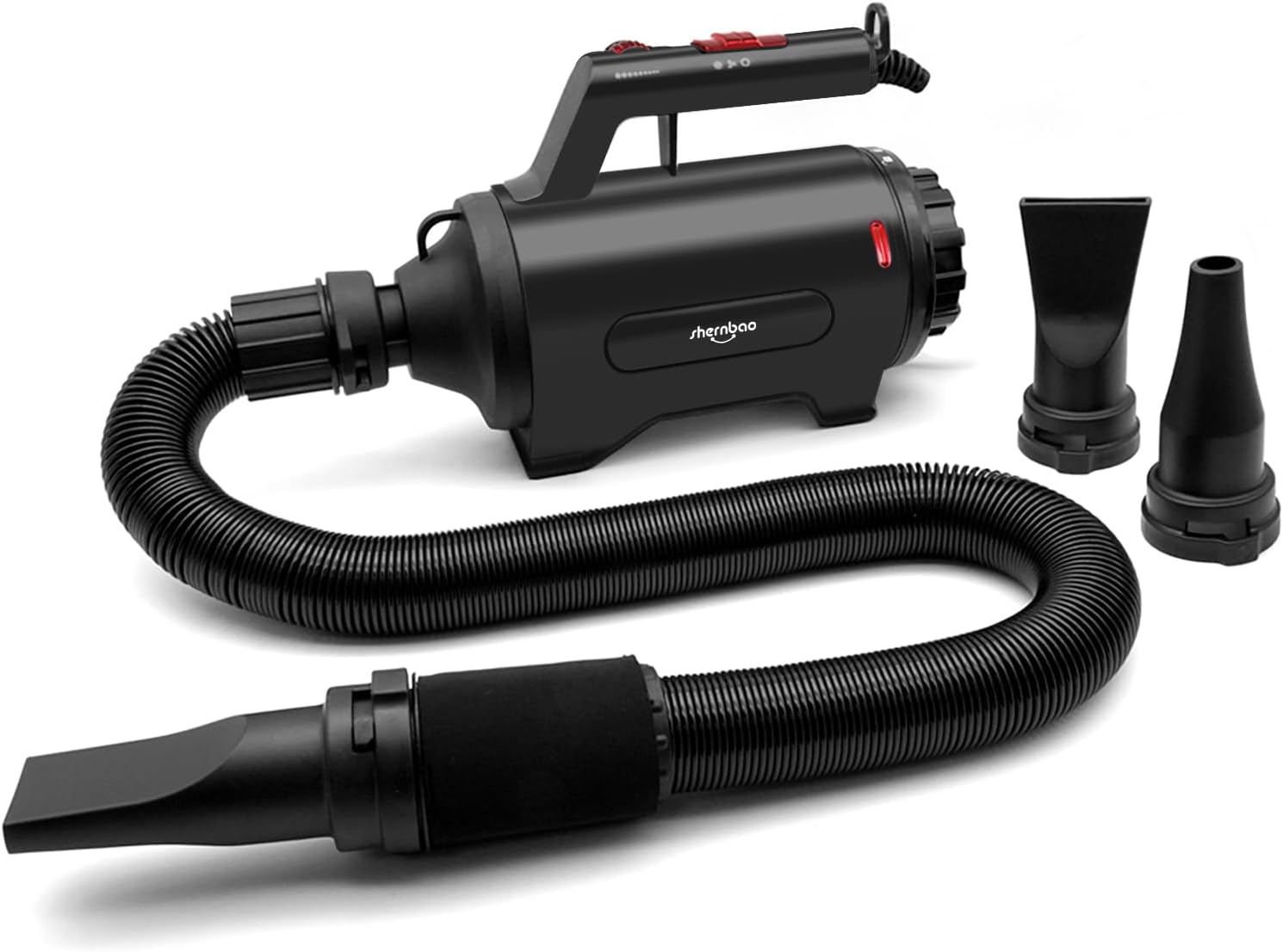 Visit on Amazon →
Best for Matted Coats and Nervous Cats: oneisall Cat Clippers for Matted Hair
A clipper with five speeds sounds like a gimmick until you are holding a matted cat. The reason this kit works is the low end of the dial: the first two speeds are quiet enough that a cat stops trying to leave, and you can start on a mat without the motor screaming at it.
The speed control matters on matted coats for a less obvious reason too. Mats are dense and inconsistent, and a single-speed clipper bogs and stalls halfway through one, which is exactly the moment a cat decides it is done. Stepping the speed up through a thick pelt keeps the blade moving and keeps the session short, and a short session is the entire game with cats. The kit comes with the guards and small tools you need around a face and paws, and it is light enough to hold in one hand while the other hand holds a cat. It is not a full-body clipper for a husky or a thick-coated lab. For a matted cat, a matted small dog, or a nervous dog that needs a sanitary trim, it is the quiet tool I reach for. 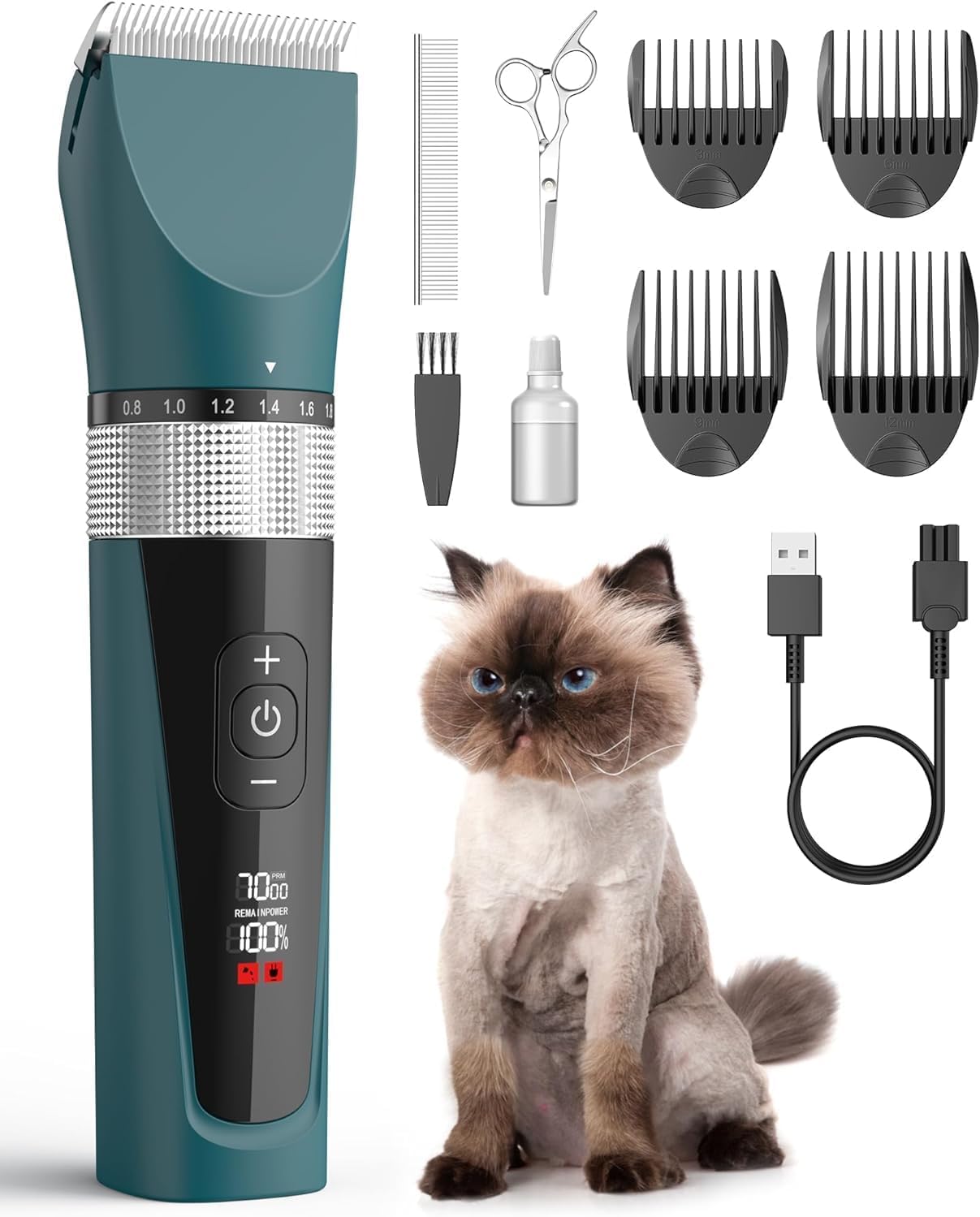 Visit on Amazon →
Best Everyday Brush: Swihauk Self Cleaning Slicker Brush
A slicker brush is the cheapest thing in the van and the one that prevents the most expensive grooms. This Swihauk is a self-cleaning slicker, which means the pins retract with a button and the hair drops out in one pad instead of you picking it out of the bristles with your fingers. That sounds like a small thing. It is the difference between brushing your dog on a Tuesday and not brushing your dog at all.
The pins are fine and slightly angled, which is what you want on a doodle's furnishings and on a cat's flank: they get under the topcoat and lift loose hair without raking skin. I use it on single coats every couple of days and on double coats between rakes. It is not a de-matting tool, and no slicker is. If the coat is already matted to the skin, a brush is not the answer, a blade is. Use this one before the coat gets there, and the coat never gets there. 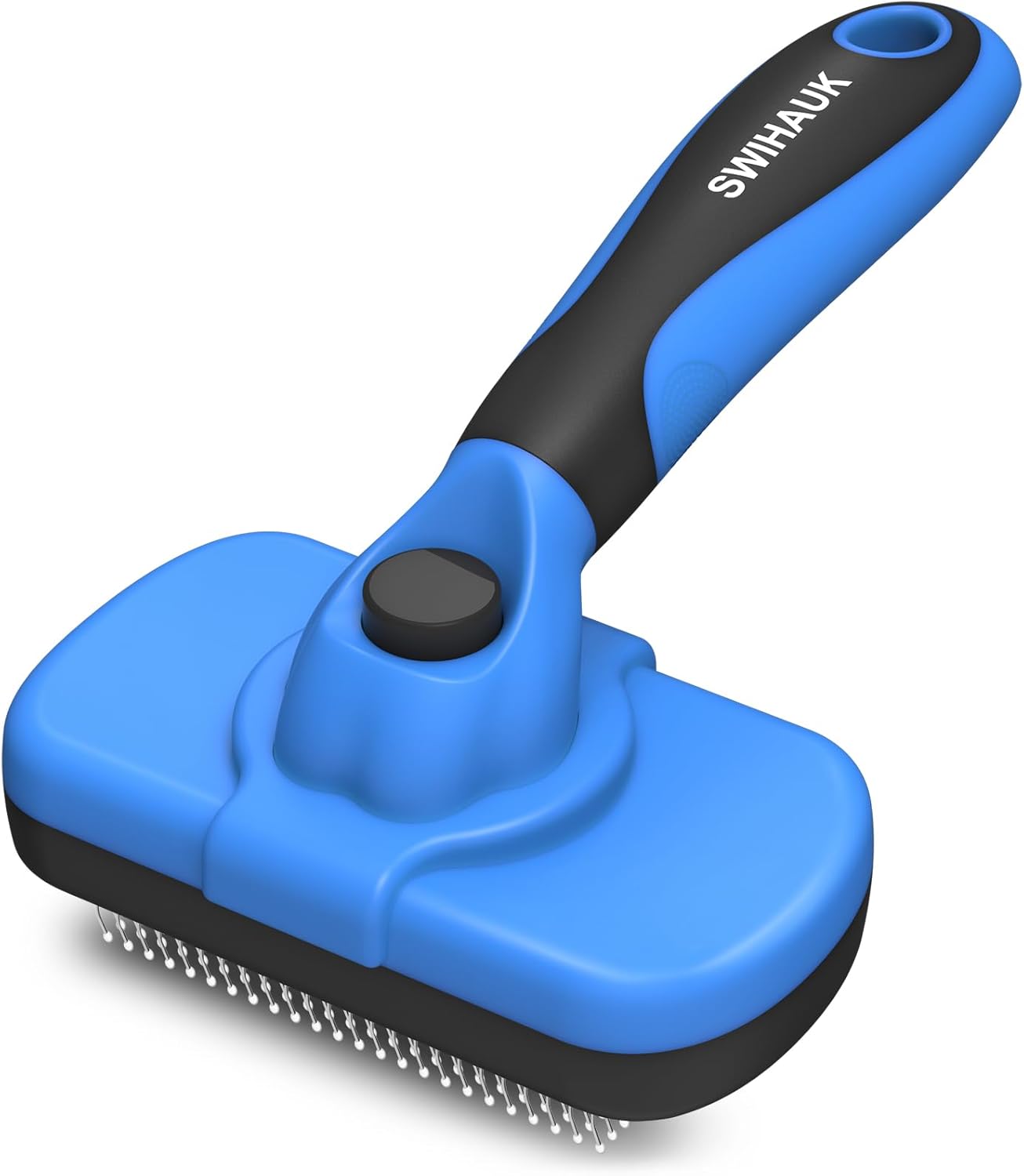 Visit on Amazon →
Best Treatment Shampoo: Veterinary Formula Clinical Care
This is the one bottle in the van that is a treatment, not a shampoo. Antiseptic and antifungal formulas are for the dogs that show up with hot spots, yeasty skin, or a smell that follows them into the driveway. They do their work on contact with the skin, which means you have to get the product there rather than on the topcoat, so I work it in with a rubber curry and give it the contact time the label asks for.
Rinse time is the spec nobody prints on the bottle. I rinse until the water runs clear and the coat stops feeling slick, because residue left in a coat turns into mats and residue left on skin keeps working after the bath. Sometimes that is the point of a medicated wash and sometimes it is not, so read the label twice. This is not a weekly shampoo and it is not a coat conditioner. It is the tool you use when the skin is the problem, and then you go back to your regular routine. 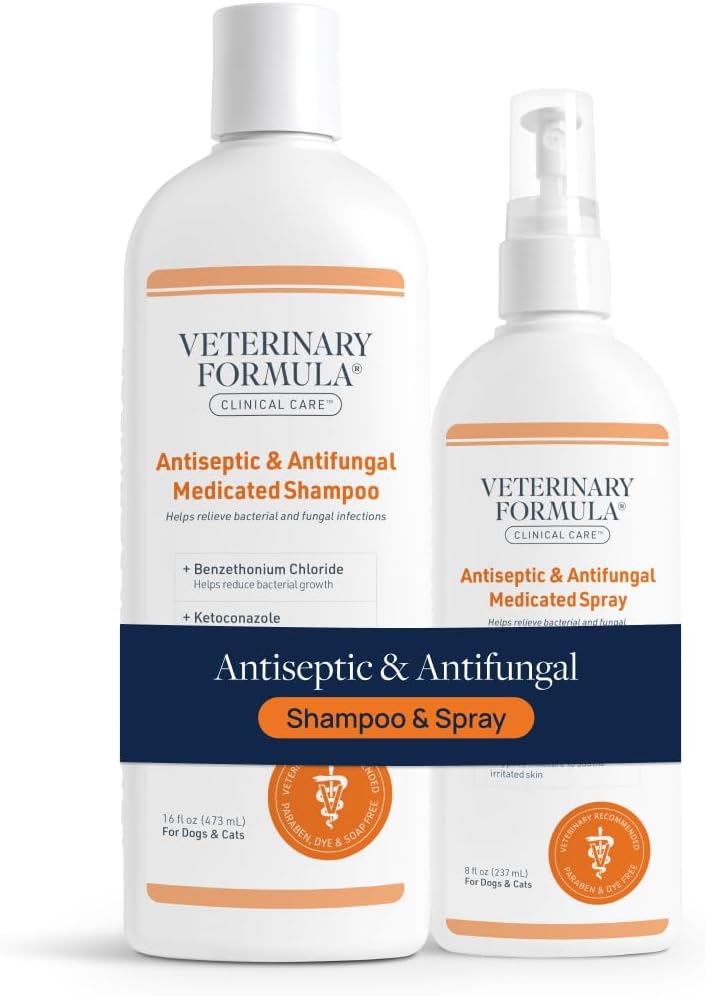 Visit on Amazon →
How I tested
Every tool runs the same gauntlet in the van. Clippers and dryers get timed on real coats with the stopwatch on my phone, because a runtime claim on a box is a suggestion and a runtime in dogs is a fact. Every blade gets its temperature logged with an infrared thermometer, because blade burn is the failure that actually hurts a dog, and a blade that runs hot after ten minutes of continuous work goes into rotation instead of back on the clipper.
Dryers get a decibel reading at the dog's ear and a dry-to-mostly-dry time on a wet doodle, plus a note on outlet temperature, since "warm" on a cheap dryer is not a number. Deshedding tools get weighed on a kitchen scale and then the topcoat gets inspected for damage, because a tool that pulls undercoat and cuts live coat is a net loss no matter how much hair is on the scale. Shampoos get a rinse-time test: how many passes until the water runs clear. Ear and dental products get the label read twice, because some of them are treatments and some are maintenance, and mixing those up is how dogs get hurt.
Analysis and test results
Four tools, four jobs, and the honest summary is that three of them are maintenance and one is a treatment. The dryer is the one that changes outcomes. Blowing a double coat out before the bath lifts more loose hair than any brush on the market, and it cuts drying time enough that a dog is not standing wet and shivering for forty minutes.
The clipper kit is the quiet tool, and speed control is what makes it usable on a cat. The low end of the dial is where the work happens on a scared animal, and the high end is where it happens on a pelt. The slicker is the tool that prevents problems, and the self-cleaning button is the feature that makes you actually use it, which is worth more than any pin design. The shampoo is the one I hope you need least and the one where the label matters most.
Two things I would tell anyone buying gear this month. First, coat type decides the tool, not breed name. A doodle and a husky need completely different kits, and marketing does not know which one you own. Second, no brush fixes a pelt. If the coat has already matted to the skin, the answer is a blade and a conversation about brushing, not a gentler tool.
The grooming tool reference table
This is the short version I keep in the job book, one line per tool. Prices move, so check the listing rather than trusting any number you read in a review.
| Tool | Best for | What it does | Notes |
|---|---|---|---|
| Visit on Amazon → Dog Dryer High Velocity Pet Dog Grooming Force Hair Dryer/Blower |
Double coats and doodles | Blows water and dead undercoat out with air, not heat | Loud. Ear protection for the dog and for you |
| Visit on Amazon → oneisall Cat Clippers for Matted Hair, 5-Speed Quiet Cat Grooming kit |
Matted cats, small dogs, sanitary trims | Five speeds so you can start quiet on a scared animal | Not a full-body clipper for a thick-coated lab |
| Visit on Amazon → Swihauk Self Cleaning Slicker Brush |
Everyday brushing, both coat types | Fine angled pins lift loose hair, button retracts them clean | Not a de-matting tool |
| Visit on Amazon → Veterinary Formula Clinical Care Antiseptic and Antifungal Shampoo and Spray |
Hot spots, yeasty skin, odor | Medicated contact treatment for skin, not coat | Read the label twice and rinse until clear |
Should you buy the high-velocity dog dryer?
Yes, if you own a double-coated dog or a doodle, and buy it before anything else on this list. It does the job no brush can do, which is reach the undercoat, and it turns a forty-minute drying ordeal into a manageable one. It is loud, so ear protection for the dog and for you, and keep the nozzle moving so warm air never parks on a shaved belly. Visit on Amazon →
Should you buy the oneisall cat clipper kit?
Yes, if you have a matted cat, a small matted dog, or a nervous pet that needs a sanitary trim. The quiet low speeds are the reason it works, and a clipper a cat tolerates beats a better clipper a cat fights. It is not a full-body tool for a husky, and it does not pretend to be. Visit on Amazon →
Should you buy the Swihauk self-cleaning slicker?
Yes, for everyday brushing on single and double coats. The one-button clean means you will actually use it, and consistency is what keeps a coat off the table. It will not break up a mat that has already formed. That is blade work, and it is a different appointment. Visit on Amazon →
Should you buy the Veterinary Formula Clinical Care shampoo?
Yes, when the skin is the problem: hot spots, yeasty odor, a bacterial flare. It is a treatment on a vet's schedule, not a weekly shampoo, and it is not a substitute for a diagnosis. Follow the contact time on the label and rinse until the water runs clear. Visit on Amazon →