Related: Dog Nail Trimming Without the Drama
I keep four tools in the van that get used on nearly every dog, and not one of them has a cord. Sharp pet grooming tools are the unglamorous half of this job: the trimmer that shortens a lab's nails without crushing them, the blade that lifts a husky's undercoat before the bath even starts, and the sharpener that keeps a pair of shears cutting a doodle's face instead of chewing it.
I groom forty-odd dogs a week out of a converted cargo van in Austin. Doodles mostly, plus labs, goldens, huskies, and the occasional matted rescue that shows up in a trash bag. Ten years in, six of them mobile. The van is the reason I started writing things down. There are no salon walls to absorb noise, the inverter has limits, and the dog sits six inches from the motor instead of across the room. So the job book has numbers in it now: blade temps from an infrared thermometer, decibel readings from a cheap meter, grams of undercoat weighed on a kitchen scale, and how many dogs a tool survived before it let me down.
This guide is about the small tools, the ones that decide whether a groom goes smoothly or ends with a dog that flinches every time you reach for its foot. Two of them work on the dog. Two of them work on the tools themselves, which is the part most buying guides skip, and it is the part that decides whether your gear lasts a season or five.
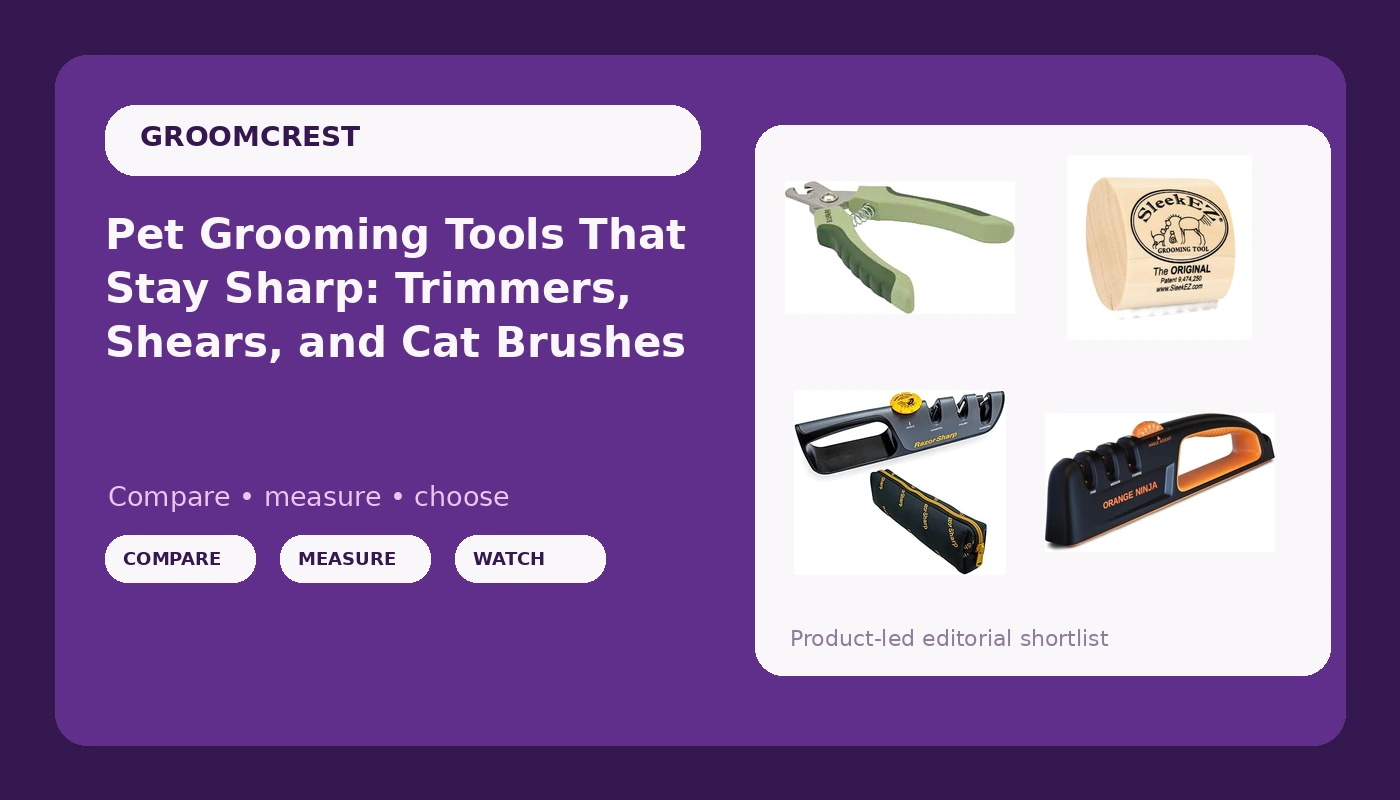
Best for Nails: Coastal Pet Safari Professional Dog Nail Trimmer
Nails are where most home grooms go wrong, and it is not the owner's fault. The quick, the pink nerve and blood supply inside the nail, is invisible on a black nail, and one bad cut teaches a dog to hate nail day for years. I have clipped a lot of nails and I still reach for a grinder on anything black or anything nervous.
The trimmer earns its spot for the other half of the job. On a cooperative dog with thick nails, a good pair of trimmers is faster than any grinder, and this Safari trimmer is the one that lives in the van door pocket. The standard size is built for real nails on real dogs, not the toy-sized jaws you find on cheap trimmers that fold under a lab's thumbnail. It is sized for small and large dogs both, which is why it is the pair I hand to a client who is nervous about grinding.
The rule I give everyone: cut in small bites, look at the cut surface, and stop while the center is still a chalky gray circle. The second you see a pink dot in the middle, you are done. A dull trimmer makes that harder, because a dull jaw crushes the nail before it cuts it, and a crushed nail hurts in a way a clean cut does not. Wipe the blades after every dog, keep them dry, do not drop them on concrete. That is the entire maintenance schedule.
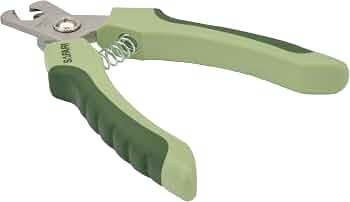
Best for Loose Fur: SleekEZ Cat Brush for Shedding
I have groomed cats out of the van for six years, reluctantly, and the honest truth is that most brushes are built for dogs and merely tolerated by cats. This one is the exception. It is a flat blade with fine teeth, patented, made in the USA, and it works on short, medium, and long coats. What makes it work on cats is that it does not feel like a rake. It glides, the hair collects on the edge, and you wipe it off with a thumb.
I use it on cats first and short-coated dogs second. On a cat it is the difference between a brushing session and a wrestling match, and it pulls the loose fur that would end up on the couch either way. On a beagle or a boxer it lifts dead hair without scratching skin.
Where people get it wrong is expecting it to handle a double coat. A husky or a golden has undercoat packed down near the skin, and no hand tool reaches it the way fifteen minutes of high-velocity air does. Use this as the finishing pass after the blowout, not instead of it. And go easy in one spot. Any tool with teeth will irritate skin if you sit on the same square inch for a minute. A few passes, then move on.
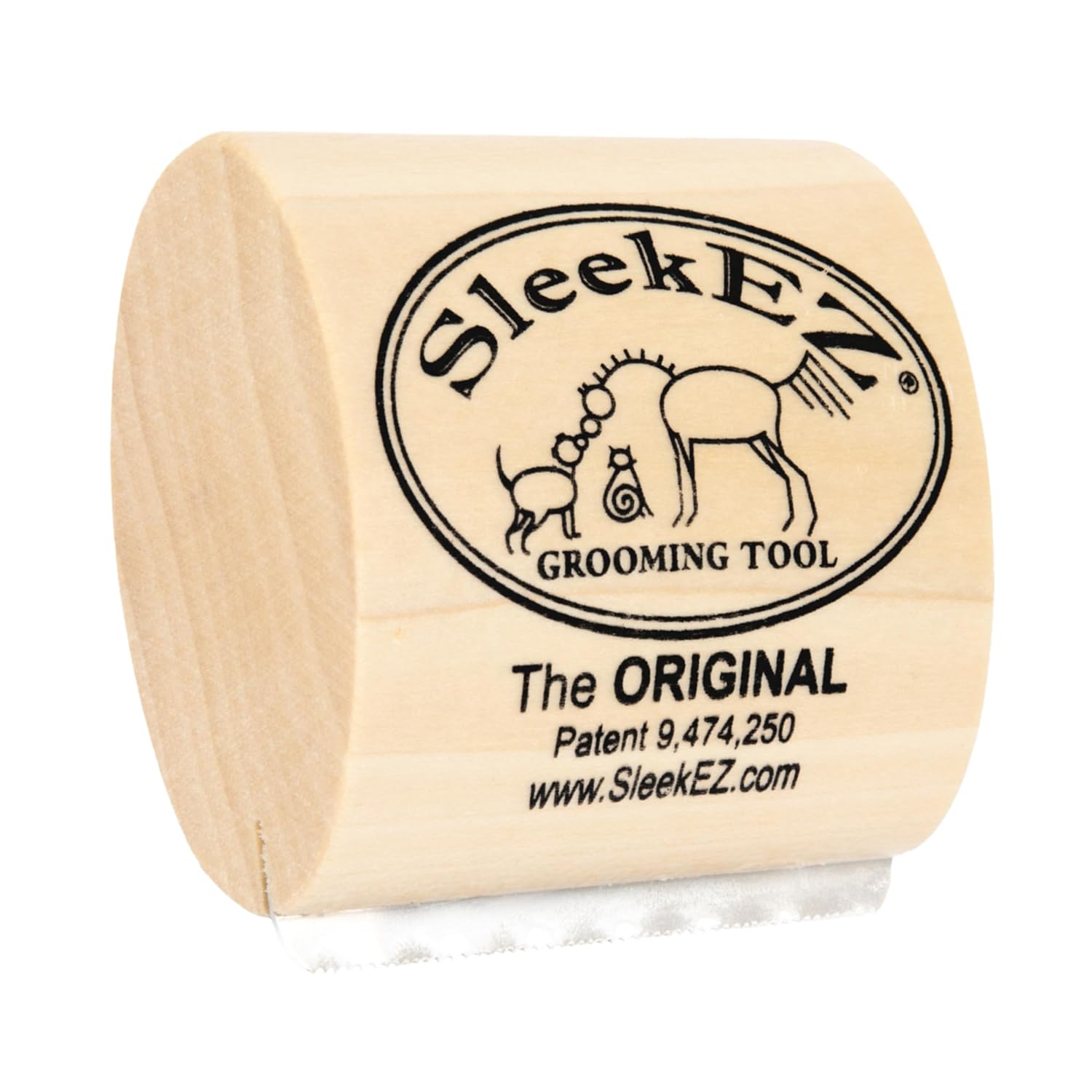
Best for Shears and Scissors: RazorSharp Knife & Scissor Sharpener
Scissor work is what separates a groom from a haircut, and it is the first thing to suffer when shears go dull. A dull shear does not cut hair, it folds it, and a shear that folds hair on a doodle's face is a shear that nicks. I test every pair with a sheet of copy paper: it should cut cleanly from the pivot all the way to the tip. If it drags on paper, it will drag on skin.
Here is the honest part. My good shears have a convex edge, and those go to a sharpening service, not to a pull-through gadget. That is not a knock on this sharpener, it is just what the tool is. The RazorSharp earns its place in the drawer for everything else: household scissors, the blunt-tip safety shears I keep for mats around eyes, the starter pairs that come in kits, and the kitchen knives that get used between dogs. The adjustable angle guide is the feature that matters, because it lets you set the bevel between 14 and 24 degrees instead of guessing, and the wrong angle is how a sharpener eats a blade instead of restoring it.
If you own one pair of forty-dollar shears and you groom your own dog every six weeks, this is a reasonable way to keep them alive between professional sharpenings. If you own two-hundred-dollar shears, send them out. Both things are true.
Best for the Kitchen Drawer: 5 Precision Adjust Knife Sharpener
This one is not a grooming tool, and I am not going to pretend it is. It is a three-stage kitchen knife sharpener, and it is in this guide for a practical reason: a groomer's day ends in a kitchen, and a dull knife is how you end up at urgent care instead of on the couch.
Three stages is the part worth understanding. A blade does not go from dull to sharp in one pass. You grind the edge back with the coarse stage, you set the bevel with the middle, and you polish with the fine. Skipping a stage is why so many kitchen knives come off a cheap sharpener with a wire edge that folds over on the first onion. The same progression is what happens on a professional sharpening wheel, just at a different scale.
Do not run grooming shears through this. The angles are not set up for it, and kitchen sharpeners remove more metal than a shear wants taken off. That is exactly why the RazorSharp with the adjustable guide is the one I point people toward for scissors, and this one stays in the kitchen where it belongs. Two tools, two jobs, no confusion.
How I test the small tools
Every tool here has to survive the van, and the van is a harder test than a kitchen counter. It hits triple digits inside by noon in an Austin summer. Everything rattles. Everything gets dropped.
Nails get judged by time and by stress signals. I time each paw and I count the lip licks, the yawns, and the whale eye, because a dog that licks its lips through all four feet is telling me the tool or the pace is wrong. A trimmer that leaves a ragged edge, or that I have to squeeze twice to get through a nail, gets replaced. A clean cut on a thick nail in one squeeze is the standard.
Brushes and deshedding tools get judged on the kitchen scale and on the coat afterward. I weigh what comes off a husky in a session, then I look at the topcoat for damage. A tool that pulls undercoat and leaves the guard hairs alone is a tool I keep. A tool that thins the topcoat is one I warn people about, which is the same conversation I have about daily Furminator use.
Shears get the paper test first, then a real face. Sharpening tools get judged on whether they restore an edge without removing half the blade, and on whether the angle guide actually holds the angle you set. I read the instructions twice, because plenty of sharpeners on the market are set up for knives and quietly ruin scissors.
What actually fails, and when
Tools in this category fail in three ways, and only one of them is about the metal.
The first is a dull edge, and it is the one owners notice last. A dull nail trimmer crushes. A dull shear folds. A dull clipper blade pulls. In every case the dog tells you before you figure it out, because the groom that used to take twenty minutes now takes thirty and the dog is done before you are.
The second is the wrong angle. This is where sharpeners get dangerous. Every blade has a bevel and every tool wants a different one. Kitchen knives live in the teens to low twenties, which is why the adjustable guide on the RazorSharp and the staged kitchen sharpener are built the way they are. Grooming shears want their own geometry, and a pull-through that grinds the wrong angle leaves you with a shear that cuts paper and folds hair. If you are not sure what angle your shears want, ask the person who made them.
The third is skin. Every tool that touches a dog is either kind to skin or it is not, and that has nothing to do with price. A fourteen-dollar trimmer with sharp jaws is kinder than a forty-dollar trimmer that crushes. A cat brush with fine teeth that glide is kinder than a rake with wide teeth that scrape. I have pulled more gear out of my van for being unkind than for being underpowered.
The small tools reference table
This is the table I keep in the job book. Everything here has been through the van, and the price column is a link rather than a number, because prices move and my memory of them does not.
| Tool | What it handles | Best on | Price |
|---|---|---|---|
 Visit on Amazon → Visit on Amazon →Coastal Pet Safari Professional Dog Nail Trimmer |
Nails, small through large dogs | Thick, light-colored nails on a steady dog | $11.53 |
 Visit on Amazon → Visit on Amazon →SleekEZ Cat Brush for Shedding |
Loose fur and light undercoat | Cats and short-coated dogs | $17.97 |
 Visit on Amazon → Visit on Amazon →RazorSharp Knife & Scissor Sharpener |
Scissors and knives, adjustable angle guide | Household scissors, safety shears, starter grooming shears | $49.99 |
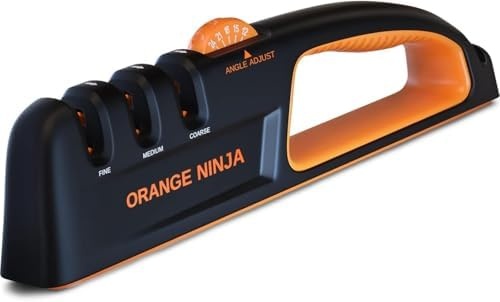 Visit on Amazon → Visit on Amazon →5 Precision Adjust Knife Sharpener |
Kitchen knives, three stages | Kitchen knives only, never shears | $39.99 |
Should you buy the Coastal Pet Safari Professional Dog Nail Trimmer?
If you trim your dog's nails at home, yes. It is the trimmer I hand to nervous first-timers because the jaws are sized for a real nail and the cut is clean enough that you can see exactly where you are. It will not solve a black nail or a dog that panics, and no trimmer will. Pair it with a grinder for those dogs, keep it dry, and it will outlast the cheap pair in the checkout aisle.
Should you buy the SleekEZ Cat Brush?
Yes, especially if you have a cat or a short-coated dog. It is the only deshedding tool I have handed to cat owners without a warning attached, because it glides instead of rakes, and the hair collects on the blade where you can see it. Just do not expect it to replace a blowout on a husky. Use it for maintenance, a few passes per area, and it earns its drawer space.
Should you buy the RazorSharp Knife & Scissor Sharpener?
Buy it if you want to keep household scissors, safety shears, and starter grooming shears alive between professional sharpenings. The adjustable angle guide is the reason it is on this list, because setting the bevel is the difference between sharpening a blade and grinding one away. If your shears cost more than a groom, send them to a service instead. Both answers are honest.
Should you buy the 5 Precision Adjust Knife Sharpener?
Yes, if your kitchen knives are the dull ones. Three stages in the right order will bring a neglected knife back to useful, and it is simple enough that you will actually do it. It is not a grooming tool, and running shears through it is how you ruin a pair, which is why the other sharpener exists. Keep it in the kitchen and let it do its one job well.