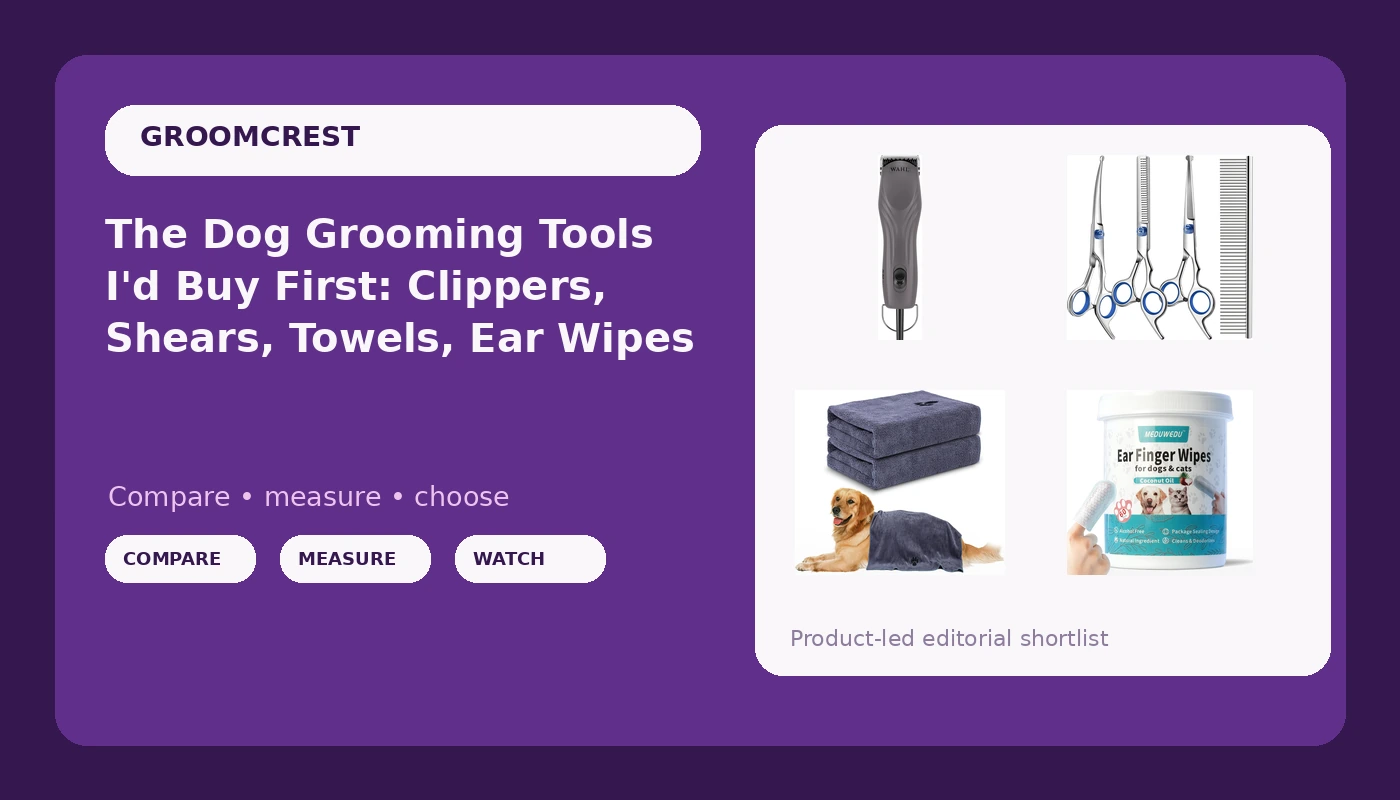
Related: How to Groom a Doodle at Home Without a Pelt
Most people who ask me about at-home dog grooming tools are asking the wrong question. They want to know which clipper is the best clipper, and the honest answer is that the best clipper is the one that matches the dog standing in front of you. A husky and a toy poodle do not need the same gear, and no marketing department has ever met your dog.
I groom out of a van in Austin, which means every tool I own has to survive Texas heat, a 3,000-watt inverter, and dogs that sit six inches from the motor instead of across a salon. That is a harder test than a kitchen counter, and it is why I stopped trusting spec sheets years ago. Gear that behaves in a quiet salon and gear that behaves in a hot van are not the same gear.
The four items in this guide are the unglamorous half of a grooming kit, and the unglamorous half is the half that actually gets used. A corded clipper that does not fade mid-dog. A cheap set of shears with round tips that cuts clean and does not nick an eyelid. Towels that pull water out of a doodle coat instead of pushing it around. And finger wipes for the ears, because ear cleaning is the step every owner skips and the step that has dogs shaking their heads at two in the morning.
Here is what each one does, who it is for, and where it earns its place.
Best Overall: Wahl Pro Animal KM10+ Corded Clipper
A corded clipper is the least exciting purchase in this article and the one that matters most. The KM10+ is built for cats, dogs, and horses, and that tells you something useful immediately: a motor rated for horse coat does not bog down on a doodle's leg. Bogging is the failure mode I see in nearly every cheap clipper, and it is almost never a blade problem. It is a motor problem.
Corded means one thing above all else: no fade. A battery clipper gives you full power for the first dog and steadily less for the second, and you feel it in your hand before you see it on the coat. The blade starts to drag, you push harder to compensate, the blade heats up, and now you are managing temperature instead of managing the groom. With a cord, the motor delivers the same torque on the last pass as the first.
The trade-off is obvious and I will not pretend otherwise. There is a cord, and a cord in a van is something to trip over. You are tethered to an outlet, which makes this a kitchen-table or garage clipper rather than a backyard one. For a home groomer doing one or two dogs on a Saturday, that is a fair trade. For someone who wants to clip a matted rescue in a parking lot, it is not.
What matters more than the badge on the housing is the blade system underneath it. Detachable blades let you swap a dull or hot blade instead of fighting it, and a sharp, cool blade on an honest motor beats a hot blade on a fancy one every single time. If you take one thing from this guide, take that.
Who it is for: the owner of a doodle, a golden, a husky, or any dog whose coat has opinions. Who it is not for: someone trimming a poodle face twice a month, who is better served by a light cordless trimmer and a spare sixty bucks.
Best Value Shears: Professional 4 in 1 Dog & Cat Grooming Scissors Kit
A kit that costs about as much as a coffee run sounds like the kind of listing I tell people to scroll past, so let me be precise about why this one is different. It is different because of the round safety tips and because of what the set actually contains: straight shears, curved shears, thinning shears, and a comb. That is a real face-and-paw kit, not a novelty bundle.
The curved pair is the one that earns its keep. Round faces, poodle feet, and the tidy-up around the eyes all want a curve, and asking a straight shear to do that job is how dogs get nicked. The thinning shears blend the line where the clipper stopped, which is the difference between a groom and a haircut. The comb is not filler either, because the way you use shears is to lift the coat with a comb and cut only what stands above it.
Two checks on any budget shear, and both take ten seconds. First, the paper test: it should slice a sheet of copy paper from the pivot all the way to the tip with no drag. A shear that drags on paper will drag on a face. Second, the tension screw. Cheap shears loosen, and a loose screw makes the blades separate instead of cut. Keep the little wrench that ships in the kit somewhere you can find it, and give it a quarter turn when the paper test starts to fail.
The honest limits: this is a home-trim set, not a career set. It will handle faces, feet, sanitary trims, and light tidy-ups for years with reasonable care. It will not hold an edge through forty doodles a week, and if you groom professionally you already know that. For everyone else, a curved shear that cuts clean at this price is close to free.
The Towels You'll Actually Use: 2 Pack Microfiber Dog Towels
The bath is the easy part. Getting a dog from soaked to mostly dry without it becoming a wrestling match is where home grooms fall apart, and the tool for that is a towel that absorbs water instead of smearing it around the coat.
Microfiber does two things a heavy cotton bath towel does not. It pulls water off the surface of the coat rather than pushing it down into the undercoat, and it does that without becoming so heavy that the dog decides it is finished standing still. Two towels in a pack is the right number: one for the first pass, one for the second, so you are not wringing a soaked towel over a wet dog.
A few habits keep microfiber working. Wash it without fabric softener, because softener coats the fibers and turns an absorbent towel into a slippery one. Wash it away from anything with velcro or zippers, because microfiber grabs and pills. And hang it to dry instead of leaving it in a heap, because a damp microfiber towel in a closed bag smells like a kennel by morning.
This is not a dryer replacement. If you own a double-coated dog, a towel gets you part of the way and moving air does the rest, because the undercoat holds water long after the topcoat feels dry. But every bath starts with towels, and this pair is the cheapest upgrade in the whole guide.
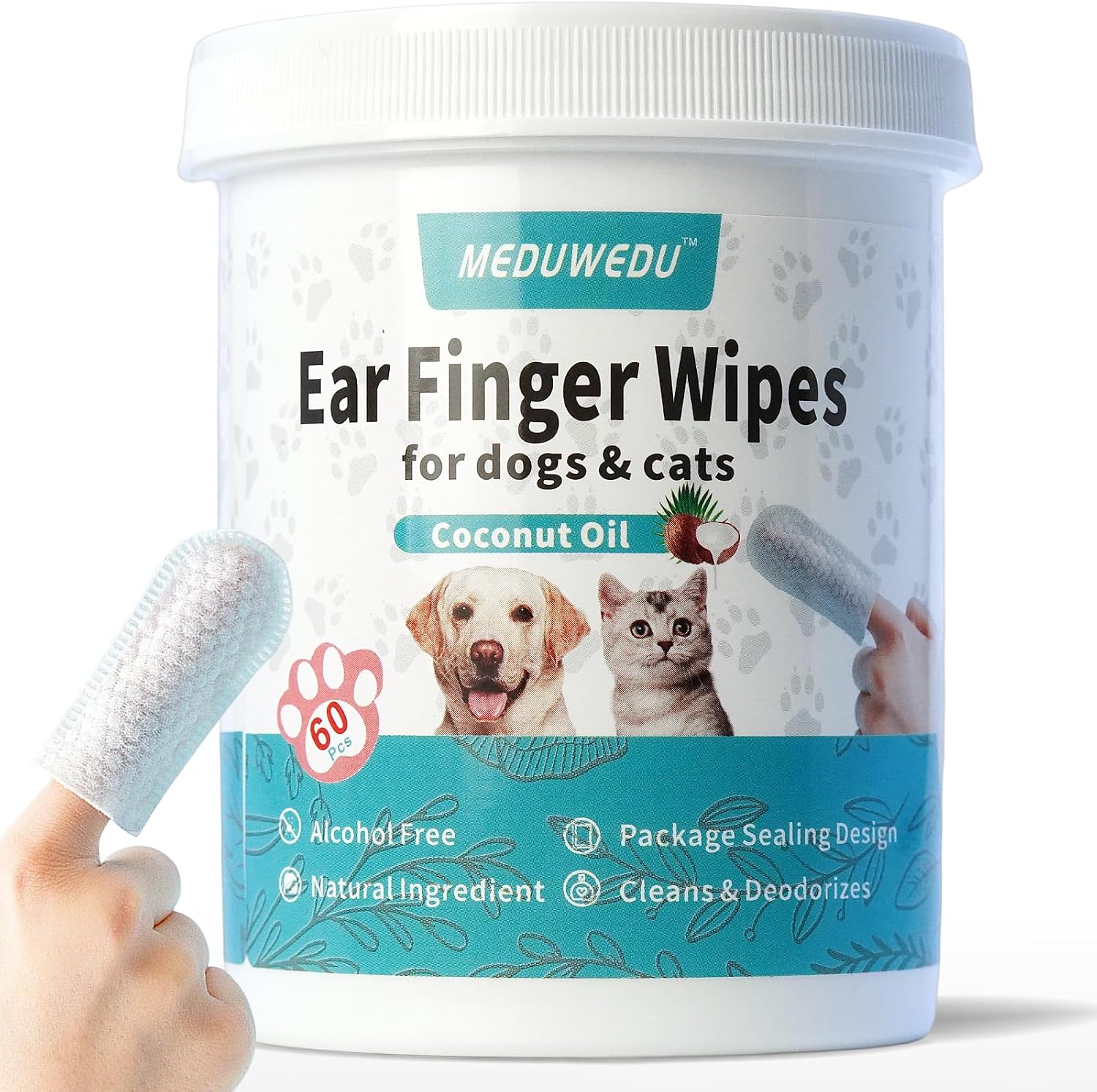
The Step Everyone Skips: MEDUWEDU Ear Cleaner Finger Wipes
Ear cleaning is the maintenance task that gets ignored until the dog is shaking its head and the ear smells like a bakery gone wrong. The finger wipe format solves the real problem with home ear cleaning, which is that owners reach for a cotton swab and pack wax deeper into a canal shaped like an L.
You slide the pad over a finger, wipe everything you can see, the folds and the flap and the crease behind the ear, and you stop there. That is the entire technique. The canal itself does not want a swab. If an ear needs more than the visible surfaces, that is a cleaner and a vet conversation, not a deeper finger.
The coconut scent is mild, and it is there to leave the ear smelling neutral instead of yeasty, which matters more than it sounds, because smell is how you catch an ear problem early. Sixty pads goes a long way at one or two per ear per week, and pre-moistened pads remove the temptation to improvise with whatever is in the bathroom cabinet.
The line I draw: maintenance is a wipe. A red, hot, painful, or foul-smelling ear is a vet visit, and no wipe in this guide fixes an infection. Dogs with upright ears generally need less of this than floppy-eared dogs, because air moves through an upright ear and does part of the job for you.
How I judge these tools
Every tool gets the same five questions before I would tell a client to spend money on it. Does it do its job on a real coat, not a demo coat? Does it survive being used twice a month for a year? Does the dog tolerate it without lip licks and yawns, which are the stress signals that say a tool is too loud or too rough? Is the price fair for what it does? And would I keep it in the van if space were free?
That last question is the real filter. Van space is not free, so a tool has to be better than the thing it replaces, not merely fine.
I also care about the boring specifications. Blade systems, because the blade is the tool and the clipper is just the thing that spins it. Tension screws on shears. Dry time and wash behavior on anything that touches a wet coat. And whether a product is maintenance or treatment, because those are different categories and the packaging blurs them on purpose.
Analysis: what actually matters
Power delivery matters more than motor size on a box. A corded clipper that holds its speed through thick coat beats a cordless one that claims more power and fades halfway up a leg. That is not brand loyalty, it is how a motor behaves under load.
Sharpness matters more than price on shears. A curved shear with a good edge and a tight screw will finish a face cleanly. A dull expensive shear will pull hair and teach the dog to hate the process, and no amount of pedigree fixes a dull edge.
Absorbency matters more than size on towels. You want water out of the coat, not a bigger towel.
Gentleness matters more than strength on ears. The correct pressure on an ear canal is almost none, and the correct tool is the one that keeps you on the surface where you can see what you are doing.
And the thing that ties all of it together: the dog is the spec sheet. A tool that makes a dog flinch has failed no matter what it cost. A tool the dog stands still for has already earned its money.
The grooming tool reference table
This is the same table I keep in the job book, trimmed to the four tools in this guide. Read the middle columns before you look at the price, because the job a tool does is what you are actually buying.
| Tool | Job on the table | Best for | Watch for | Verdict |
|---|---|---|---|---|
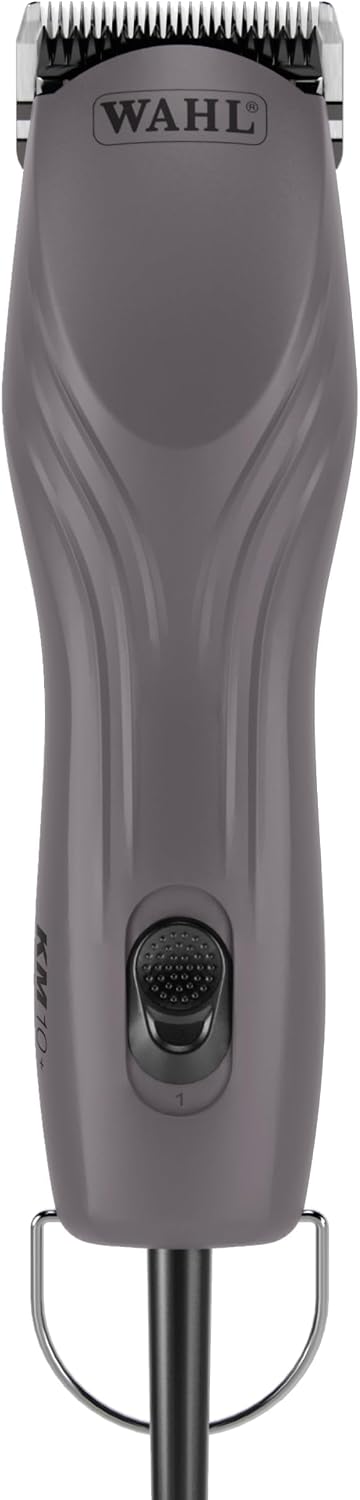 Visit on Amazon → Visit on Amazon →Wahl Pro Animal KM10+ Corded Clipper |
Full body clips, heavy coat, matted work | Doodles, goldens, huskies, thick coats | The cord, and you need an outlet nearby | The one to buy if you clip more than faces |
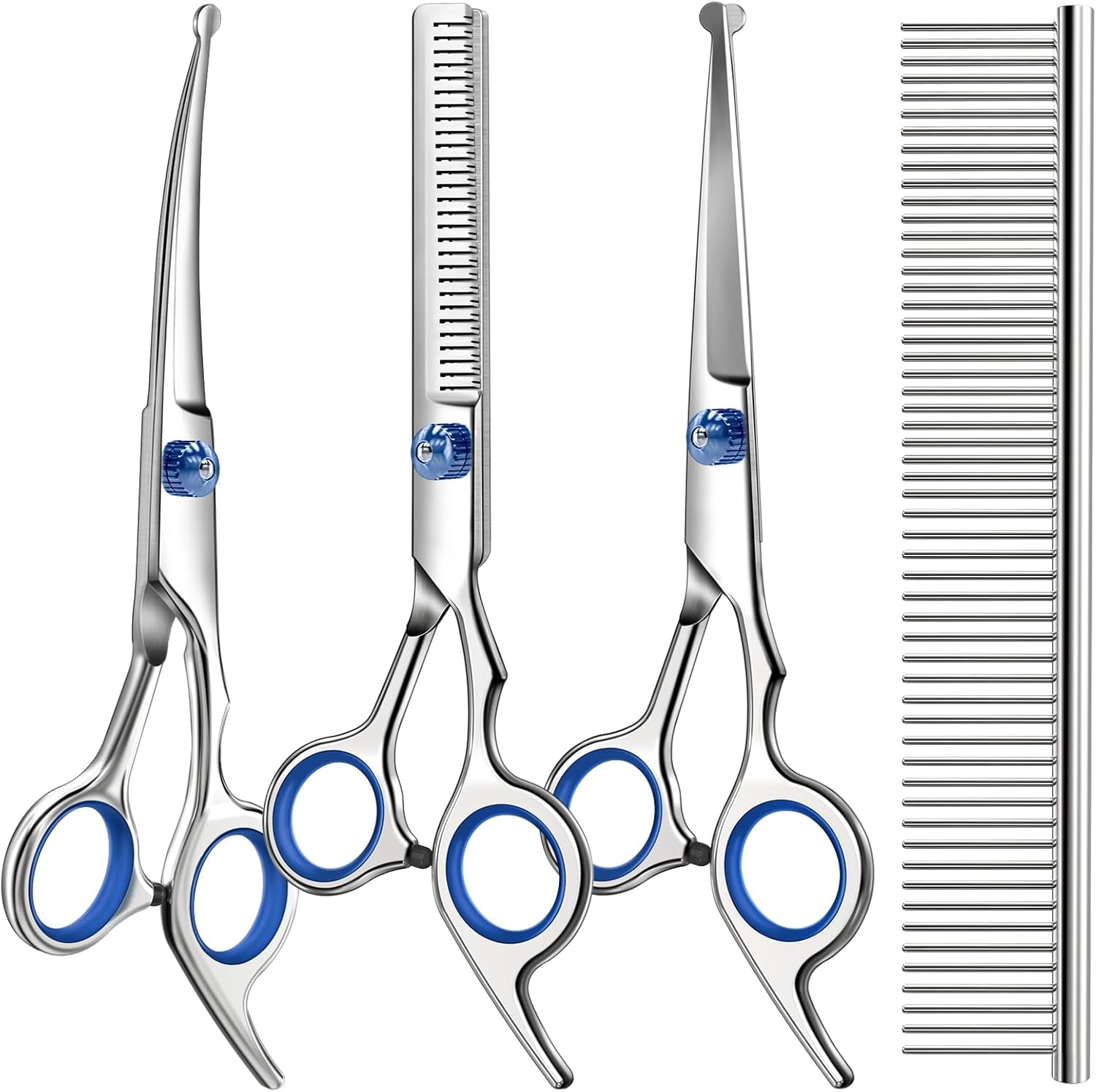 Visit on Amazon → Visit on Amazon →Professional 4 in 1 Grooming Scissors Kit |
Faces, paws, poodle feet, blending a clipper line | Home trims and tidy-ups | Tension screw loosens over time | The best ten dollars in the kit |
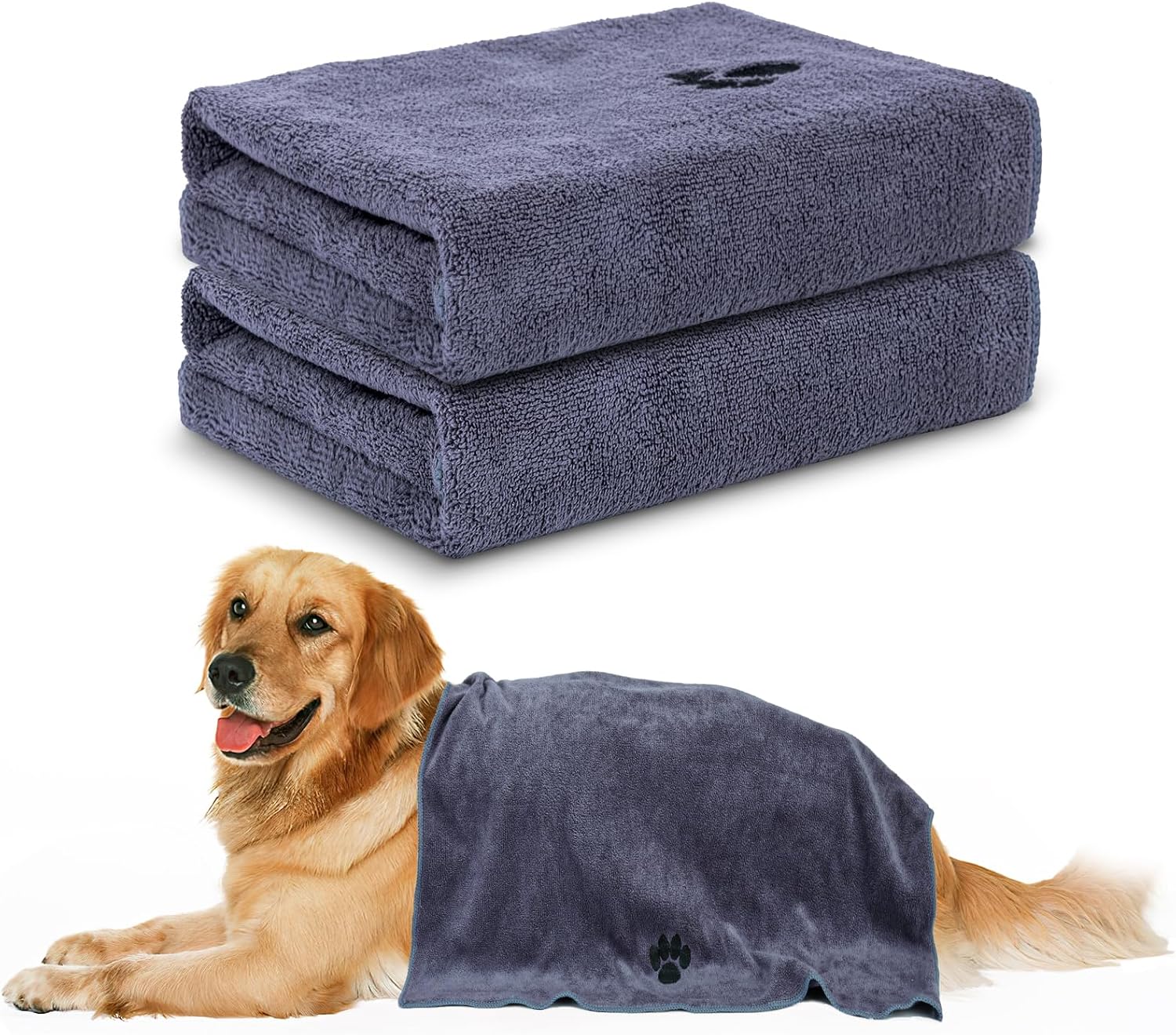 Visit on Amazon → Visit on Amazon →2 Pack Microfiber Dog Towels |
Drying after the bath | Every coat, every bath | No fabric softener, ever | Buy two packs and thank yourself |
 Visit on Amazon → Visit on Amazon →MEDUWEDU Ear Cleaner Finger Wipes |
Weekly ear maintenance | Floppy-eared dogs and cats | Maintenance only, not for infections | The step you were skipping |
Order matters as much as the tools. Brush the coat out first, because you cannot clip what you have not separated. Bath, then towel, then dry. Nails before the trim, while the dog is still fresh and you have not already spent its patience. Ears last, because it is the one step most dogs dislike. Then trim.
Should you buy the Wahl Pro Animal KM10+ Corded Clipper?
Yes, if you clip full coats rather than just faces. Corded power that does not fade, a detachable blade system you can rotate instead of fighting, and a motor rated for cat, dog, and horse coat. It is the tool in this guide that changes what a home groom is capable of, because it will not stall on the exact coat that makes cheap clippers stall.
The trade-offs are real and I listed them. There is a cord. It costs real money. You cannot do this one in a parking lot. If your dog only needs a tidy around the eyes and feet, skip it and buy a light cordless trimmer instead. But if you are the person who bought clippers twice and gave up twice, this is the purchase that ends that cycle.
Should you buy the scissors kit?
Yes, for almost everyone. Round safety tips, a curved shear for faces and paws, a thinning shear to blend where the clipper stopped, and a comb to lift the coat so you cut the right amount. Run the paper test when it arrives, tighten the tension screw when the test starts to drag, and keep it dry.
Just do not mistake it for a career tool. It is a home kit built for monthly trims, and it is honest about that. Add the towels for bath day and the finger wipes for the ears, and you have covered the three steps that most home groomers skip.