Related: Why Your Double-Coated Dog Sheds More After a Bath
I have groomed dogs for ten years, the last six out of a converted cargo van parked in driveways all over Austin. That means I have met every shedding dog in Travis County and the owners standing next to them holding a brush that stopped working in 2023. Here is what I tell them at the door: shedding is almost never a brushing problem. It is an air problem and a coat-type problem, and the dog grooming tools for shedding that actually work are the ones built to move dead undercoat out of the coat instead of raking the topcoat until it snaps.
So this is not a gadget list. It is four tools that do four different jobs, plus the specs I check before anything earns floor space in the van. One is a full-size high velocity dryer, one is a handheld dryer small enough for a drawer, one is a 7-in-1 grooming vacuum kit, and one is a cat brush that turns out to be the gentlest deshedding tool I own for small animals. Different jobs, different dogs, and the wrong pick for your dog is worse than no pick at all.
Best for Double Coats: EGFKI High Velocity Dog Dryer
This is the category of tool I reach for before the bath, not after it. The EGFKI is a 5.2 HP, 3800-watt high velocity blower with a heater, adjustable speed and temperature, and four nozzles in the box. On a double coat, fifteen minutes of air before the shampoo lifts more dead undercoat than an hour with a rake, and it does it without dragging metal across the skin. That is the whole argument for owning one.
What matters to me here is the control stack. Speed and temperature adjust separately, which sounds like a small detail until you meet a dog that tolerates air but not heat. You can run high air with the heater off on a hot day, or drop to low air with gentle warmth in January when a wet doodle is shivering on the table. The four nozzles cover the jobs I actually have: a concentrator for driving water out of a thick coat, a wider head for the body, and narrower tips for feet and face work where I want precision instead of force.
Two things to plan for. First, power. A 3800-watt dryer wants a dedicated household circuit, and it is not going to run off a small van inverter. If you blow a breaker, that is the machine doing its job, not a defect. Second, heat discipline. Warm air is a tool for drying a coat, not for drying skin. On a shaved belly or a thin-coated dog, keep the temperature low and keep the nozzle moving.
Best for Between-Groom Maintenance: oneisall Dog Grooming Vacuum
The oneisall is a 7-in-1 kit: a suction grooming head, a deshedding attachment, clipper and detail tools, and a dust cup that collects what it pulls instead of throwing it across the room. That last part is why these kits sell. There is no cloud of undercoat drifting onto the couch while you work.
Where it earns its place is cats and small to medium dogs between grooms. Loose fur on a short coat, a little tidying on the haunches, a quick pass before a client arrives. It is also marketed as low noise, and that is the spec I care about most on any vacuum. Noise, not suction, is what makes a dog decide the tool is dangerous. A nervous dog reads a vacuum at the ear, not at your hand, so listen for it next to the dog's head before you commit.
Where it stops is thick double coats. Suction does not reach undercoat the way air does, and it fades as the cup fills and the fur packs the head. If you own a husky or a shepherd, this is a supplement to a dryer, not a substitute for one. Used as a maintenance tool on the right dog, it is genuinely handy. Used as a promise to fix shedding on a double coat, it will disappoint you.
What I check before a tool earns space in the van
My van is small, my inverter is limited, and my floor space is measured in inches, so nothing gets to stay unless it passes the same short list.
Does it survive a full coat without bogging or heating up? A tool that stalls on a doodle's leg is a tool that stalls on the dog you actually own.
What does the noise sound like at the dog's ear? Not at your hand, not at the counter. A dog that lip licks and yawns through a groom is telling you the tool is too loud, and that feedback is worth more than any sticker.
Does it work on both a curly coat and a 70-pound dog that leans? Gear that only performs on a cooperative Maltese is a toy.
Would I use it on a nervous rescue or a puppy? If the answer is no, it stays home.
Does it earn its space? There is one answer to that question, and it is not about the box.
Analysis: coat type decides the tool, not the trend
Every dog is a double coat or a single coat, and the answer is different for each one.
A double coat is a topcoat plus a dense undercoat. Huskies, goldens, labs, shepherds. These dogs need less bathing and more air. Shampoo strips the natural oils that keep the undercoat healthy, so over-bathing makes shedding worse, not better. The tool that matters is the high velocity dryer, used as a blowout before the bath and again in spring when the coat blows. A brush alone will never keep up.
A single coat is continuous hair: poodles, doodles, Yorkies, bichons, and most cats. These dogs mat instead of blowing coat, so the priority is regular brushing and a schedule that keeps hair from tangling at the skin. A vacuum kit and a gentle brush do more here than a blower does, because the problem is tangling rather than volume.
Matted dogs are a third category and they do not get brushed out. They get shaved down and started over. No gentle tool fixes a pelt, and any product promising otherwise is selling you a second appointment.
The reference table
This is the table I keep in the job book. It is not a ranking, because the right tool depends on the coat in front of you. It is a map from dog to tool.
| Tool | Best for | Coat type | What the specs say | Price |
|---|---|---|---|---|
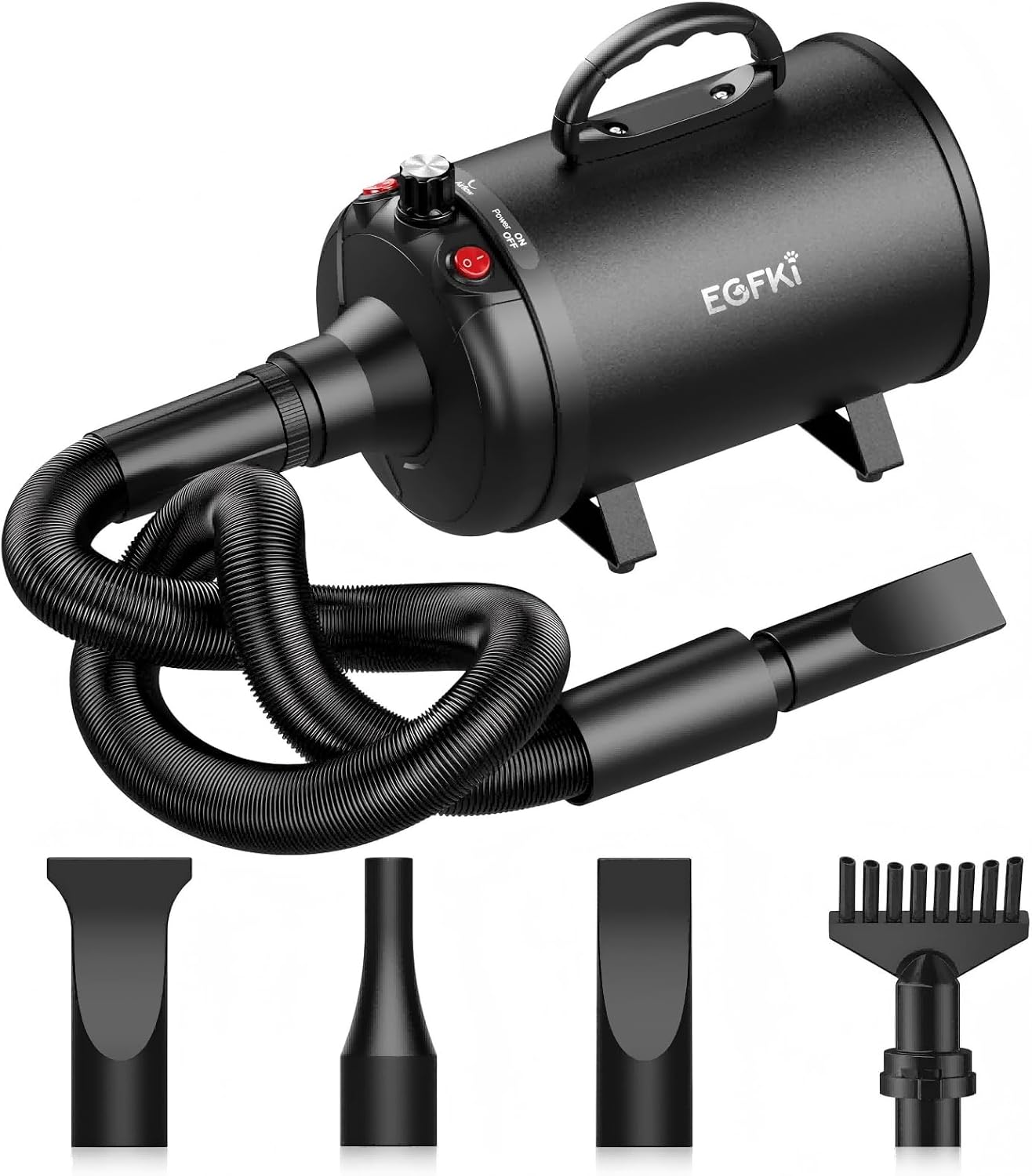 Visit on Amazon → EGFKI high velocity dryer |
Blowout before the bath | Double coats | 5.2 HP, 3800W, heater, adjustable speed and temperature, 4 nozzles | $89.99 |
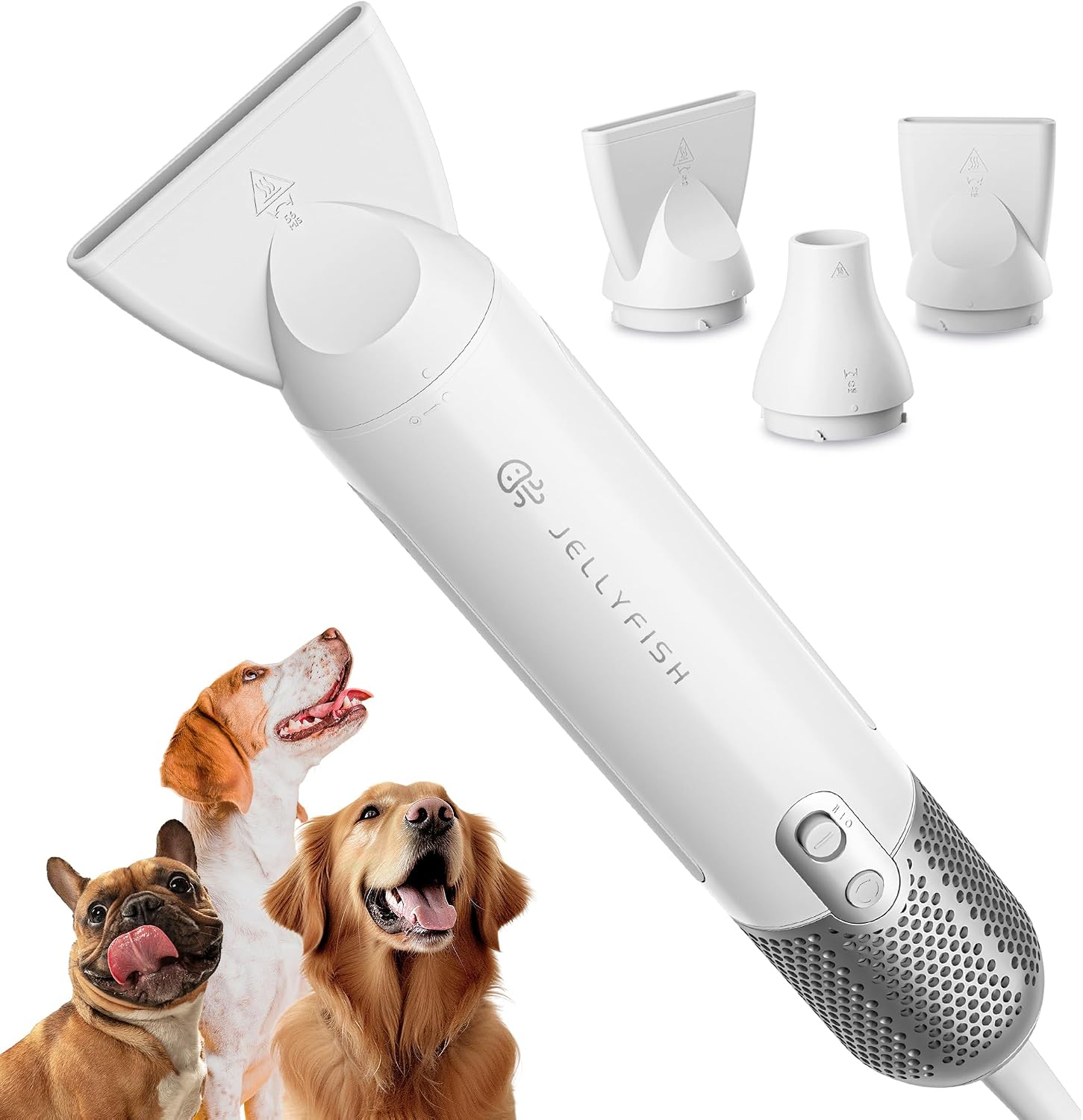 Visit on Amazon → Jellyfish handheld dog dryer |
Touch-ups, travel, small dogs | Single coats, faces, feet | 1.21 lb, 2 speeds, 4 temperatures | $97.99 |
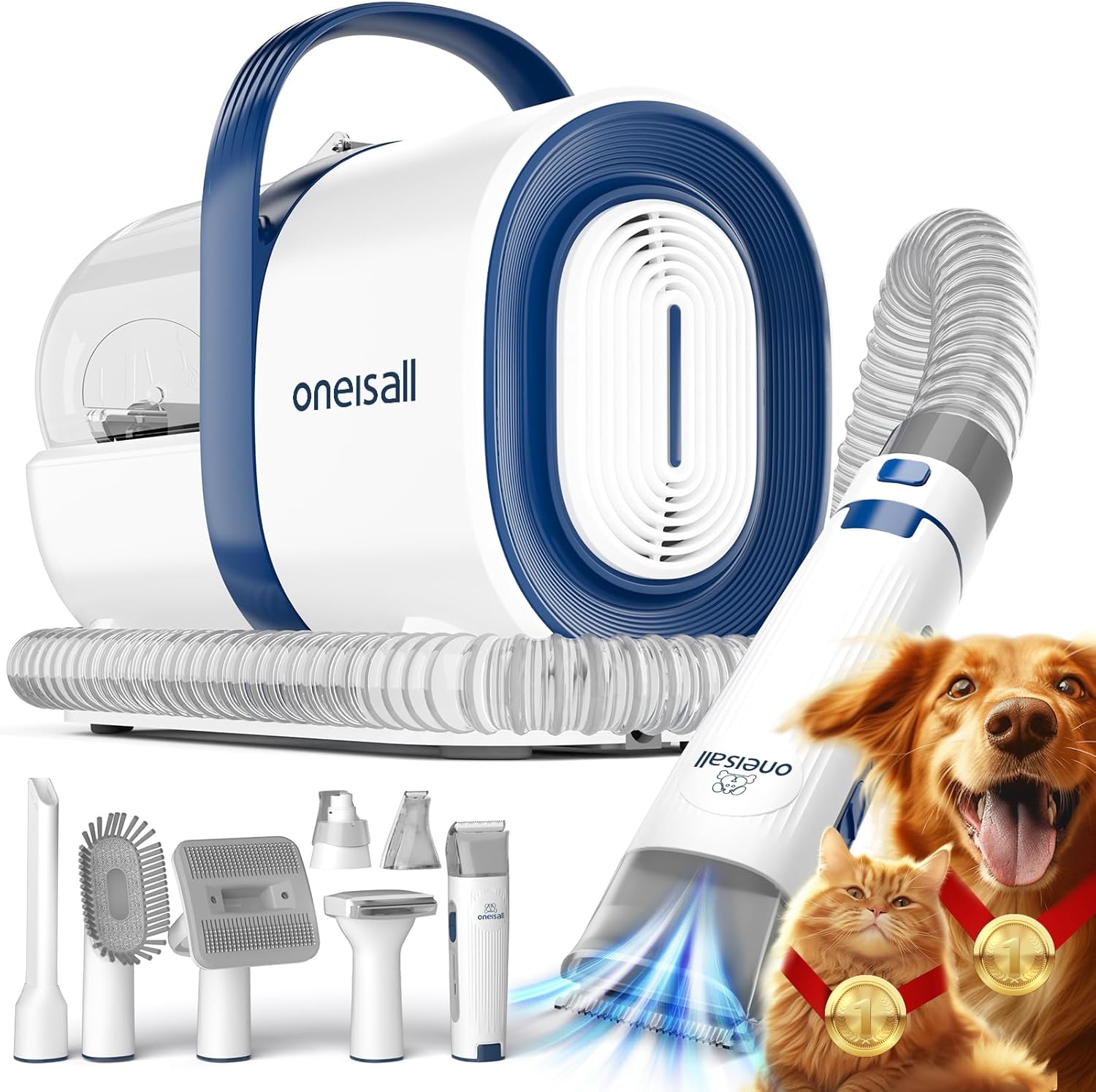 Visit on Amazon → oneisall grooming vacuum |
Between-groom maintenance | Cats, small to medium dogs | 7-in-1 kit, low noise design, dust cup | $84.99 |
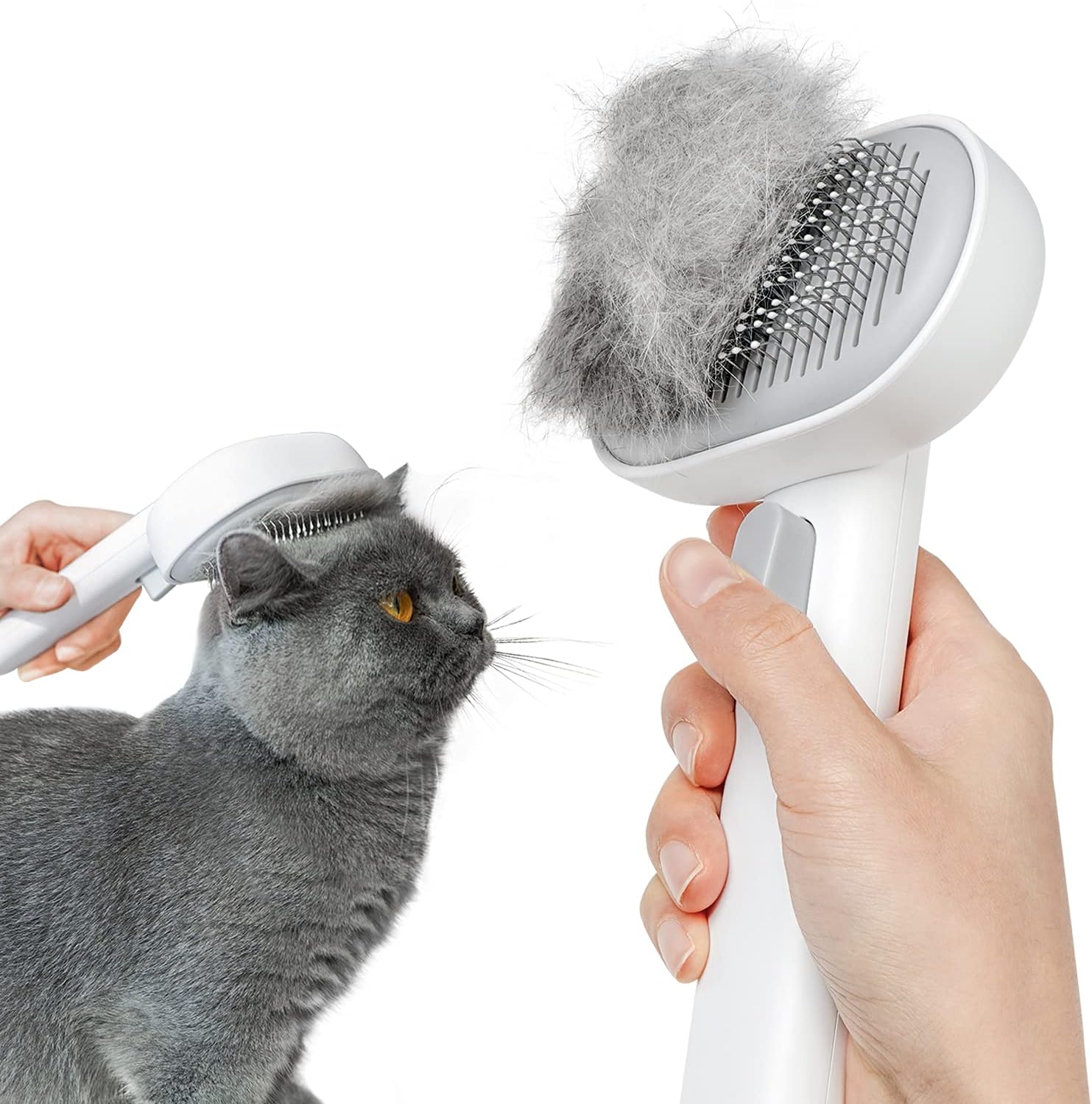 Visit on Amazon → Aumuca cat brush |
Cats, kittens, small pets | Long and short cat coats | Shedding brush, massage style, removes loose fur | $15.99 |
Best for Travel and Small Dogs: Jellyfish Handheld Dog Dryer
At 1.21 pounds with 2 speeds and 4 temperature settings, the Jellyfish is the dryer for the jobs a full-size blower is too much for. Poodle feet. A face. A paw that got wet in the yard. A cat that needs a spot dry and would rather not be in the same room as a leaf blower.
That is the honest use case, and it is a good one. A human hair dryer is not a dog dryer, because it runs too hot and too weak, and it takes forever to half-dry a coat. A handheld high velocity unit is a different machine. It moves air fast at a temperature you choose, it fits in a drawer or a travel bag, and it does not require a dedicated circuit.
What it will not do is dry a husky after a bath. If you own a big double-coated dog, this is the second dryer you buy, not the first. If you own a Maltese, a Yorkie, a Frenchie, or a cat, it may be the only one you ever need, and the size means you will actually use it instead of dreading the setup.
Best for Cats and Small Pets: Aumuca Cat Brush
The Aumuca is sold as a cat brush for shedding on both long and short haired cats, and it also works as a massage brush on kittens and small animals. That description is accurate, and the massage framing is the part I care about. Cats do not tolerate rakes. They tolerate something that feels like petting, which is why the brush a cat owner actually uses beats the brush with the best marketing.
Use it in short passes, in the direction the coat grows, with one hand steadying the cat and the other doing the work. Cats get matted behind the ears, on the belly, and at the base of the tail, the spots they groom most. If you find a mat in one of those places, put the brush down. Mats are a groomer or a vet, not a home project, and I have seen too many scissor wounds from owners who tried.
On short coats, this is also a reasonable finishing tool for a small dog. On a double coat, it is a surface brush and nothing more.
Should you buy the EGFKI high velocity dryer?
Yes, if you own a double-coated dog. This is the tool that changes shedding season from a losing battle into a fifteen-minute job, and the adjustable speed and temperature plus four nozzles give you the control a nervous or thin-skinned dog needs. Run it as a blowout before the bath and again when the coat blows in spring.
Plan for the power draw, because 3800 watts is a serious load, and keep the heat low anywhere the coat is thin. If your dog is small or single-coated, this is more machine than you need, and the handheld is the better buy.
Should you buy the oneisall grooming vacuum?
Yes, with the right expectations. It is a maintenance tool for cats and small to medium dogs, and the 7-in-1 kit means one box covers deshedding, tidying, and detail work without fur ending up on the floor. The low noise design is the reason it gets recommended to nervous dogs at all.
No if your dog is a husky, a golden, or a lab. Suction does not lift undercoat, and a double coat needs air. Buy the dryer first, then add this later if you still want help between grooms.
Should you buy the Jellyfish handheld dryer and the Aumuca cat brush?
Both are small-tool buys that solve specific problems well. The Jellyfish is the dryer you will actually pull out for feet, faces, and travel, at 1.21 pounds with 2 speeds and 4 temperatures. The Aumuca is the brush a cat will let you use, and a cat that gets brushed weekly sheds less on the couch and mats less at the skin.
Neither one replaces the big tools. Together they cover the small animals and the small jobs that a full-size dryer and a grooming vacuum were never meant for. Pick by the dog, or the cat, in front of you, and the shedding problem gets a lot smaller.