Most shedding advice fails because it treats shedding as a hair problem. It is a coat problem. A husky in September is not losing hair because it needs a bath; it is blowing the undercoat it grew for a winter that is not coming, and the topcoat sitting over that undercoat is the thing you have to protect. Reach for the wrong tool and you pull live coat, leave a patchy finish, and wonder why the dog looks worse after you brushed it.
The routine below is the one I run in the van, and it comes down to a deshedding brush and comb used in a specific order: lift the loose undercoat, check the work with a metal comb, and keep the utility edges in your drawer sharp. Get the order right and shedding season stops being a war fought on your couch cushions.
Everything here works on a dog that is already brushed out. If your dog is matted, stop and read the section on when to put the tools down, because no brush fixes a pelt.
Why you should trust me
I have groomed dogs for ten years, the last six out of a converted cargo van that I park in driveways across Austin. I am fear-free certified, which means I spend as much time watching stress signals (lip licks, yawns, whale eye) as I do watching the coat. I run forty-odd doodles a week, plus labs, goldens, huskies, and the occasional matted rescue that arrives in a trash bag.
I also keep a job book with numbers in it. Blade temperatures logged with an infrared thermometer, dryers timed to 90% dry on a wet doodle, undercoat weighed on a kitchen scale, decibels read at the dog's ear. When a tool fails in the van, it goes in the book. When a tool survives a hot Austin summer in the van, it goes in the book too. The picks below come out of that book.
How I picked and how I tested
Every deshedding tool gets the same three questions.
First, what does it take off? A good undercoat tool lifts dead, loose coat and leaves the topcoat intact. A bad one cuts live topcoat along with the undercoat, and you do not notice until three months later when the coat looks thin and dull. My check is simple: brush a section, then look at the skin and at what is left on the dog, not just what is piled on the tool.
Second, does the dog tolerate it? A deshedding session on a double coat runs 15 to 30 minutes. That is a long time to hold still, so drag, scratch, and pressure matter more than the copy on the box.
Third, does the tool still work on the third dog of the day? Pins that bend, heads that clog with fur, handles that make your hand cramp by dog three, all of that is a tool you end up fighting instead of using.
For edge tools the question changes. Does it leave a clean, consistent edge without gouging the steel, and can you use it without a tutorial? A sharpener that needs a lesson does not get used, and a dull shear does not cut coat. It folds it, which is how dogs get nicked.
The two tools this routine runs on
You do not need a grooming kit for this. You need one tool that lifts undercoat, one comb that tells you the truth, and a way to keep the small edges sharp.
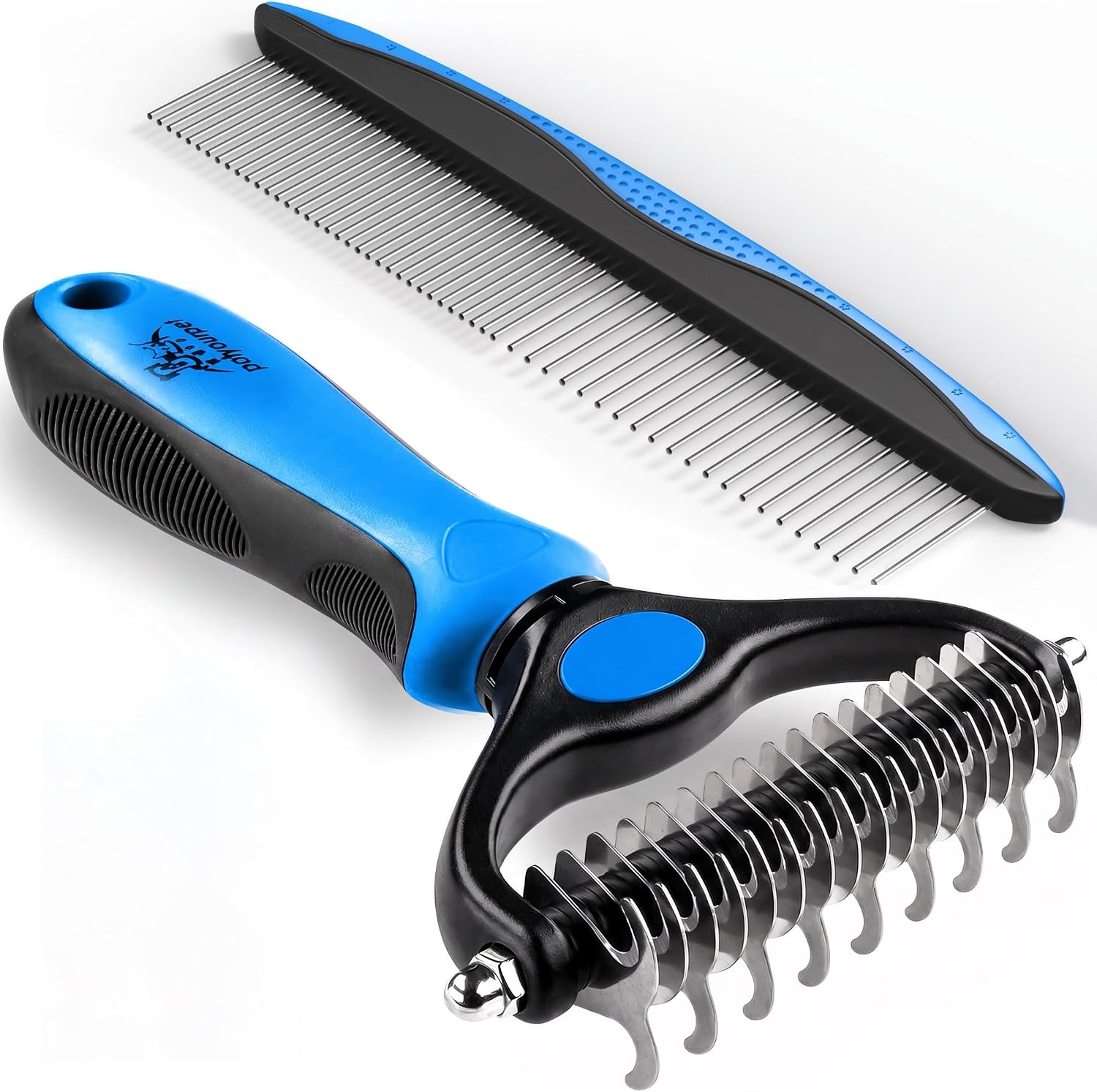
The undercoat tool: Pat Your Pet Deshedding Brush & Metal Comb Grooming Combo
 Visit on Amazon →
The reason I prefer a combo over a single brush is that deshedding is a two-part job and most people only buy the first part. The brush lifts loose undercoat out of the coat. The metal comb is the check: run it through the section you just finished, and if it stops or catches, there is still undercoat in there or a mat is starting. A brush alone will skim happily over the surface and leave you convinced the job is done when it is not.
On a double coat, work with the lay of the hair in small sections and let the tool do the work instead of leaning into it. Pressure is what irritates skin, and pressure is what teaches a dog that the brush is something to avoid.
Flaws but not dealbreakers: this is a maintenance and finishing tool, not a mat remover. If the comb stops dead and the coat feels like felt under your fingers, you are past brushing, and no amount of work with a tool in this class will fix it. The comb is also the piece that goes missing, so keep it clipped to the brush.
Anyone with a lab, golden, husky, shepherd, or any dog that sheds in tufts will get their money out of this combo, especially if they have been trying to deshed with a slicker alone.
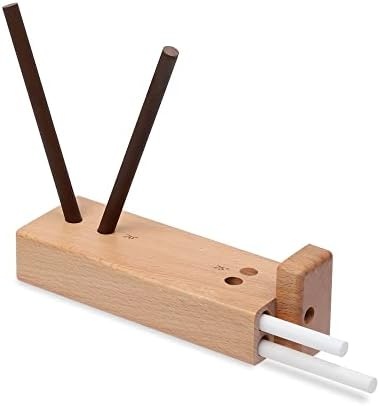
The edge keeper: 4-Rod Ceramic Sharpener Box for Kitchen Knives and Cutlery Sharpening Tool
 Visit on Amazon →
This one is labeled for kitchen knives, and that is exactly what it is: a box with ceramic rods that put a working edge back on a blade in a handful of strokes. I am putting it in a grooming article on purpose, because the utility edges in a grooming drawer go dull faster than anything else you own and almost nobody sharpens them.
Here is the honest placement. This sharpener is for the straight shears you keep for cutting through a mat before a bath, the blunt-tip snips in your first-aid kit, and the kitchen knives that live in the same house. Those are everyday, softer-steel edges, and ceramic rods bring them back quickly.
What it is not for: your good curved shears. The convex edge on a professional shear is ground a specific way, and a pull-through ceramic sharpener flattens it. If your grooming shears cost more than your clippers, they go to a sharpener who knows shears, not to a box on the counter.
Flaws but not dealbreakers: a rod sharpener removes a little steel every time you use it, so use it when an edge actually needs it rather than every weekend. It also will not rescue a nicked or badly rolled edge. That is a bench job.
Anyone who keeps utility shears, snips, and kitchen knives in one household will reach for this more often than they expect.
The actual deshedding workflow
This works on any double-coated dog, on a table or on the floor, with the dog standing.
Step one: Read the coat. Two kinds of coats, two different answers. A double coat is a topcoat over a dense, woolly undercoat: huskies, goldens, labs, shepherds, most spitz breeds. That undercoat is what blows in spring and fall, and it is what you deshed. A single coat is hair that grows continuously: poodles, doodles, Yorkies, bichons, shih tzus. Those dogs shed into their own coat instead of blowing it, which is why they mat. Running an undercoat tool over a single coat pulls live hair and thins the coat. If you are not sure which you own, part the coat to the skin. If you see a dense woolly layer under longer guard hairs, that is a double coat.
Step two: Work dry, in sections. Deshedding happens before the bath, on a dry coat. Part the coat down to the skin in a line, work that line with small strokes going with the lay of the hair, then move over two inches and do it again. Ten minutes of that beats an hour of random brushing, and the dog feels the difference.
Step three: Follow with the comb. The comb is the honest one. Drag it through the section you just finished. If it glides, the section is done. If it catches, either there is more loose undercoat, in which case go back over it, or the coat is packing into a mat, in which case stop. Never fight a mat with a deshedding tool.
Step four: Blow out, then bathe. If you own a high-velocity dryer, blow the dog out before water ever touches the coat. Air lifts dead undercoat that brushing never reaches, and it does it in minutes. Then bathe with a shampoo that rinses clean, dry thoroughly, and give the coat one more pass once it is dry, because drying tightens loose hair down against the skin.
Step five: Set the schedule and hold it. Double coats get brushed two to three times a week, with a heavier session during the spring and fall blows, and bathed every six to eight weeks. Single coats get brushed every two to three days and bathed every three to four weeks. Brushing is the schedule that matters. If you only keep one commitment, keep that one.
When to put the tools down
A matted coat means stop. Dragging a brush or an undercoat tool through a pelt hurts, and it teaches the dog that grooming is pain. A matted dog gets clipped down and started over, and that is a conversation about brushing, not a tool problem.
Shaving a double coat is not a shortcut either. The undercoat is insulation, and it can grow back patchy or wrong after a full shave. Skin issues, hot spots, lumps, or a dog that yelps when you touch one spot all mean a vet visit before any grooming session. And a dog that lip-licks, yawns, or tries to leave during step two is telling you to slow down, not to push through. Change the plan, take a break, come back.
What this all costs
Two tools, no kit. The brush and comb combo handles the coat, and the ceramic sharpener keeps the utility edges in your drawer alive instead of folding coat and nicking skin. Check current Amazon price on both and compare that with what a single deshed appointment runs in your city, then compare it with what you spend on lint rollers and vacuum bags in one shed season. The tools pay for themselves the first time you get through a blow without booking a groomer.
The real cost is time. Twenty minutes, two or three times a week, for the six weeks a double coat takes to blow. That is the entire secret, and no tool on the market replaces it.
Get the order right, dry before wet, comb after brush, and let the dog tell you when you are done. The coat you save is the one you keep.