Deshedding a thick double coat is a sequence problem, not a brushing problem. Every spring and fall I watch owners buy a stiffer brush and lean harder into a husky's back, and every spring and fall the dog ends up with a scraped topcoat and a coat that still sheds. The fur that is already dead has to come out in the right order: loose hair first, then air, then water, then the skin underneath.
I groom dogs out of a converted cargo van parked in driveways all over Austin. Most weeks that is forty-odd doodles, plus labs, goldens, huskies, and the occasional matted rescue that shows up in a trash bag. The van taught me to measure things, because there are no salon walls to hide a tool that runs hot, loud, or weak.
Here is the order I use on a thick coat, the two tools that do most of the work, and the parts of the job most owners skip entirely.
Why you should trust me
I have groomed for ten years, the last six out of the van. I started at nineteen as a bather at a strip-mall salon, and on my third week the only groomer quit mid-shih-tzu, so I finished the dog with a 10 blade and a bruised thumb. I have been finishing other people's dogs ever since.
I am fear-free certified, which in practice means I read lip licks, yawns, and whale eye before I read the label on a box. I keep a job book in the van with a number behind every review I write: decibel readings from a cheap meter, runtimes timed on my phone, blade temps logged every ten minutes with an infrared thermometer, and grams of undercoat pulled off huskies on a kitchen scale. If a tool did not survive the dogs, it does not survive the review.
How I picked and how I tested
For deshedding tools, looks mean nothing. I weigh the fur a tool pulls, then I inspect the topcoat underneath for cut ends and brush burn. A tool that pulls twelve grams and leaves a ragged coat is worse than a tool that pulls six grams and leaves the coat intact.
For anything that touches irritated skin, I read the label twice before it goes anywhere near a dog, because some products are treatments and some are maintenance, and the two are not interchangeable. I also time the rinse. A shampoo that takes four passes to stop feeling slick leaves residue, and residue in a thick coat turns into mats.
Noise gets measured at the dog's ear, not across the room, because in a van the motor sits six inches from the animal. Most grooming vacuums land between 75 and 80 dB at that distance, which is the range where nervous dogs start shaking. I keep that number in mind on every dog, and I stop when the dog says stop.
The two tools that carry a thick coat
This is a two-part job. Something has to lift the dead undercoat, and something has to calm the skin that has been sitting under it. These are the two I reach for, and I will tell you exactly where each one stops working.
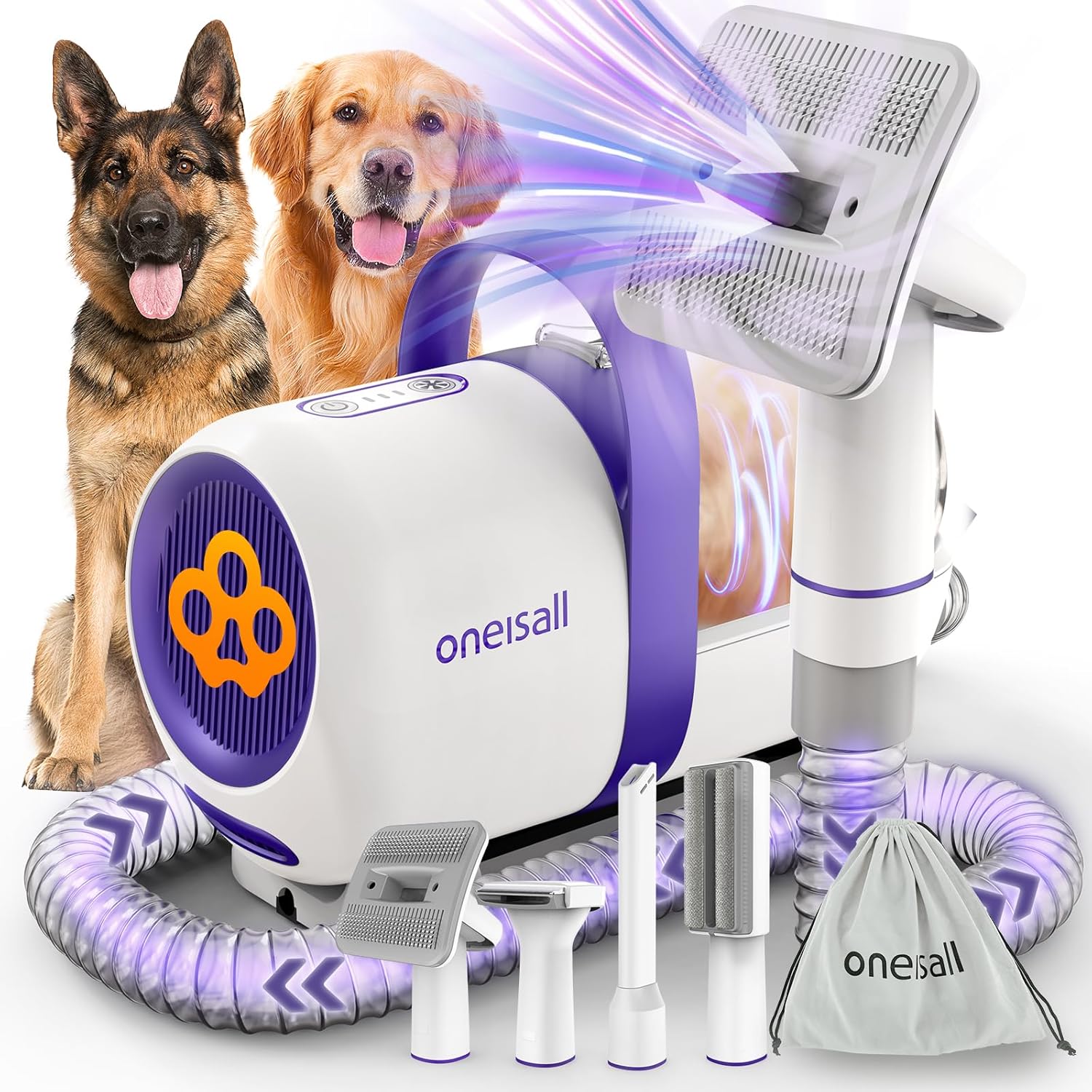
Our pick for the dry pass: oneisall Dog Hair Vacuum Shedding Grooming Brush Kits for Pet Thick Coats
 Visit on Amazon →
This is the kit clients ask about most, and it earns its place as a between-grooms maintenance tool. The deshedding attachment works, the dust cup does not clog every five minutes, and on a single small-to-medium dog with a moderately thick coat it pulls loose fur without yanking at the skin. For a doodle owner who wants to stay ahead of the shedding between appointments, that is real value.
The honest caveat is suction. On a genuinely dense double coat, the kind a husky or a malamute carries, the pull fades as the cup fills and the tool starts skating over the undercoat instead of reaching it. A vacuum also cannot do what air does: it lifts what is already loose near the surface, it does not blow apart a packed undercoat from the skin out.
And noise is the dealbreaker, not suction. At the dog's ear these units sit in the range where nervous dogs start lip-licking. Borrow one before you buy one if your dog is sound-sensitive, or run it in the same room for a week with the motor off before you ever touch the coat.
Flaws but not dealbreakers: The attachments are plastic and the kit is built for one dog, not a kennel. If you have a double-coated giant, put your money into a high-velocity dryer first and treat this as a supplement.
Anyone with a medium coat, a shed-prone house, and a dog that tolerates a vacuum will get their money's worth out of it.
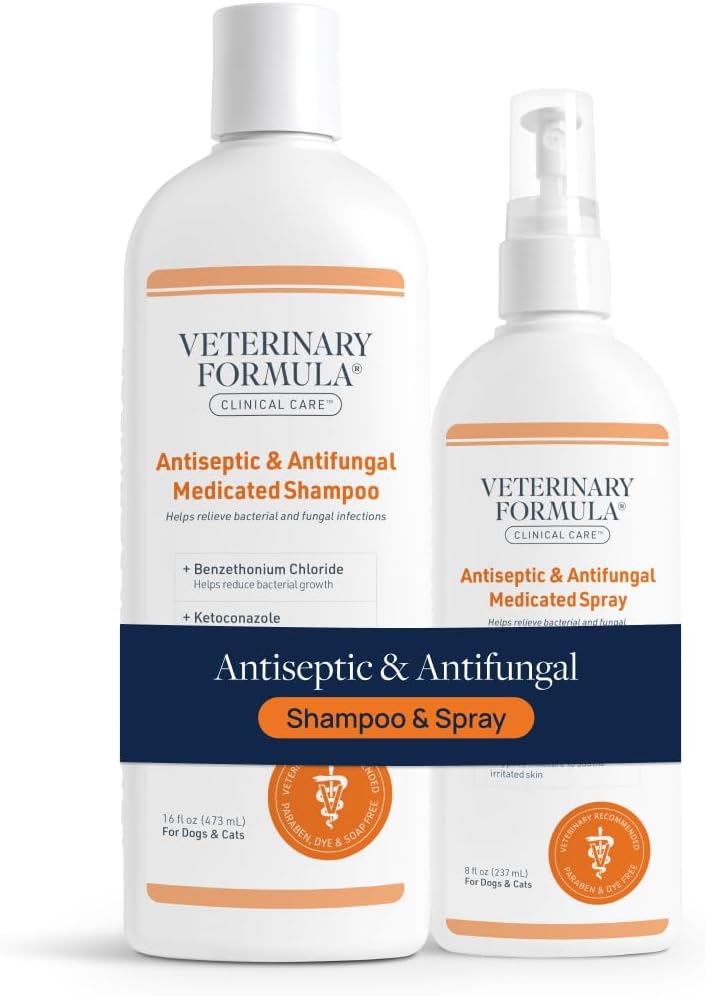
The treatment pick: Veterinary Formula Clinical Care Antispetic and Antifungal Shampoo and Spray
 Visit on Amazon →
This is a treatment, not a weekly shampoo, and I want that sentence to land before anything else. Antiseptic and antifungal formulas exist because the skin is already compromised, usually because a dense undercoat trapped moisture, dander, and heat against it. The spray is the part most people forget: it lets you spot-treat a hot spot or a fold without soaking the whole dog again.
Read the label twice, exactly like I do. If your dog has an open sore, a smell you can identify from across the room, or hair falling out in patches, that is a vet visit, not a bath. Medicated washing is not a substitute for a diagnosis, and the wrong product on a broken skin barrier makes a bad week worse.
Used properly, this is the wash I reach for when a coat comes in greasy, yeasty, or irritated, and I follow it with a full rinse test: no squeak, no slick feeling, no residue left to sit in the undercoat and start a mat. If it takes a fourth rinse to feel clean, keep rinsing, because leftover product in a thick coat is how you trade a skin problem for a matting problem.
Flaws but not dealbreakers: It is not a fragrance-forward salon shampoo, so do not expect a scent that lasts for days. That is a feature when the skin is angry and a disappointment when it is not.
Anyone whose dog has a recurring itchy patch, a greasy coat, or a skin fold that stays damp should keep a bottle in the cabinet and a vet on speed dial.
The actual deshedding workflow
Now the part you came for. This works on any double-coated dog: husky, golden, lab, shepherd, or the fluffy doodle that acts like one.
Step one: Read the coat before you touch it. Run your hands against the grain from the shoulder to the hip. A double coat has a soft, dense undercoat sitting under longer guard hairs. If your fingers stop at a solid wall of felt, you are not deshedding today, you are having a conversation about a shave-down. Mats do not brush out, they get shaved and started over.
Step two: Dry work first. Line-brush the whole dog before any water touches it. Work in rows the width of your brush, lifting the coat and brushing from the skin outward. This is the step that removes the bulk of the dead coat, and it is the step almost everyone skips because it takes fifteen minutes.
Step three: Follow with a rake or a deshedding tool. This is where the vacuum kit earns its slot on a medium coat. Keep the passes short and light, and stop the moment you see cut guard hairs in the cup. A deshedding blade used like a scrub brush will slice the topcoat, and you will not notice until the coat looks dull in three weeks.
Step four: Blow it out. If you own a high-velocity dryer, this is the single most valuable fifteen minutes in the entire routine. Air lifts the undercoat the brushes could not reach, and it does it before the bath, which means half the loose fur goes straight into the yard instead of down the drain. Every matted or shedding dog I groom gets a blowout before shampoo ever touches the coat.
Step five: Bathe, and pick the wash for the skin, not the smell. A healthy double coat gets a gentle oatmeal or value oatmeal shampoo. A coat with irritated, greasy, or yeasty skin gets a treatment wash like the Veterinary Formula bottle above, used on the schedule the label and your vet describe.
Step six: Rinse until you would drink the water. This is not a joke. Residue is invisible on a wet double coat and obvious three days later when the undercoat starts clumping. Rinse, feel, rinse again.
Step seven: Dry completely, all the way to the skin. A damp undercoat is a skin infection waiting to happen, and it is the number one cause of the hot spots I see in summer. Towel, then air, then check the armpits, groin, and neck folds with your hand before the dog goes back on the floor.
Step eight: Brush again when the coat is dry, then set the schedule. Double coats get a line-brush and rake twice a week and one full blowout before every bath. Baths run every six to eight weeks for a double coat, every three to four for a single coat. The bath schedule matters less than the brush schedule.
The mistakes that make shedding worse
Over-bathing is the first one. Shampoo strips the natural oils that keep an undercoat healthy, and a dry undercoat sheds more, not less. Owners who bathe a husky every two weeks because the house is full of fur are making the exact problem they are trying to solve.
Daily use of a deshedding blade is the second. It is a tool, not a lifestyle. Used weekly on a double coat with a light hand, it is brilliant. Used daily, it cuts live coat and leaves a patchy dog.
Brushing a dry coat with the wrong order is the third. Line brush, then rake, then deshedding tool, then finish. Most "my dog hates brushing" complaints come from starting at step three and yanking.
Skipping the dryer is the fourth. A human hair dryer is not a dog dryer. It is too hot, too weak, and it takes forty minutes to half-dry a lab. If you have a double coat, buy a real high-velocity dryer or accept the wet-dog life and the shedding that comes with it.
And the last one: treating a medical skin problem as a grooming problem. If the skin is red, smelly, or bald in patches, no brush and no wash fixes that. That is a vet, and grooming resumes after.
What this all costs
The vacuum kit sits in the middle of the price range for home deshedding gear, and the treatment shampoo is one of the cheaper medicated options on the shelf, so check current Amazon price on both before you commit.
The honest math is that the two purchases above solve about half the job. The other half is a line brush, a rake, and either fifteen minutes of your own arm or a real high-velocity dryer. If you own a husky, a golden, or a shepherd, the dryer is the better first purchase and the vacuum kit is the second. If you own a doodle or a medium-coated mix with a shedding problem and no skin trouble, flip that order.
Either way, the schedule is free. Twice a week with a brush, once every six to eight weeks with water, and a treatment wash only when the skin asks for one. That is the whole routine, and it beats any gadget that promises to make shedding "easy."
That is the job. Your dog was built to shed. Your job is to give the fur somewhere to go before it ends up on your couch.