Most of the messages I get from clients start the same way: "he sheds everywhere" or "she hates being brushed." Both problems usually have the same fix, and it does not involve a new pet. Home pet grooming is two jobs stacked together. You lift the loose coat before it lands on the furniture, and you keep whatever is cutting the hair cool enough that the animal never flinches. That is it. Everything else is technique and patience.
I groom dogs out of a converted cargo van in Austin, about forty doodles a week plus labs, goldens, huskies, and the occasional matted rescue that arrives in a trash bag. I also live with cats, which is how I learned that a shedding brush is a negotiation, not a chore. Cats do not care what the box promises.
So here is the routine I hand to clients who want to do more between appointments: two tools, the order to use them in, and the caveats that keep a bad afternoon from turning into a vet visit.
Why you should trust me
I have been grooming for ten years, the last six of them mobile. I am fear-free certified, which mostly means I read the dog before I reach for a tool: lip licks, yawns, whale eye, a tail tucked against the belly. When a dog tells me the clipper is too loud, I change the plan instead of pushing through.
The numbers in my job book are the reason clients trust the recommendations. I log blade temperatures with an infrared thermometer, because a hot blade gave a golden retriever a mild burn one July and I never want that on my record again. Undercoat comes off huskies and onto a kitchen scale in grams. Dryers get timed on wet coats and measured with a cheap decibel meter. If a tool did not survive a real coat, it does not get recommended here.
I am not a veterinarian, and nothing below replaces one.
How I picked and how I tested
Nothing gets into this guide on looks. A clipper has to run through a full coat without bogging or heating up, and a brush has to prove it lifts loose fur without chewing the topcoat. For cats there is a third test: does the cat stay on the table, or does it leave.
Both picks in this guide are home tools, not pro gear, and that is deliberate. A home groomer trimming a face and a belly twice a month does not need the clippers I run on other people's doodles. What you need is a tool that does the job in front of you and does not scare the animal.
The single rule I will not bend on: no product gets a pass because the box says "gentle" or "whisper quiet." Show me how it behaves in fur.
The two tools you'll need before you start
You cannot brush a cat with a clipper and you cannot clip a dog with a cat brush. These are two different jobs with two different tools, and buying the wrong one is how people end up with a frightened animal and a half-finished groom.
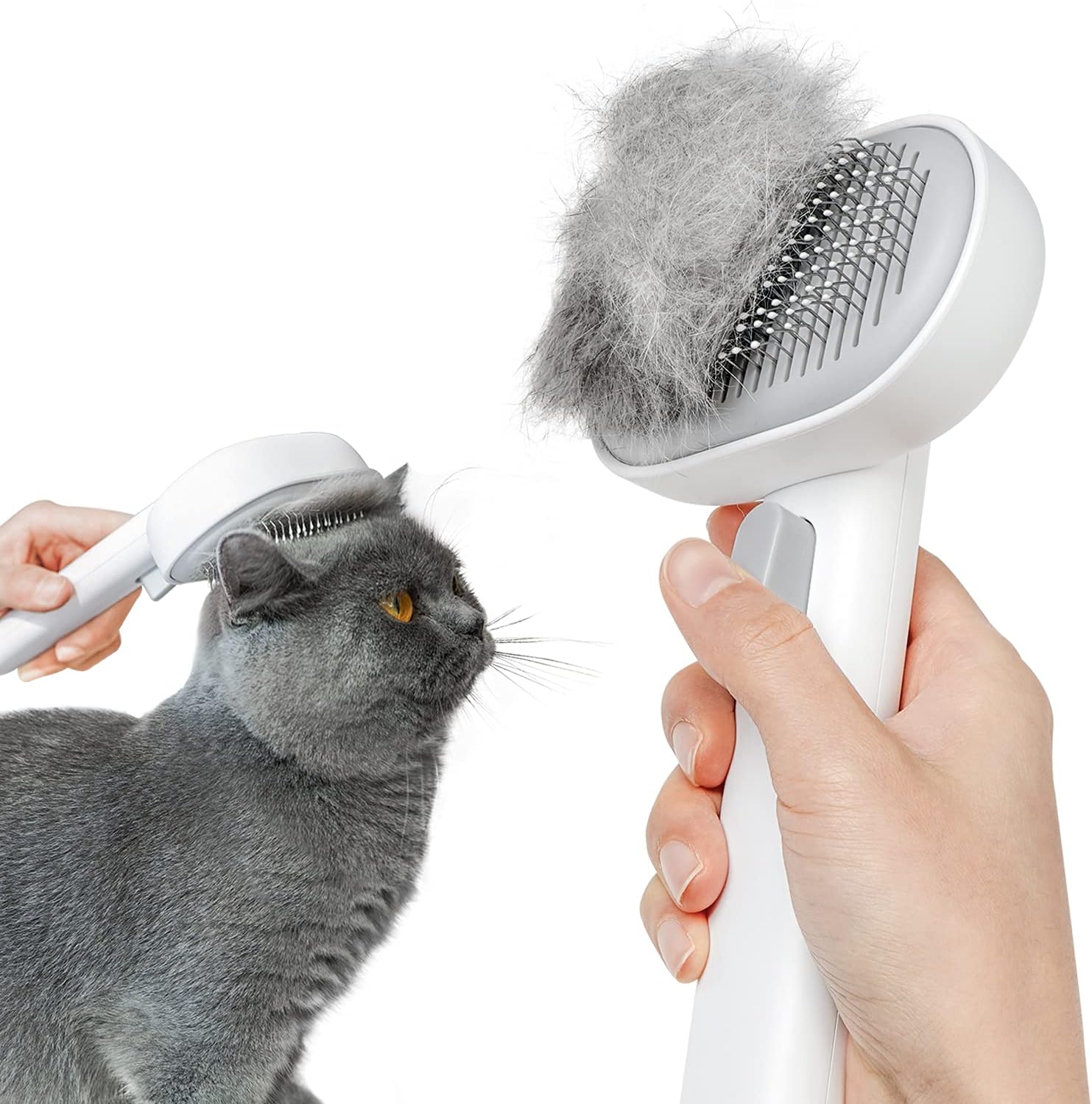
The shedding brush: Aumuca Cat Brush for Shedding, Cat Brushes for Indoor Cats, Cat Brush for Long or Short Haired Cats, Cat Grooming Brush Cat Comb for Kitten Rabbit Massage Removes Loose Fur
 Visit on Amazon →
This is the brush I point cat owners toward first, and the listing tells you exactly what it is built for: indoor cats, long or short hair, loose fur, and even kittens and rabbits. The massage angle matters more than it sounds. A cat that reads the brush as petting will sit still for it, and a cat that sits still is the only cat you can actually deshed.
Flaws but not dealbreakers: This is a shedding brush, not a de-matting tool. If your cat has tight mats behind the ears, on the belly, or at the base of the tail, no brush removes those safely. That is a groomer or a vet, and I have sewn up too many home scissor wounds to pretend otherwise.
Cat owners with a short-haired cat and a couch covered in fur will get the most use out of it.
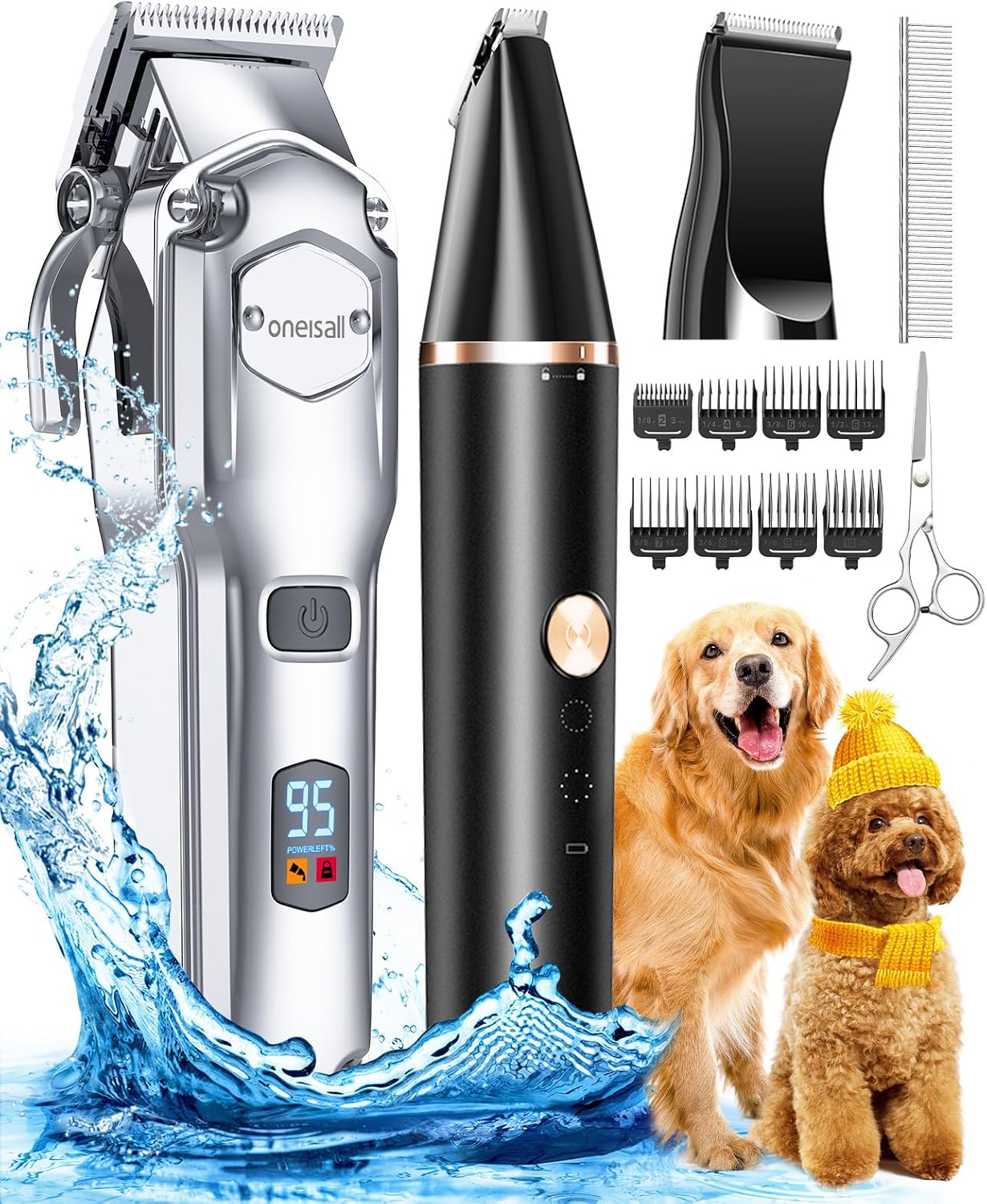
The clipper kit: oneisall Dog Clippers Grooming Kit for Thick Coats & Heavy Duty
 Visit on Amazon →
The name on this kit tells you the target: thick coats, heavy duty. That is the right target for a home groomer with a lab, a golden, or a doodle whose legs have gotten away from them. A kit also means you are not buying the pieces one at a time, which is how most first-time home groomers end up with three tools that do not fit each other.
Flaws but not dealbreakers: A kit is a starting point, not a career. Blades dull, and a dull blade drags and heats up, which is how dogs get nicked. Plan on replacing blades if you clip monthly. And if the coat is already matted into a pelt, do not clip it at home. That is a shave-down by someone who knows what they are doing.
Anyone with a thick-coated dog who wants to keep the sanitary trim, the feet, and the face under control between professional grooms will get real value here.
The actual routine
This works on a cat, a dog, or one of each, in that order. Do the cat first, when the house is quiet.
Step one: read the coat before you touch a tool. Run your hands through the fur, down to the skin. A double coat (husky, lab, golden) means topcoat plus dense undercoat, and your job is lifting dead undercoat. A single coat (poodle, doodle, Yorkie, bichon) grows continuously, and your job is preventing mats. The tool and the schedule are different for each, and the box does not know which one you own.
Step two: brush the cat in short sessions. Two or three minutes, then stop while the cat is still winning. Brush in the direction the fur grows, working from the head back, and give a treat at the end every time. A cat that learns brushing ends in food will come back for the next session.
Step three: work in sections, not sweeps. For a double coat, part the fur down to the skin and brush in lines. Random sweeps over the topcoat feel productive and pull almost nothing. This is the step most people skip, and it is the reason they think their brush does not work.
Step four: bathe on a schedule that matches the coat. Double coats get a bath every six to eight weeks, no more, because shampoo strips the oils that keep the undercoat healthy and over-bathing makes shedding worse. Single coats can go every three to four weeks, since continuous hair growth plus regular brushing is what keeps them out of mats. Dogs with skin conditions follow the vet's schedule, not mine.
Step five: dry before you clip. This is the step that separates a home groom from a bad haircut. Get the coat dry with a towel and a dryer, and get as much loose coat out as you can first. Clipping damp, shedding fur is how blades clog and dogs end up in a tug of war.
Step six: clip with a cool blade. Start with the areas that matter most: sanitary trim, paw pads, and the feet. Keep the blade moving, and if it starts feeling warm against your wrist, stop and let it cool. A blade that is uncomfortable on your skin is a burn waiting to happen on a belly. Guard combs leave a longer finish, so take them off when you are done and check your work with a comb.
Step seven: nails and ears, briefly. Nails: trim a sliver at a time, and stop before the pink quick on light nails. On black nails, take tiny bites and look at the cut end for a gray dot. Ears: clean the visible part of the ear, never push anything down the canal, and let the dog shake the rest out.
Step eight: end on something good. Every groom I do ends with praise and a treat, even the ones that went sideways. The dog remembers how the session ended, and that is what decides whether the next one is easier.
Coat type decides the plan, not the marketing
Every dog and cat is either a double coat or a single coat, and the answer is different for each. Double coats: brush twice a week, bathe rarely, and blow out the dead undercoat in spring. Single coats: brush every two to three days, bathe more often, and watch the furnishings, meaning the beard, brows, and leg hair, because they mat first.
Marketing does not know which one you own. A tool sold as "for all coats" is usually optimized for one and merely tolerated by the other. That is why the two picks above are aimed at specific jobs instead of sold as universal.
What this all costs
Two tools, one routine. Both listings above show their current price on Amazon, so check there rather than trusting a number that goes stale.
The math that matters is not the price of the tools. It is the difference between a coat you maintain every week and a pelt that has to be shaved down. A matted dog is not a brushing problem, it is a clipper problem, and it costs more every time. Thirty minutes a week with a shedding brush and a pair of clippers keeps you on the right side of that line.
When to stop and call a groomer
Some jobs are not home jobs. If the coat is matted tight to the skin, if the skin is red, broken, or smells yeasty, if the ears are painful to touch, or if the animal panics hard enough to bite, stop. Those are groomer or vet appointments, and pushing through at home is how dogs learn that grooming hurts.
Everything else you can learn. Start with the shedding brush on the cat while the house is quiet, then take the clippers to the dog on a calm afternoon with a cool blade and a treat at the end. Do it once a week and you will never have to book an emergency shave-down again.