Most home grooms fail before the clipper ever touches the dog. The dog is on the floor, the coat is tangled, and the tool is louder than the dog can tolerate. A dog grooming vacuum kit and a sharp pair of shears solve two different problems. The vacuum kit handles the between-groom maintenance, the loose hair, the nails, and the light tidy-ups. The shears do the finishing work around faces, feet, and furnishings that clippers cannot reach cleanly. I have groomed dogs for ten years out of a converted cargo van in Austin, and the tools I trust are the ones that survive a curly doodle coat, a nervous rescue, and a hot afternoon with the inverter humming. This is the routine I would hand to a first-time home groomer.
Why you should trust me
I started as a bather at a strip-mall salon when I was nineteen. On my third week the only groomer quit mid-shih-tzu, the dog was half-pelted, and the owner was already in the lobby. I finished that dog with a 10 blade, a lot of patience, and a bruised thumb. I have been finishing other people's dogs ever since. The last six years I have worked out of a van, which means I groom forty-odd doodles a week plus labs, goldens, huskies, and the occasional matted rescue that shows up in a trash bag. I am fear-free certified, and I log blade temperatures, decibel readings, runtimes, and grams of undercoat on every tool that comes through the van. If a tool does not survive a doodle coat and a 70-pound lab that leans, it does not get recommended.
How I picked and how I tested
I did not pick these two tools because they look good on a shelf. I picked them because they cover the two jobs a home groomer actually has: maintenance between full grooms, and finishing work that clippers cannot do. The criteria are the same ones I use in the van. Does the tool run through a full coat without heating up or bogging? What does it sound like at the dog's ear, not at my ear? Can I use it on a nervous dog or a puppy without the dog shutting down? Does it survive a curly coat and a dog that spins?
For a vacuum kit, the test is whether the suction holds and whether the noise stays under the range where a nervous dog starts shaking. For shears, the first test is the paper test. A shear should cut a sheet of copy paper cleanly from the pivot to the tip. A shear that drags on paper will drag on a face, and that is how dogs get nicked. I do not trust a spec I cannot check with a stopwatch, a decibel meter, or a kitchen scale. That is the standard below.
The tools that do the work
A home groomer needs a way to pull loose hair, tidy the coat, grind nails, and finish the outline. These two tools cover that without turning your kitchen into a salon.
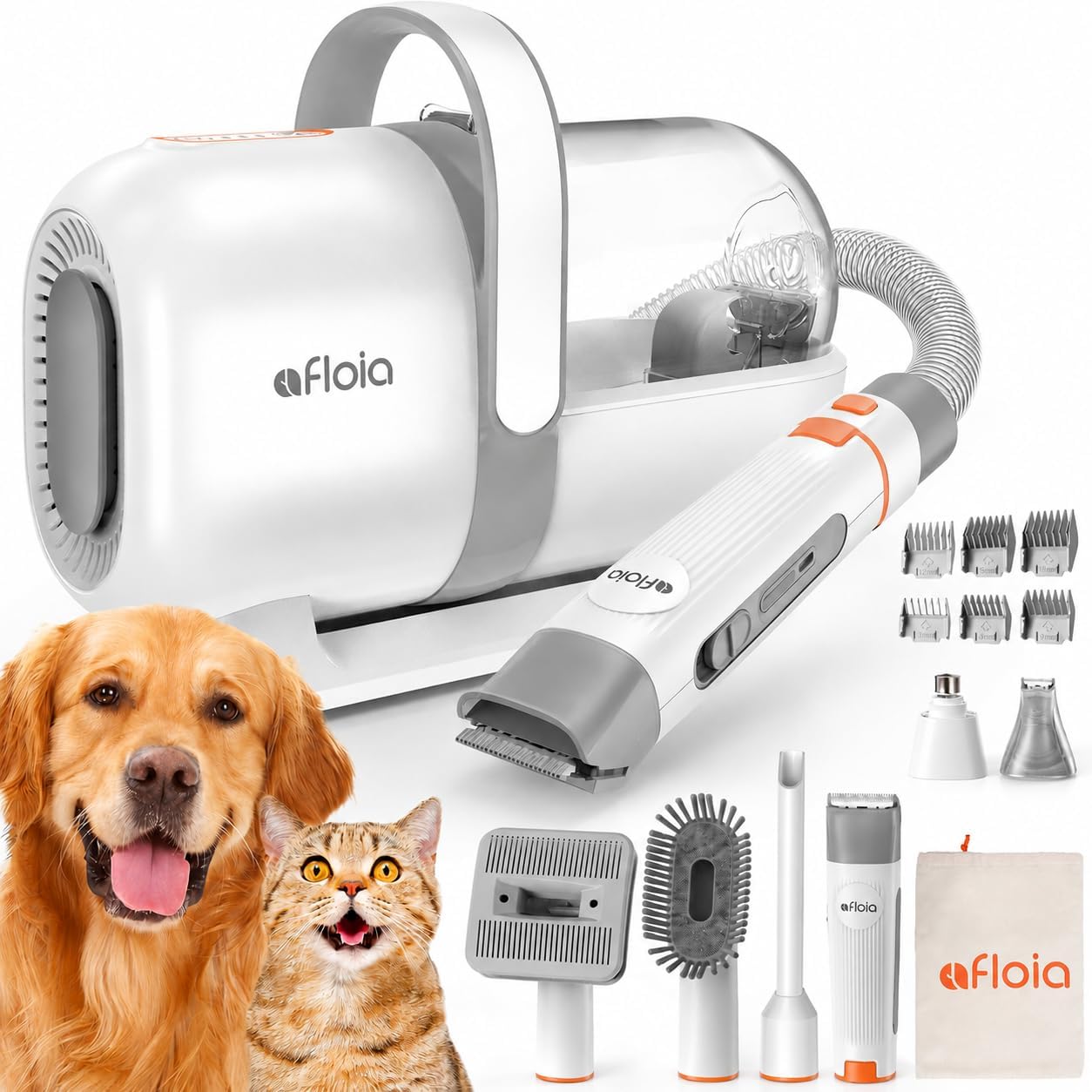
The all-in-one pick: Afloia 6-in-1 Dog Grooming Vacuum Kit, Pet Clipper & Nail Grinder, White
 Visit on Amazon →
The Afloia 6-in-1 kit is the tool I would hand to someone who wants one box to cover the maintenance work between full grooms. It combines a grooming vacuum, a pet clipper, and a nail grinder, which means you can pull loose hair, tidy the coat, and grind nails without three separate cords on the floor. That matters more than it sounds. A dog that is already nervous does not need you to leave the room for a different tool.
The vacuum is not a replacement for a high-velocity dryer or a bath. It is a maintenance tool. Use it on a dry, brushed coat to lift loose hair, and use the clipper attachment for sanitary trims and paw pads rather than a full body clip on a thick double coat. The nail grinder is the piece most home groomers underuse, and it is safer than clippers on black nails because you can take small passes and check the quick as you go. Check current Amazon price.
Flaws but not dealbreakers: Vacuum kits live or die on noise. If your dog lip-licks or yawns when you turn it on, stop, let the dog sniff it while it runs in another room, and try again tomorrow. The bin is also not a salon bin, so empty it before it fills if you are working on a heavy shedder. Anyone with a small-to-medium dog, a doodle that needs regular tidy-ups, or a cat that will tolerate a quiet vacuum will get the most out of this kit.
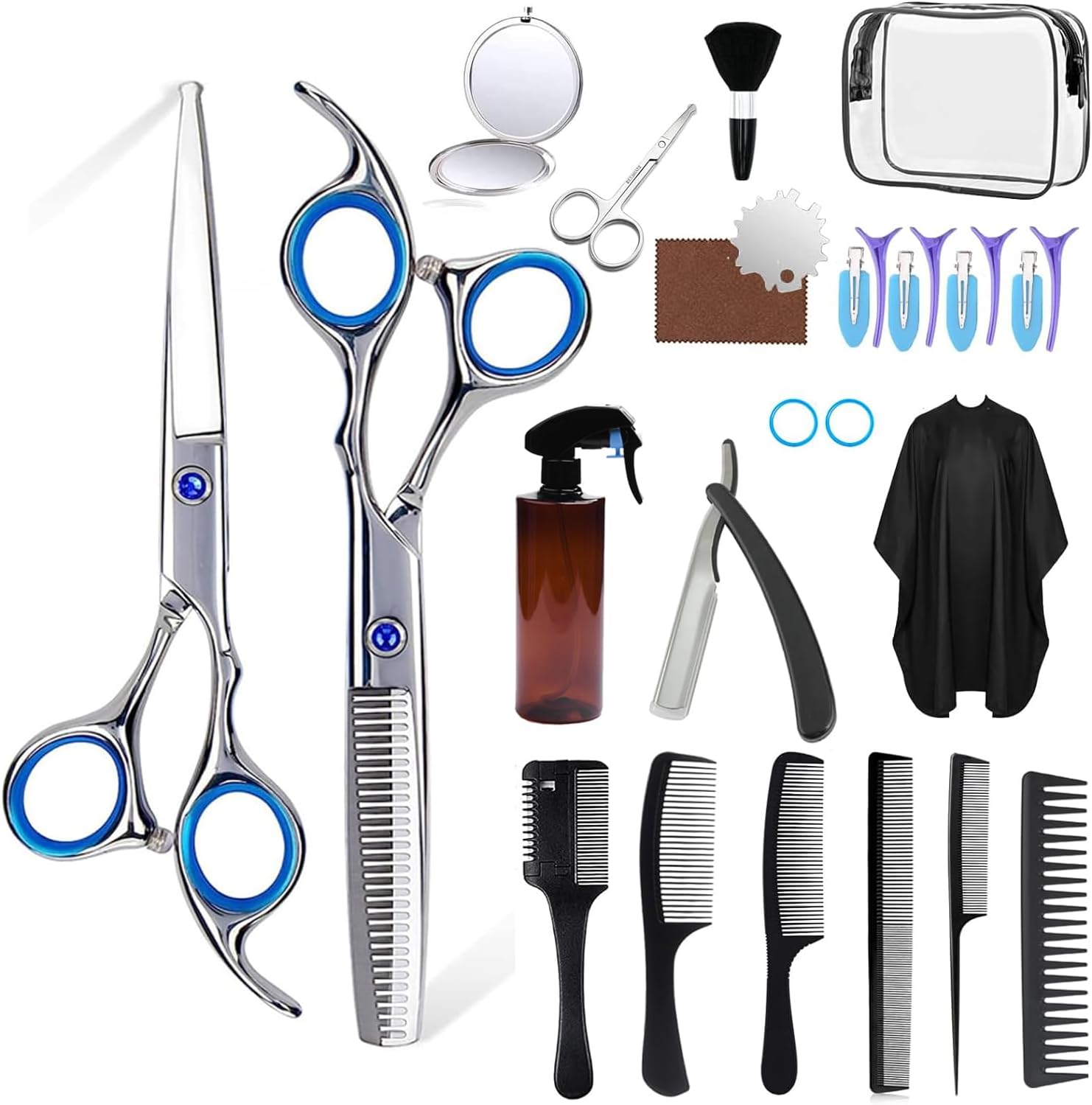
The finishing pick: Hair Cutting Scissors Kit,27PCS Professional Stainless-Steel Sharp Barber Professional Hairdressing Shears Set with 6.5 Inch Cutting Scissors,Thinning Shears for Man Woman Adults Kids Home Salon
 Visit on Amazon →
Scissor work is what separates a groom from a haircut, and it is the part home groomers skip because dull shears scare them. This 27-piece kit covers the basics: a 6.5 inch cutting pair, thinning shears, and the smaller pieces you need for face, feet, and sanitary work. The paper test is the first thing I do with any new shear. It should cut a sheet of copy paper cleanly from the pivot to the tip. A shear that drags on paper will drag on a face, and that is how dogs get nicked.
Use the straight shears for the outline of the feet and the top of the head. Use the thinners to blend the choppy lines a clipper leaves. Keep the points away from eyes, and keep your fingers between the skin and the shear points. Thinning shears are not for mats. If the coat is matted, the shears are the wrong tool and so is the clipper. That dog needs a shave-down and a conversation about brushing. Check current Amazon price.
Flaws but not dealbreakers: Kit shears are not pro shears. The tension screw will need adjusting, and the edge will not hold through forty doodles a week. For monthly trims on one or two dogs, they are enough. Anyone who wants to trim around eyes and paws at home without paying a groomer for a five-minute tidy should start here.
The actual home grooming workflow
This is the order I use in the van. It works on a kitchen counter, a folding table, or the floor if you have no other option, but a table changes the dog's behavior more than any tool. Work at your height, not the dog's.
Step one: Read the dog before you plug anything in. A dog that lip-licks, yawns, or shows whale eye is telling you the tool is too loud or too rough. If the dog is already over threshold, the groom waits. That is not being soft. That is how you avoid a dog that hates grooming for life.
Step two: Set up a non-slip surface at your height. A bath mat on a table is enough. Grooming on the floor wrecks your back and corners the dog. A dog on a table behaves differently because it cannot bolt, and you can work with both hands.
Step three: Brush the coat out completely. Line-brush, then rake, then slicker. Never clip over a tangle. The clipper will grab the knot, the dog will yelp, and you will lose the dog's trust for the rest of the session. If the coat is matted into a pelt, stop. That is a shave-down, not a brushing problem.
Step four: Do the sanitary trim and paw pads first. Use the clipper attachment from the Afloia kit for the belly, rear, and paw pads. This is the part nobody wants to talk about and everybody needs. Doing it first means the dog is still fresh, and it keeps the messy work away from the finished coat.
Step five: Clip the body in the direction of coat growth. Go with the grain unless you are deliberately cutting short. Let the clipper do the work. Do not push. If the blade gets warm in your hand, it is too warm for the dog. Rest it and swap to a cool blade.
Step six: Grind the nails. Small passes, one paw at a time. The grinder is safer than clippers on black nails because you can stop before the quick. If the dog pulls a paw, stop and reset. A nail trim that takes four minutes and ends calm is better than one that takes ninety seconds and ends with a dog on the ceiling.
Step seven: Scissor the face, feet, and furnishings. Use the straight shears for the outline and the thinners to blend. Keep the points parallel to the skin, not pointed at it. The face is the part owners see every day, so take your time here and do less than you think you need.
Step eight: Vacuum the loose hair. This is where the grooming vacuum earns its space. Run it over the coat after the clip to lift the hair you just cut, and use the deshedding attachment on double coats before the bath. On a husky or a golden, this step pulls more fur than any brush.
Step nine: Bath and dry if the coat needs it. A vacuum kit is not a bath. If the dog is greasy, itchy, or due for a bath, bathe after the clip. Dry with a high-velocity dryer, not a human hair dryer. A human dryer is too hot, too weak, and it takes forty minutes to half-dry a lab. If you have a double coat, buy a real dryer or accept the wet-dog life.
Where home grooming goes wrong
Home grooming fails at the same three steps every time: no table, wrong blade, and skipping the dryer. Fix those three and you can groom 80% of dogs at home with a modest kit.
The next mistake is brushing after the bath instead of before. A wet coat tightens, and a tangle that was manageable on a dry dog becomes a mat in the tub. Brush first, bathe second, brush again after the dryer.
Another mistake is using a grooming vacuum on a matted coat. The vacuum cannot reach the undercoat on a pelt, and it will not pull a mat apart. It will just pull hair and hurt the dog. Mats get shaved. That is the whole conversation.
Blade heat is the number nobody prints on the box. After ten minutes of continuous clipping, most A5 blades sit at 110 to 125 degrees Fahrenheit on my thermometer, and that is when blade burn happens. Rest blades in rotation like a line cook. If the metal is uncomfortable on your wrist, it is too hot for a dog's belly.
Finally, do not clip a double coat short for summer. The undercoat insulates against heat and sun. A shaved husky is not cooler. It is sunburned and patchy. Deshed with a vacuum and a dryer instead.
The competition and why it lost
The tools I did not put on this list did not lose. They solve different problems. A high-velocity dryer is the single best purchase for a double-coated dog, but it is not a vacuum kit and it is not a pair of shears. A pro clipper with detachable blades is the right tool for full body clips on thick coats, but a home groomer trimming one doodle every six weeks does not need one. A grooming table with a good arm and loop is worth the money, but you can start on a counter with a bath mat if your dog is small and calm.
What this article is about is the two tools that cover the widest range of home grooming jobs for the least money. A vacuum kit for maintenance and nails. A shear kit for finishing. Everything else is an upgrade you can add later, once you know your dog's coat type and your own patience level.
What this all costs
The Afloia kit and the scissors kit together cover maintenance and finishing. Check current Amazon price on both, because prices move and the math only works if the tools still cost less than a year of salon visits. Compare that to a full groom every six weeks. The break-even is usually a few months, and the tools keep working after that.
What you cannot buy is the routine. The dog still needs brushing twice a week, nails every two to three weeks, and a bath on the schedule its coat type demands. A double-coated dog bathes every six to eight weeks. A single-coated dog bathes every three to four. Dogs with skin conditions bathe on the vet's schedule, not mine.
That is the job. Start with the dog's signals, set up at your height, and let the tools handle the parts your hands cannot. The first groom will be rough. The fifth one will look like you have been doing it for years.